Ipswich Town's Global Gamble: From Championship to Premier League
Ipswich Town have come back to the Premier League with money in their pockets and a very different idea of how to spend it.
Only Chelsea, Tottenham and Arsenal have a bigger net outlay so far this summer. The newly promoted club from Suffolk sit fourth on that list, with 10 signings costing a combined £106.6m – a staggering figure for a side that finished second bottom the last time they were here.
The number is eye-catching. The shift in thinking is bigger.
From local comfort to global reach
Under Kieran McKenna, Ipswich built a modern fairytale on familiar faces. Three promotions in four full seasons, a tight-knit dressing room and a squad largely drawn from the UK and Republic of Ireland. Of the 39 permanent first-team signings in his four-and-a-half-year reign, 32 were either born or raised in Britain or Ireland. Only two arrived directly from European clubs.
It was deliberate. Ipswich’s years in League One forged a recruitment model that prized players who understood the language, the culture and the chaos of the lower leagues. McKenna admitted after promotion to the Championship in 2023 that the club had made a “conscious decision” to avoid overseas players in the third tier, wary of the division’s fast, frantic rhythm.
That continuity carried them further than anyone expected. A largely unchanged squad surged to second place in the Championship in 2023-24, completing back-to-back promotions and hauling Ipswich into the Premier League for the first time in 12 years.
At that point, the club could have pivoted. They could have chased continental bargains, broadened their scouting map and tried to buy Premier League survival with foreign know-how.
They didn’t. They doubled down.
The first Premier League lesson
The summer of 2024 brought a £100m spend, but it stayed close to home. Omari Hutchinson, Jack Clarke, Liam Delap, Dara O’Shea and Jacob Greaves were the headline arrivals – players who had largely shone in the Championship and were seen as high-upside projects rather than ready-made top-flight operators.
Ten of the 12 summer signings were British or Irish, all coming from other English clubs. Ipswich bet that youth, potential and character could compensate for a lack of top-level experience. They also sought players unlikely to walk away if relegation came.
Relegation did come. Hard.
McKenna’s “Championship all-stars” never got near safety. Ipswich finished second bottom with just 22 points, a full 16 behind 17th-placed Tottenham Hotspur. The gap between the divisions was laid bare.
Yet behind the pain of the table, the numbers told a different story. Ipswich’s wage bill, at £77m, was the lowest in the Premier League in 2024-25. Heavy spending on fees had been offset by tight control of salaries and the huge uplift in broadcast income. A quick profit on Delap’s move to Chelsea helped too. When the accounts landed for the year ending June 2025, they showed a £4m pre-tax profit – a remarkable outcome for a club that had just gone down.
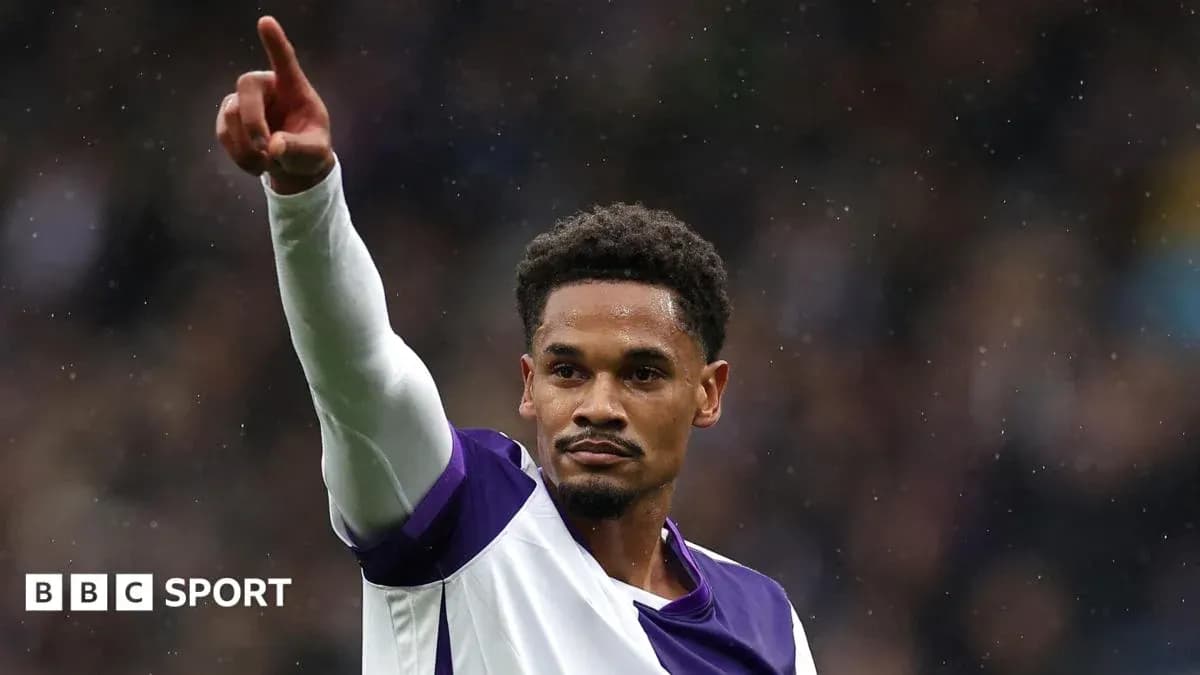
Hutchinson’s sale to Nottingham Forest added another injection of cash. Crucially, O’Shea, Clarke, Greaves and January 2025 signing Jaden Philogene stayed and formed the spine of a side that went straight back up at the first attempt.
McKenna argued even in the relegation aftermath that recruitment had been in the club’s “best long-term interests”. The balance sheet and the promotion that followed give weight to that claim.
But the football itself offered a blunt verdict: that model, on its own, was not enough to survive.
O’Neil’s brief: be braver
McKenna stepped down on 10 June, leaving with his reputation enhanced and his work largely vindicated. In came Gary O’Neil, with a different brief and a harder edge.
Chairman Mark Ashton has been clear. Ipswich, he says, now have to be “a bit braver” in their approach to the Premier League. The transfer list shows what that means.
This summer’s recruitment has ripped up the old borders. Emersonn and Florentino Luis are set to become the first Brazilians to play for the club. Sasa Lukic will be the first Serbian, Daizen Maeda the first Japanese player in Ipswich colours. Of the 10 players bought, only one is British – Chuba Akpom from Ajax – and his move was triggered automatically by promotion after an underwhelming loan spell.
This is not the comfort zone of League One stalwarts and Championship standouts. This is a club testing itself in a different market, with different risks.
O’Neil, who must assemble a competitive side at speed rather than over multiple seasons, has been blunt about the stakes.
“Two seasons ago, the club didn’t get anywhere near staying in the division and this time we need to do better,” he said last month. “That’s why we’re trying to add quality to the squad from different parts of the world and we’re trying to add some different attributes.”
After a 3-0 win over Rayo Vallecano on Saturday, he hinted that the spending is not done yet, saying the “plan is to do quite a bit more”.
Power, pace and a different profile
One of the clearest lessons from 2024-25 sits in the middle of the pitch. Ipswich’s midfield lacked power and ball-winning aggression. They were neat, they were brave, but they were often overrun.
Ashton has acknowledged the need for more athleticism and “a different set of physical attributes”. The arrivals of Florentino Luis and Lukic speak directly to that. Both have experience at a high level and both will be expected to impose themselves from day one, especially with Azor Matusiwa and Jack Taylor doubtful for the opening game after summer operations.
Up front, the problem is just as stark. No Ipswich player scored more than 10 non-penalty goals in the Championship last season. For a side that wants to stay in the Premier League, that simply won’t do.
The response has been bold. The club record has gone on Emersonn, a 22-year-old Brazilian striker signed for an initial £24m. At Toulouse last season he scored seven times in 31 appearances, 22 of them starts. The raw numbers don’t scream superstar, but Ipswich clearly believe in the ceiling: strong, mobile, physically imposing, and still at the start of his development.
Maeda brings a different kind of threat. The Japanese forward or winger arrives with 79 goals in 212 games for Celtic and a reputation for relentless work-rate. He will not get the same volume of chances in a team battling to avoid the drop, but his energy without the ball could be just as valuable as his finishing.
Behind them, Ipswich have quietly reshaped the goalkeeping department. Two Dutch keepers have come in, including Kjell Scherpen. At 6ft 9in (2.06m), he is set to become the tallest player ever to appear in the Premier League – a literal giant tasked with anchoring a rebuilt side.
World Cup pedigree and familiar faces
This is not just a numbers game. Ipswich have targeted players used to the biggest stages.
Maeda and Morocco centre-back Issa Diop both scored at this summer’s World Cup. Another World Cup goalscorer could yet follow. The club have been linked with Paraguayan forward Julio Enciso, who played under O’Neil at Strasbourg last season and had an injury-hit loan at Portman Road in the second half of 2024-25.
Enciso would tick several boxes at once: international pedigree, knowledge of the manager’s demands, and unfinished business in Suffolk.
It is a sign of how far Ipswich’s recruitment net has been cast that such a move even feels plausible.
Spending big, walking a tightrope
The scale of this summer’s outlay puts Ipswich in rare company. Only three promoted clubs have spent more in a single window: Sunderland in 2025, Nottingham Forest in 2022 and Aston Villa in 2019. All three stayed up.
The precedent offers encouragement, but not comfort. Fulham, Southampton, Burnley and Ipswich themselves have all thrown comparable sums at survival in recent years and still dropped straight back down. In the modern Premier League, this level of investment has become the starting price of competitiveness, not a guarantee of safety.
Ipswich know that better than most. They have already lived through the reality that spending wisely and spending enough are not the same thing.
What they have now is a club structurally stronger than at any time in the past quarter of a century. A new manager with Premier League experience. A £30m training ground redevelopment nearing completion. A wage bill that has been kept under control. A squad that, at last, looks built with the demands of the division in mind.
The question is no longer whether Ipswich are willing to gamble. They have pushed their chips into the middle of the table.
The real test comes next: has this new, global Ipswich finally found a way not just to reach the Premier League, but to stay there?