James Rodríguez Retires from Colombia National Team After 15 Years
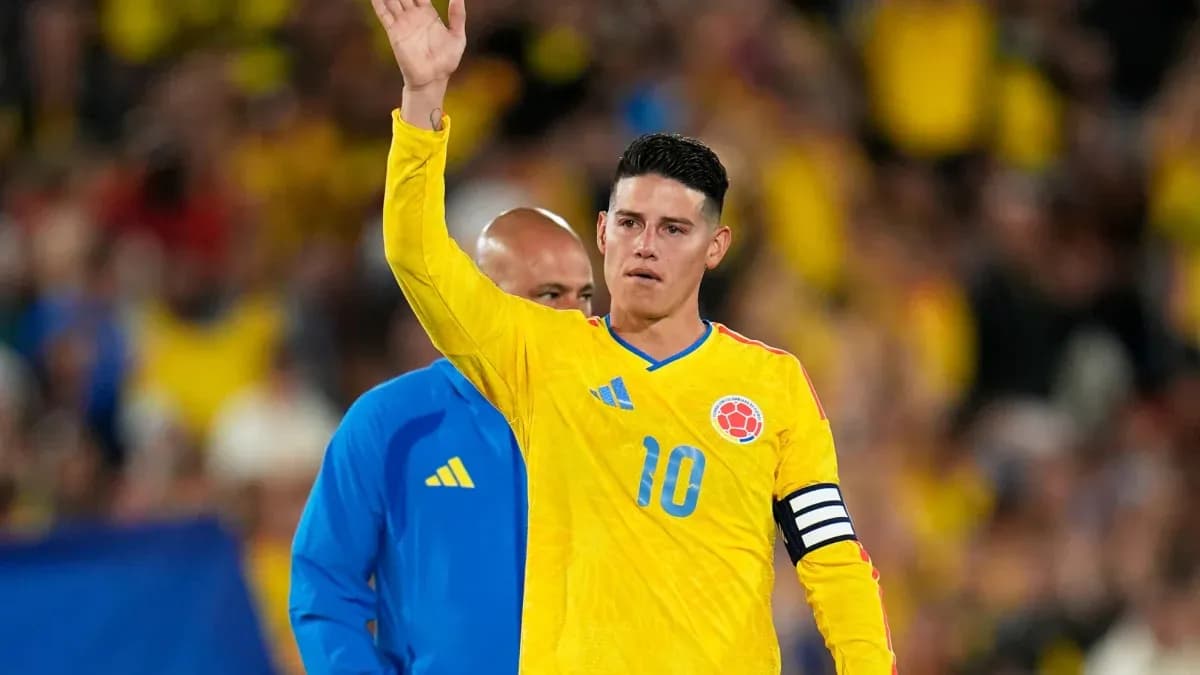
James Rodríguez chose a quiet video on his own social media to say the loudest goodbye of his career. On Tuesday, the 35-year-old announced his retirement from the Colombia National Team, drawing the curtain on a 15-year international journey that helped define a golden generation.
He leaves with numbers that frame the scale of his impact: 131 caps, 31 goals, three World Cups, five Copa América tournaments. But his story with Colombia was never just about statistics. It was about a player who, no matter where his club career took him, always seemed to find his truest version in yellow.
From Brazil 2014 to global superstardom
James’ relationship with the World Cup will always start in Brazil. In 2014, at just 22, he lit up the tournament and announced himself to the world.
Six goals. Golden Boot. A left foot that felt like a spotlight.
His volley against Uruguay in the round of 16 has long since passed into World Cup folklore. Chest control, turn, and then that thunderous strike from outside the box. It won the Puskás Award for best goal of the year and, in many ways, changed his life. Real Madrid moved quickly, paying around 75 million euros after the tournament to take him to the Bernabéu.
He would return to the World Cup stage in 2018 and again in 2026, a constant presence through changing coaches, teammates, and tactical plans. Across those cycles, his status barely shifted: James was the reference point, the “10”, the player around whom Colombia so often tried to build.
A national team constant amid club turbulence
While his club career took him from Madrid to Munich, from England to other stops, his role with the national team remained strikingly stable. Colombia became his fixed point.
Coaches came and went. Systems changed. James stayed central.
From his debut in 2011 to his farewell after the 2026 World Cup, he was more than a creative hub. He was the emotional barometer of a side that carried the hopes of a football-obsessed country.
That bond reached another peak at the 2024 Copa América. There, he delivered a tournament that felt like a reminder of his prime: decisive, influential, constantly involved. He was named the best player of the competition and led Colombia all the way to the final, underlining again why generations of managers trusted him with the keys to the attack.
“Time to close one of the most important chapters of my life”
The goodbye itself was intimate, direct, and heavy with gratitude. In his video message, James spoke of a decision that had clearly been weighing on him.
“Today I want to speak to you from the heart. After many years, many matches, many joys, and also difficult moments, I feel that the time has come to close one of the most important chapters of my life: my journey with the Colombia National Team,” he said.
Then came the thank yous, aimed not at clubs or directors, but at a country.
“Thank you for every match, every joy, every tear, and every shared dream. Defending the colors of the Colombia national team was one of the greatest honors of my life. Thank you, Colombia. Forever.”
With that, the player who carried the No. 10 for a decade and a half stepped away from the international stage. The yellow shirt that had so often revived him is now part of his past.
New chapter at Atlético Nacional
His career, though, does not end here. James will continue at Atlético Nacional, a return to Colombian club football that adds a new layer to his story.
This time, he will play without the weight and responsibility of the national team jersey, but with the same eyes on him. For many fans, seeing him week in, week out in domestic football will be a rare privilege after years of watching him mostly from afar.
The question now is not what James can still do for Colombia. It is what this version of James can bring to Colombian football from within.
A farewell that echoed across generations
The reaction to his announcement was immediate and emotional. Dressing rooms past and present, rivals and teammates, all lined up to salute the “10”.
Juan Guillermo Cuadrado, one of his closest allies on the pitch, called him a “historic legend”. The phrase captured the mood: this was not just another retirement. It was the end of an era.
Jefferson Lerma wrote: “Epic and different from everyone else, always MY CAPTAIN.” Richard Ríos chose fewer words but hit the same note: “Thank you for so much, GENIUS.”
Cucho Hernández underlined what James meant to a younger generation of attackers: “Thank you for everything, captain. Total idol and legend of our country.” Matheus Uribe focused on the broader impact, saying James had taken the National Team “to another level”.
The tributes were not limited to the Colombia camp. Luis Suárez, a rival for club and country over the years, thanked James for contributing to Colombia’s growth and for carrying the country’s name to the highest stages. CONMEBOL also highlighted his performances in the national team shirt, a nod from the institution that oversaw many of his defining nights.
Luis Díaz, one of the current standard-bearers of Colombian football, added his own message: “I feel fortunate to have shared with you.” One generation saluting another, the baton formally passed.
The volume and variety of those messages told their own story. James Rodríguez did not just mark a chapter in Colombian football. He stitched together eras, influencing teammates who shared his first World Cup and those who will lead the next ones without him.
The No. 10 shirt will find a new owner. The space he occupied, on and off the pitch, will be harder to fill.