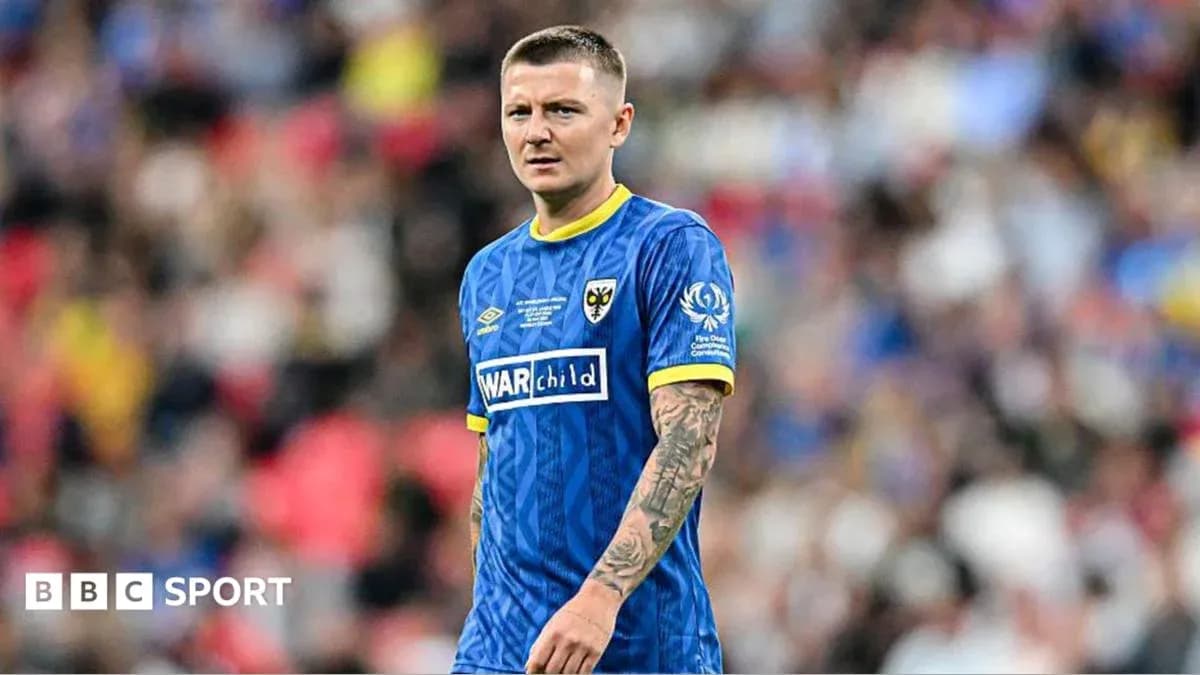
James Tilley Returns to AFC Wimbledon: A Statement Signing
James Tilley walks back into Plough Lane this summer not as a loanee scrambling for survival, but as a statement signing for a club that believes its days of merely hanging on are over.
The 27-year-old winger has rejoined AFC Wimbledon from Wycombe Wanderers on a three-year deal for an undisclosed fee, returning to the club he helped drag up from League Two – and then helped keep in League One.
From play-off glory to survival scrap – and back again
Tilley’s relationship with Wimbledon has already covered most of the emotional spectrum. He first arrived in 2023 with the club in League Two, part of a group tasked with restoring momentum and identity. That mission hit its peak in June 2025, when he played his part in the Dons’ promotion via the League Two play-off final.
Wycombe moved quickly that summer, taking him to Adams Park. On paper, it looked like a natural step. In reality, the pull of Wimbledon never really loosened.
By the second half of the 2025-26 season, he was back in south-west London on loan, thrown straight into a relegation battle. Thirteen appearances, two goals, and one successful escape later, Wimbledon were still a League One club – and Tilley had reminded everyone what he brings in a Dons shirt.
Now the return is permanent.
“It feels like home”
Some players drift from club to club. Others find one that sticks.
“In football you find one team where it just feels right, it feels like home, and for me that's Wimbledon,” Tilley told BBC Radio London.
The line lands with weight because his actions have already backed it up: promotion, a rescue act, and now a long-term deal.
He spoke of his family being “absolutely buzzing” to be back and of the culture that hooked him the first time around – the “Wimbledon way”, the message underlined by co-founder Ivor Heller’s famous speech about what the club stands for.
There is nothing glossy about that identity. It is built on graft, edge, and a refusal to accept star turns.
“There are no individuals at all, we're always a collective,” Tilley said. “Everyone comes together, the fans, the players and the staff.”
From underdogs to ambition
Wimbledon’s reality in League One is stark. Bigger budgets. Bigger stadiums. Clubs with recent Premier League experience. Tilley doesn’t pretend otherwise.
“Obviously it's going to be tough, because when you go up a league, the levels change and you're playing against better players and bigger clubs,” he said.
The admission isn’t defeatist; it’s a set-up for what follows.
“We know when we go into any game, we know we're probably the underdogs, but we believe we're just as good as anybody else when we perform as we know we can.”
That belief is the pivot point for the season ahead. Last year was about staying up. This one, in Tilley’s words, has to be more.
“Everyone at the club now is looking to push on and do better than we did last season.”
The pressure finally told last spring, when the squad had to scrap for every point to stay in the division. This time, the aim is to turn that togetherness into something more constructive than a late-season firefight.
A manager’s priority, a player’s platform
For Jonnie Jackson, bringing Tilley back was non-negotiable. The Dons boss described the deal as one of his “top priorities this summer” – a rare level of clarity in a transfer window that often deals in maybes and contingency plans.
For a player, that kind of language matters.
“It just gives you that bit more confidence that you feel wanted, and that's when you play your best football, knowing you've got that full support behind you,” Tilley said.
The message from the dressing room is consistent: their strength comes less from star quality and more from character.
“Our togetherness comes from having the right people in the building. During promotion and since then, we've always fought for each other on the pitch.”
Tilley has already proved he can be one of those “right people” when it counts. The question now is whether that same spirit, with a familiar face tied down for three more years, can drag Wimbledon from survival mode into something sharper, bolder – and far more dangerous to the so-called bigger clubs circling above them.