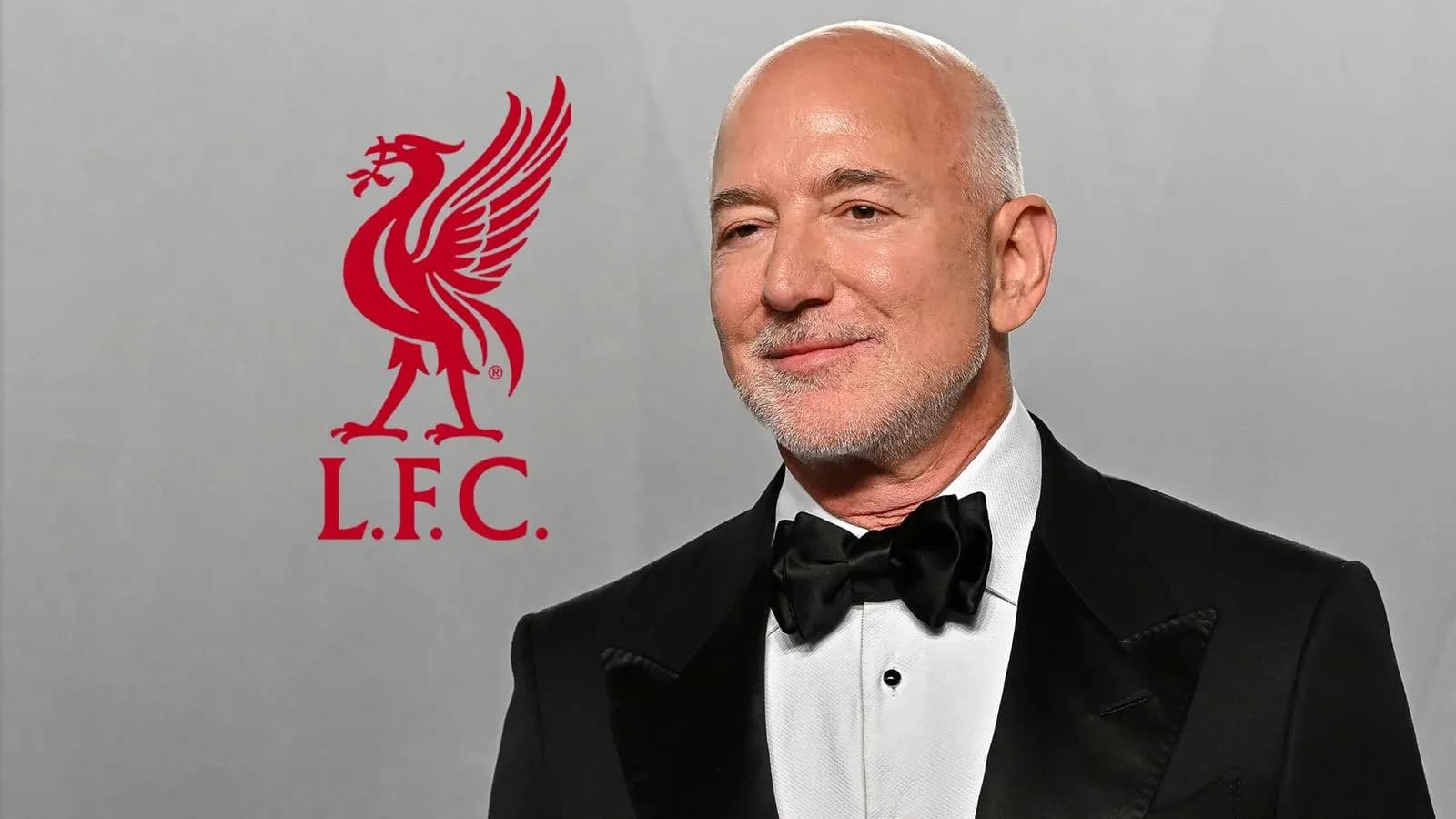
Jeff Bezos Joins Liverpool Consortium for Major Stake Acquisition
Liverpool are on the brink of welcoming one of the world’s richest men into their boardroom, with Jeff Bezos part of a heavyweight consortium closing in on a deal to buy roughly a one‑third stake in the club.
Fenway Sports Group (FSG), the club’s owners since 2010, are preparing to announce the transaction as early as this week, with one source suggesting the timing could slip into next week if final details drag on. Either way, Anfield is braced for a financial jolt of historic proportions.
At the heart of the move is a syndicate led by Amit Bhatia, the British Indian entrepreneur and former Queens Park Rangers shareholder. Bezos, the Amazon founder, and Eduardo Saverin, the Facebook co‑founder, are key figures in that group. Between them, they bring a level of personal wealth rarely seen in football ownership.
If completed, the deal is expected to involve a stake of just over 30 per cent and value Liverpool at around £4.4bn ($6bn). That figure would place this among the most lucrative transactions the sport has ever seen, and would underline the extraordinary financial journey FSG have made since buying the club for about £300m in 2010, when Liverpool were mired in financial trouble.
The numbers are staggering. Bezos alone is estimated by Forbes to be worth more than £207bn ($280bn). Saverin’s fortune is put at over £23.7bn ($32bn). Now they are poised to take a significant slice of a club whose global profile, commercial reach and on‑pitch pedigree make it one of the most coveted assets in world sport.
For FSG, who also own the Boston Red Sox, this is another powerful endorsement of their long-term strategy: restore the club’s competitiveness, expand its commercial power, and let the market do the rest. A valuation of £4.4bn would not just vindicate that model; it would supercharge expectations about what comes next.
Because this is not just another investor dropping into football. Bezos has never previously been seriously linked with a football deal. His looming arrival in a Liverpool consortium illustrates how elite sport has evolved into a fully fledged asset class for the ultra‑wealthy, a place where global brands, media rights and technology converge.
Saverin, 44, is no stranger to the game’s top table either. He was part of a consortium that tried, and failed, to buy Chelsea in 2022 after Roman Abramovich’s exit in the wake of Russia’s invasion of Ukraine. This time, the target is Liverpool – and the structure is different: a strategic minority stake rather than a full takeover.
The group is fronted by Bhatia, 46, who has an investment banking background and now runs AyBe Capital, a multi‑asset investment firm with interests across technology, media, real estate, consumer retail and health. He is married to Vanisha Mittal Bhatia, daughter of steel magnate Lakshmi Mittal, underlining the depth of financial muscle behind the project.
Last month, FSG confirmed the approach without giving much away.
“An investment consortium led, managed, and represented by Amit Bhatia has expressed interest in making a strategic minority investment in Liverpool Football Club,” a spokesperson said at the time.
Since then, both FSG and Bhatia’s camp have declined to comment on the timing or finer details, even as the deal has moved closer.
Inside the industry, the arrival of such a powerful trio has triggered an obvious question: is this the first step towards eventual full control? A minority stake, even one north of 30 per cent, leaves FSG firmly in charge in the short term. But investors of this scale rarely think small or short term, and their presence will inevitably sharpen speculation about the club’s longer‑term ownership picture.
Liverpool have already tested the minority‑investment route. In 2023, Dynasty Equity acquired a small stake that valued the club at more than £3.3bn ($4.5bn). This new deal would blow past that benchmark and push Liverpool into a financial stratosphere occupied by only a handful of clubs worldwide.
The move also reflects a broader trend: top-tier football clubs are no longer just trophies for billionaires, but complex media and data platforms with global fanbases, ripe for monetisation. For someone like Bezos, whose empire was built on scale, logistics and digital reach, Liverpool offer a ready‑made global audience and a powerful cultural brand.
For now, the football side of Anfield carries on as normal, with transfer windows, fixtures and title ambitions dominating the day‑to‑day noise. Above it all, though, a new financial era is forming in the background.
If and when the deal is signed, Liverpool will not just be competing with Europe’s elite on the pitch. They will be backed by a consortium that counts three of the world’s richest individuals among its key figures. The only real unknown is how long a minority stake will satisfy ambitions of that size.