John Barnes on Liverpool's Future: Focus on the Dressing Room
John Barnes has never been one to hide behind the easy answer. Faced with questions about Liverpool’s next steps under Arne Slot, the former Anfield winger cut straight through the transfer noise: stop looking at the market, start looking at the dressing room.
For Barnes, the temptation to spend big is a distraction, not a solution.
“The solution to the problem isn’t just signing players because we have players here,” he said, speaking to Betfred.
He pointed directly at the names already on the books: Alexander Isak, Hugo Ekitike and highly rated youngster Rio Ngumoha. If Liverpool keep recruiting in those areas, he asked, what happens to them?
“We don’t need to sign anybody as far as I’m concerned because we need to work with what we have. We need to get the balance right, we need to get the blend right,” he argued, pushing back against the idea that every tactical issue can be fixed by another big-name arrival.
The pressure of a new era, he suggested, has only fuelled a familiar reflex. Linked moves, rumours, shopping lists. Jarrod Bowen’s name has already been thrown into the mix following West Ham United’s relegation, but Barnes sees that as another example of the game’s obsession with the next signing rather than the next solution on the training ground.
“Unfortunately people believe the solution to any problem is just to keep signing more players,” he said.
For him, Slot’s real test lies not in how many players he brings through the door, but in how well he moulds what is already there. “I think what we have already is enough and I’m sure they can all stick together and work together.”
That theme of authority and identity ran straight into Barnes’ verdict on Mohamed Salah’s farewell and the tension around his recent comments.
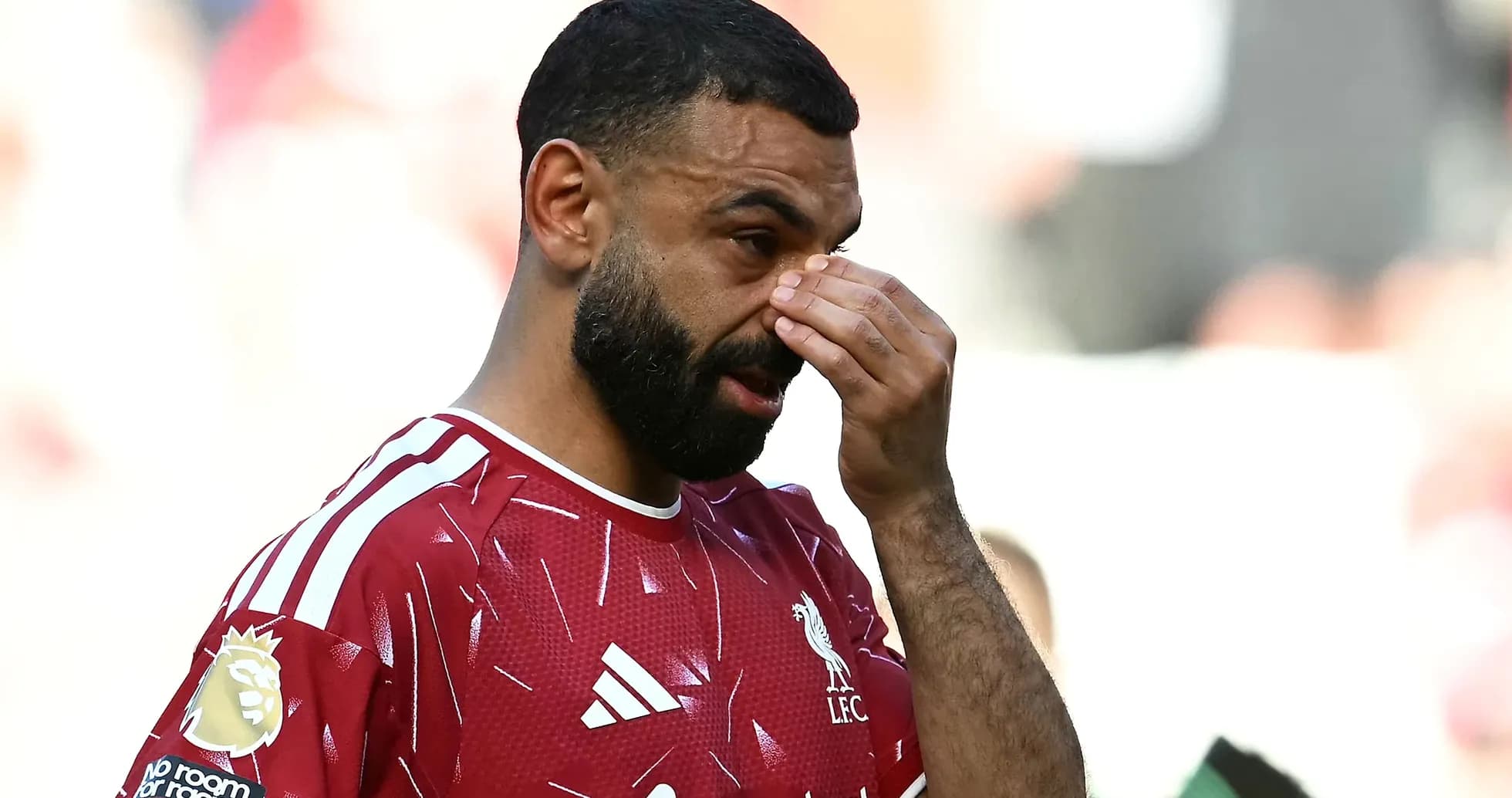
Slot’s decision to start Salah at Anfield, alongside Andy Robertson, for what is set to be the Egyptian’s last game at the stadium drew firm approval from Barnes. On the touchline, a new manager. On the pitch, one of the club’s modern greats bowing out.
“Absolutely, Slot did the right thing,” Barnes said. Salah is going, so the equation felt simple to him: give the forward his moment, give the supporters their goodbye, and allow one of Liverpool’s defining players of the era to leave on a high.
The performance and the occasion delivered that. The build-up, in Barnes’ eyes, did not.
“But I think Mo was wrong to do what he did and what he said,” he added, turning to the Egyptian’s remarks about Liverpool’s style and the legacy of Jurgen Klopp.
Barnes took issue with the idea that any Liverpool manager must effectively pledge allegiance to Klopp’s “heavy metal football” as a non-negotiable principle.
“If you analyse what Mo said, he’s saying that any Liverpool manager needs to be subservient to the way Jurgen Klopp played as a non-negotiable, which is rubbish,” Barnes said, bluntly.
For him, the job description at Anfield is clear: the manager leads, the manager defines the football.
“Any manager at Liverpool needs to say they’re doing it their way, not Jurgen’s way,” he insisted. To present Klopp’s approach as sacred ground, untouchable and compulsory, crossed a line in Barnes’ view.
“For Mo to say that ‘heavy metal football’ is a non-negotiable is crazy and ridiculous, so he was wrong to say it.”
Slot, he felt, handled the situation with exactly the sort of calm authority Liverpool now require. No public feud, no grand statement. Just a team sheet that included Salah, a performance that gave Anfield its farewell, and a quiet assertion of control.
“I think Arne Slot was the bigger man to give Mo his send-off for being a great servant,” Barnes said.
One era has ended, another has begun, and the lines are already being drawn: between spending and coaching, between past and present, between a club that worshipped Klopp’s chaos and a manager determined to write his own script.