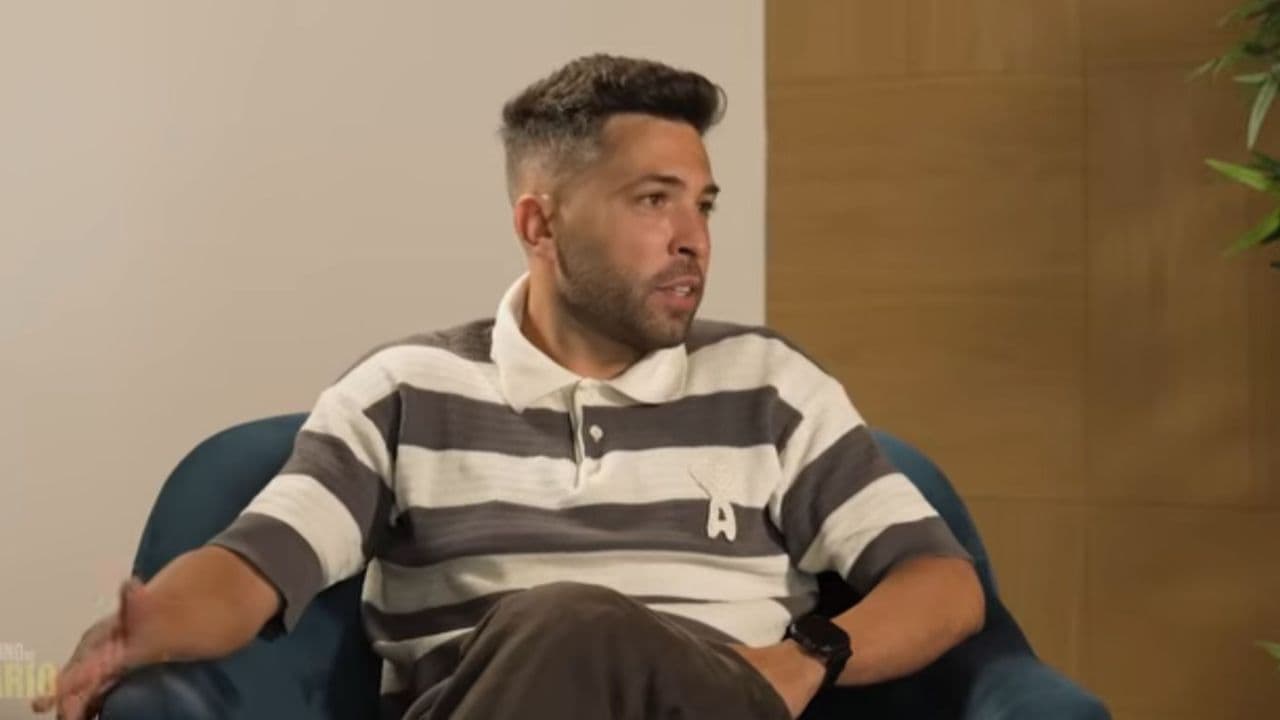
Jordi Alba Reflects on Barcelona's Triumphs and Painful Farewell
Jordi Alba has lived the full Barcelona experience – from Champions League parades to nights that still wake him up. On Mario Suarez’s podcast, El Camino de Mario, the former Barça left-back opened the door to all of it: the coaches who shaped him, the trophies that defined him, and the exit that still stings.
Emery, the conversion and a career reborn
Alba did not grow up dreaming of overlapping from deep. He started higher up the pitch, a winger with pace and aggression, until one coach saw something different.
“I owe my career to Unai Emery,” he said, without dressing it up.
At Valencia, Emery dragged him back down the flank and rebuilt him as a full-back. Alba admitted he hated it at first. The role felt unnatural, the demands brutal. But Emery insisted, pushed, refined.
“Initially, I didn't take to the full-back role particularly well, but Emery is world-class. He has a knack for extracting the absolute best from his players at every club he leads.”
That positional switch turned Alba into one of the best attacking full-backs of his generation, a cornerstone for club and country. From there, the path to Camp Nou opened.
“It was stolen”: the 2014 title that never was
Not every memory in that stadium is bathed in confetti.
Asked about the 2014 La Liga title race – the season when Atletico Madrid came to Camp Nou on the final day and walked out as champions – Alba’s response was instant and raw.
“It was stolen!” he snapped. “Mateu Lahoz was the official that day, wasn't he? My word…”
Atletico’s draw that afternoon sealed the title and left Barça staring at a trophy they felt should have been theirs. Years later, Alba’s frustration has not cooled. That day still sits apart, filed not under disappointment but injustice.
Luis Enrique, the genius who made them “untouchable”
If that campaign hurt, 2015 healed almost everything.
Alba’s voice changed when Luis Enrique’s name came up. The respect was absolute.
“For me, Luis Enrique is the standout,” he said. “He ensures every player is pulling in the same direction, even those on the fringes. You feel a genuine sense of joy for your teammates and the collective. Not many managers can foster that environment; in that sense, he's a genius.”
Under Luis Enrique, Barcelona hit a level that even within that dressing room felt unreal. The treble year sits on its own shelf in Alba’s mind.
“2015, when we secured the Champions League under Luis Enrique, was the only year I felt we were truly untouchable,” he recalled. Before the final, he told his agents: “Relax, we're going to win.” There was no bravado in it, he insisted. “It wasn't arrogance; it was pure conviction. We were invincible.”
That conviction proved right in Berlin. A team at its peak, a full-back at full throttle, and a coach who had convinced everyone to run for each other.
Xavi’s storm and a dressing room under control
The tone shifted again when Alba moved on to Xavi. The context was different, the club unrecognisable from the superclub that had dominated Europe.
“Xavi Hernandez inherited the reins during a very turbulent period,” Alba said. Financial chaos, institutional crisis, a squad in transition – Xavi walked into all of it and was asked to restore order and identity at once.
“He stepped up to the plate and did a fantastic job. We secured La Liga and the Supercopa against Real Madrid, and he managed the dressing room expertly during my time there.”
The trophies mattered. So did the feeling inside the dressing room, something Alba kept coming back to. For him, the measure of a coach is as much about the atmosphere he builds as the medals he wins.
Anfield, 2019: the night that still hurts
But even in an era of titles, there are scars. Anfield is one of them.
Barcelona arrived in Liverpool in 2019 with a 3–0 first-leg lead and one foot in the Champions League final. They left shattered, beaten 4–0 in one of the competition’s most famous comebacks. Alba still carries that night.
“I made a mistake with a header back for the opening goal,” he admitted. A simple action, a misjudged moment, and suddenly Liverpool had a lifeline. The avalanche followed.
“It was a golden opportunity to reach the final, and I'm certain we would have won it.”
Rumours later painted a picture of a broken player at half-time, in tears in the dressing room. Alba pushed back.
“People claimed I was in tears at half-time, but that wasn't the case. I just felt physically sick.”
It was not just a defeat. It was the sense of something slipping away that would not come back.
A brutal goodbye: “With 24 hours left…”
For all the trophies and all the nights under the Camp Nou lights, Alba’s exit from Barcelona came with a cold edge.
“With only 24 hours left in the transfer window, they informed me I had to go on loan to Inter Miami,” he revealed. No slow farewell, no long goodbye. Just a blunt message, delivered late.
“Without any prior warning, and with my children already settled in school... it was a deeply difficult moment.”
In the end, he refused to be pushed into a move he did not control. “I eventually terminated my Barcelona contract without having another move lined up.”
He walked away on his terms, even if the timing left him exposed. Then football’s chaos gave way to something more relaxed: a holiday with Sergio Busquets.
They went to Ibiza. Busquets had already agreed to join Inter Miami. There, Alba met club owner Jorge Mas.
“In Ibiza, I met with Jorge Mas, the club's owner, and he quickly sold me on the project,” Alba said. At that point, it was just an intriguing new chapter in MLS. “At that stage, we still had no idea Messi was joining too.”
The reunion that would light up Miami came later. Alba’s decision was made on something simpler: trust in the project, and in the people already there.
The pay-cut story and a dressing room under fire
One final subject still clearly bothers him: the way the Barça captains were portrayed during the club’s financial collapse and the COVID-19 crisis.
“The captains deferred our salaries and waived earnings of our own volition,” he said. Those inside the dressing room saw it as an act of responsibility, a way to help the club breathe.
What followed left a bitter taste.
“A campaign of misinformation was leaked to tarnish our reputations. It felt as though the captains were being scapegoated for the club's financial troubles.”
In Alba’s telling, the players stepped up, and then watched as their names were dragged through the mud to cover deeper structural failures.
From Emery’s tactical gamble to Luis Enrique’s invincibles, from Anfield to Miami, Jordi Alba’s story runs straight through a decade of Barcelona’s modern history. The trophies are on the record. The bruises, he has now laid bare.