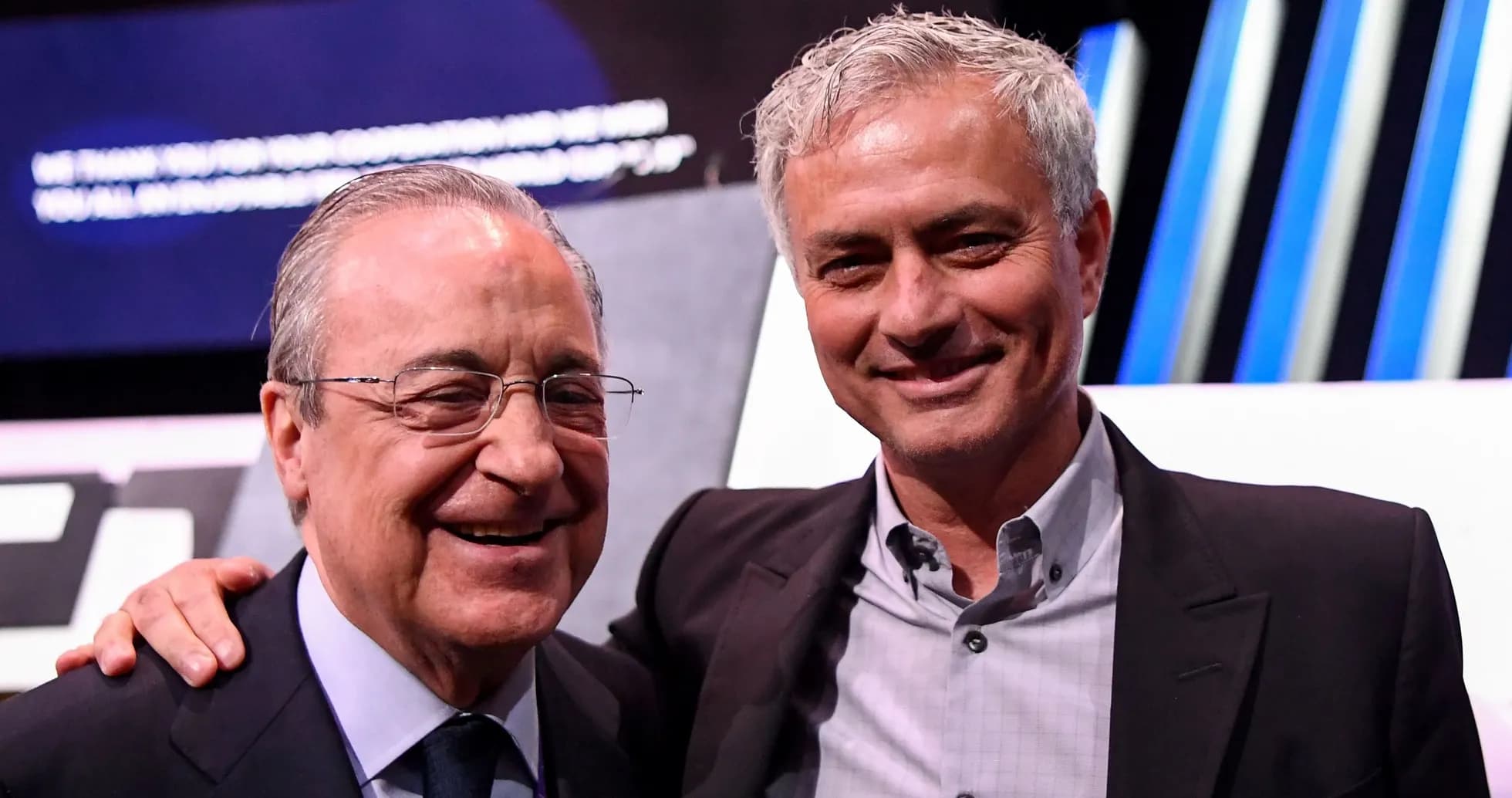
José Mourinho's Potential Return to Real Madrid: A Dramatic Second Act
José Mourinho and Real Madrid. The sequel nobody thought they’d dare write again is suddenly on the table.
According to Esdiario and journalist Sergio Valentín, the “Special One” has already spent close to an hour on a video call with Florentino Pérez, exploring a sensational return to the Bernabéu dugout. On the other end of the line, quietly watching, sat Jorge Mendes. The super-agent did not lead the talks this time; he observed as two powerful figures revisited an old, volatile alliance.
The timing is no coincidence. Pressure on the current coaching staff has reached breaking point after a deeply underwhelming season. Results have dipped, doubts have multiplied, and the sense of internal stability has frayed. When Madrid begins to wobble, Pérez traditionally reaches for big personalities and bigger solutions. Few come larger than Mourinho.
Yet this is not 2010. Mourinho is no longer the hungry disruptor arriving from Inter; he is now the coach of Benfica, tied to a contract until 2027 and armed with the leverage of experience and scars from his first spell in Spain. If he comes back, it will be on his terms.
And those terms are uncompromising.
The reports are clear: Mourinho has not pushed for a higher salary or an extravagant financial package. Instead, he has demanded a structural revolution. He wants absolute sporting control. He wants the medical department reshaped. He wants full disciplinary authority over the dressing room.
In short, he wants to run Real Madrid his way.
These demands cut straight to the heart of what went wrong the first time. Between 2010 and 2013, Mourinho delivered trophies — La Liga, the Copa del Rey, the Supercopa de España — and, crucially, he shattered Barcelona’s domestic dominance during one of the most ferocious eras in Spanish football. His Madrid were aggressive, relentless, and ruthless. A team built to fight.
But the end was messy. The dressing room split. Public clashes with club icons left scars. The politics of the Bernabéu, always swirling, eventually suffocated the project. Mourinho left as a champion and a lightning rod, his legacy complicated but unforgettable.
That duality still defines how the fanbase sees him today.
For many Madridistas, he is the coach who rearmed the club with a killer instinct, who turned a talented squad into a snarling, title-winning machine. In a moment when the current side is accused of lacking edge and consistency, his tactical discipline and psychological steel feel like exactly what the club is missing.
For others, the memory is darker. They remember the fractures in the dressing room, the public rows, the sense of a club constantly on the brink of combustion. To them, bringing Mourinho back is not a bold step into the future, but a risky return to a past that ended in civil war.
That is the calculation now facing Florentino Pérez.
Mourinho has not closed the door. Far from it. He has left the path open, but only if his conditions are met. This is not a nostalgic homecoming; it is a negotiation over power. Pérez must decide whether to hand a manager unprecedented control at a club where the president has traditionally ruled every corner.
Other names sit on the shortlist. Unai Emery, among them, has been linked with the job and would represent a very different kind of appointment: tactically astute, modern, and far less explosive. The contrast could not be sharper.
Pérez is expected to deliver his answer to Mourinho next week. Between now and then, Madrid will weigh not just a coach, but an identity. Do they entrust the project to a man who demands to reshape the institution from the inside, or do they opt for a steadier, more conventional path?
If the president says yes and grants Mourinho the control he craves, the sport will brace itself. Because what follows would not be a simple reunion.
It would be one of the most dramatic second acts football has ever seen.