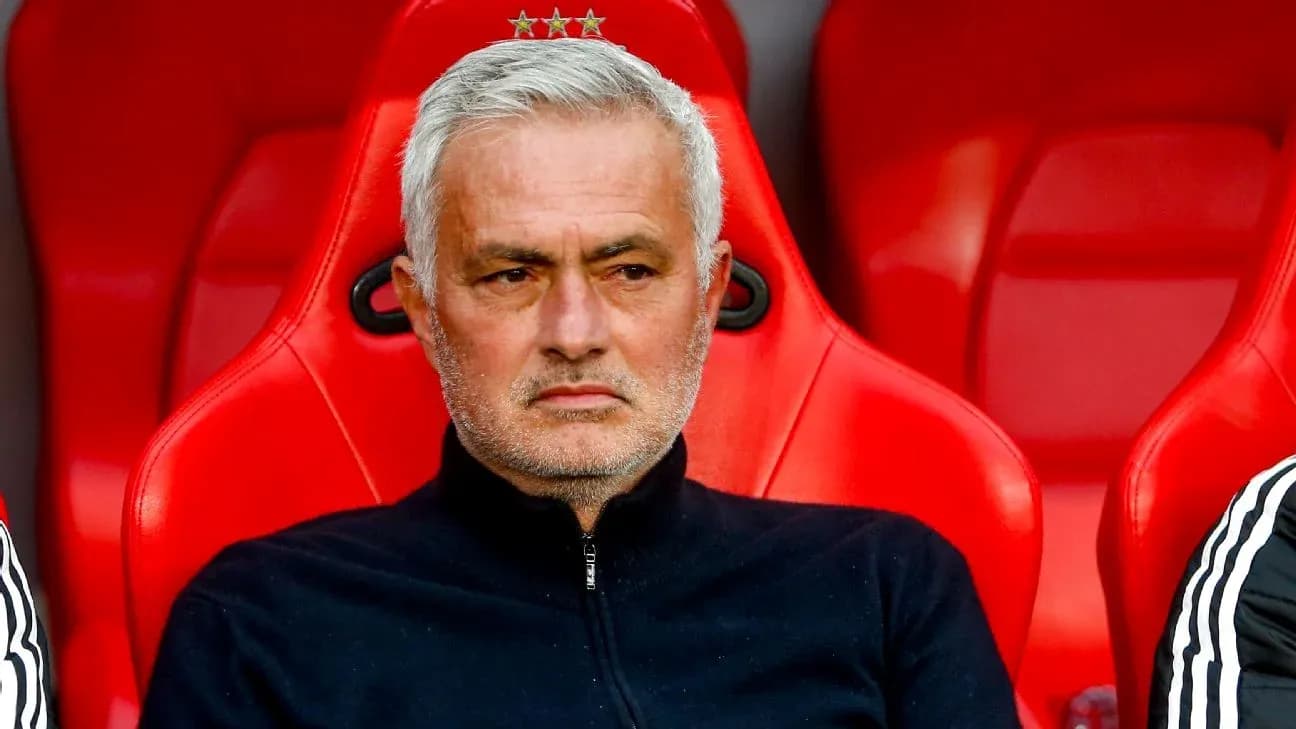
José Mourinho stood in front of the cameras and did what he rarely does in public: he admitted defeat. Not in the dressing room. Not in his own future. In the title race.
A 1-1 draw with Casa Pia on Monday night left Benfica unbeaten in the Primeira Liga, but seven points behind leaders FC Porto with six games to go. For Mourinho, that gap is now a wall.
“You say we've dropped two points; I'd say we've lost our last chance to fight for the title,” he said, the words landing with the weight of a verdict rather than a complaint.
Title hopes fade, pressure shifts
The numbers are brutal. Porto out in front. Sporting CP in second, two points ahead of Benfica and with a game in hand. Benfica, proud, unbeaten, and yet staring at a table that tells them the big prize is slipping away.
“We're no longer in control of our own destiny when it comes to finishing second,” Mourinho admitted. “Even if we won every game – which would be extremely difficult, but possible – Sporting would also have to drop two points. But the aim is to fight for this.”
The pressure that once framed a title charge now narrows into a scrap for second place and Champions League security. That is the “achievable goal,” as Mourinho put it, and even that depends on others stumbling.
The frustration stems from nights like this. At home, against a team Benfica should beat, with the stakes laid out in bold. Mourinho knew it before kick-off. He reminded his players at half-time. The response never truly matched the warning.
Mourinho’s anger at his own players
He did not hide his anger.
“I wasn't happy with the first half,” he said. “At halftime, we talked about what we needed to change tactically, and I tried to make them understand, because there are some who seem to have lost touch with football and forget the realities; I did a bit of maths for them.
‘If we didn't win this game, the title race would be over.’”
That line was not a throwaway remark. It was the central message of his team talk. The players heard it. They still failed to deliver the win he told them was non-negotiable.
Mourinho’s irritation runs deeper than one result. It touches selection, mentality, and the balance between sporting ambition and boardroom reality.
“I have to think carefully, as a whole, because, at this moment, I wanted to stop playing some players, but there are higher values at stake,” he said. “They are assets, even if I didn't want to continue with some of them.”
It is a classic Mourinho tension: the coach who wants ruthless decisions on form and attitude, and the club that must also protect market value. He did not name names, but the message was sharp. Some players are on the pitch because of what they represent on the balance sheet, not because they convince him on the touchline.
“I would like to continue at Benfica”
All of this unfolds with speculation swirling about his own future. Mourinho’s contract runs until June 2027, but it includes a clause that allows him to leave this summer. His name never stays out of the rumour mill for long, and links have already surfaced with clubs watching Benfica’s situation closely.
He shut that down with the kind of clarity that leaves no room for spin.
“Jorge Mendes is my agent, but I am in charge of my own decision. My decision is that I would like to continue at Benfica.”
No drama. No tease. Just a firm statement that, even with the title slipping away and internal frustrations simmering, he wants to stay and fight.
Mourinho returned to Portuguese football in September after 21 years abroad, a homecoming layered with expectation and nostalgia. To leave after one full season, via a clause, would have felt like an admission that the project had broken before it truly started. His words suggest the opposite: he sees a job unfinished.
An unbeaten team with nothing to show?
The irony of Benfica’s season sits in plain sight. The only unbeaten team in the league, yet staring at the possibility of finishing third. Unbeaten, but not unforgiving enough. Too many draws. Too many flat halves like the one against Casa Pia.
Mourinho framed Monday’s result not as a blip, but as a turning point. The night the title dream died, the night the margins for second place narrowed.
At the sporting level, he insists, the mission is now clear: chase down Sporting, squeeze every point out of the final six games, and hope. Off the pitch, the decisions look more complicated – who stays, who goes, and how a squad he openly questions can be reshaped around a coach who has already laid down his stance.
He is staying. The title is not. How Benfica respond to that contrast will define far more than the final league table.