Why Jürgen Klopp Could Ignite Germany’s Football Comeback After 2026 Setback
The German national team showed promise at EURO 2024 on home soil, narrowly missing a semifinal spot due to a controversial handball incident involving Marc Cucurella. Yet, after years of disappointing World Cup exits in 2018 and 2022, where Germany failed to progress past the group stages, the 2026 tournament saw another early departure. This outcome came despite renewed hope under Julian Nagelsmann’s leadership following Joachim Löw’s tenure.
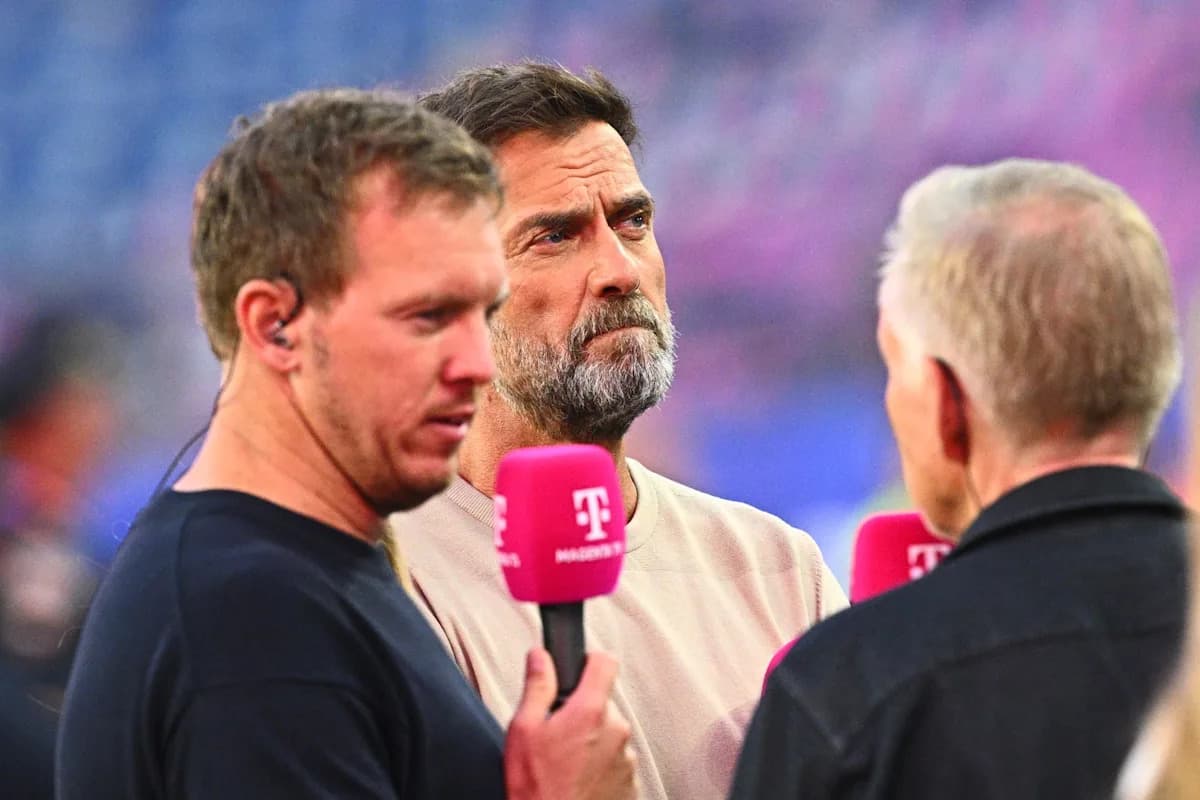
Following this setback, change is underway. Jürgen Klopp is poised to take over as Germany’s head coach after Nagelsmann was allowed to resign post-World Cup. Klopp will finish his punditry work with MagentaTV before activating a release clause from Red Bull GmbH, where he serves as head of global football. His appointment excites many Germans who have long hoped for him to lead the national squad and restore its former glory reminiscent of the 2014 World Cup triumph in Brazil.
Klopp’s Proven Track Record
Klopp has achieved success across several top leagues: from promoting Mainz to the Bundesliga, winning titles with Borussia Dortmund, to breaking a 30-year Premier League drought with Liverpool during the 2019/20 season. His collection of trophies includes Bundesliga titles, DFB-Pokals, Champions League, Premier League, FA Cup, and more. While Nagelsmann earned notable honors, Klopp’s decorated career stands out for its breadth and consistency at the highest levels of club football.
Internationally, managing a national team presents unique challenges. Klopp’s extensive experience in major club finals, both victories and defeats, equips him with insights few managers possess. Germany hasn’t had someone with such an illustrious club record step into the national team role in quite some time.
Strong Existing Ties with the DFB
Klopp’s connection to German football and his respected reputation among key figures in the Deutscher Fußball-Bund (DFB) should ease his transition. He plans to bring assistants Peter Krawietz and Zsolt Löw, offering continuity and familiarity. Relationships with officials like Bernd Neuendorf, Hans-Joachim Watzke, and Rudi Völler—who recently confirmed he’ll remain DFB sporting director through 2028—suggest Klopp’s appointment is well-supported.
This rapport means Klopp can navigate pressures and expectations more smoothly, which might prove vital during Germany’s rebuilding phase ahead of EURO 2028 and the 2030 World Cup.
Authority to Reshape German Football
Reports indicate Klopp will receive broad authority to overhaul the national team structure, including tactical changes and revamping youth development akin to the "Das Reboot" era of the early 2000s. Such sweeping control is rare but aligns with Klopp’s high-risk, high-reward style often described as “heavy metal” football.
His successes at Mainz, Dortmund, and Liverpool came with various degrees of freedom, yet even limited powers yielded lasting legacies. Given the chance to apply his vision fully to Germany, Klopp’s influence could reshape squad selection, tactics, man-management, and youth integration. Three successive World Cup failures are unacceptable, and this mandate reflects that urgency.
Balancing Experience and Youth
Klopp’s ability to get the best out of players at different career stages is well documented. At Dortmund, he nurtured young talents like Robert Lewandowski, Marco Reus, and İlkay Gündoğan. Meanwhile, at Liverpool, he managed veterans such as James Milner alongside emerging stars like Trent Alexander-Arnold.
Germany’s squad debates often revolve around whether it is too young, too old, or lacking the right mix of experience and fresh talent. Klopp’s history suggests he will strike a balance, possibly giving chances to promising players like Said El Mala or recalling seasoned names such as Robert Andrich or Niclas Füllkrug. His track record hints at a squad capable of blending Bundesliga and Champions League winners with rising stars effectively.