Kubo Takefusa's Absence: Japan Faces Brazil with Depth and Determination
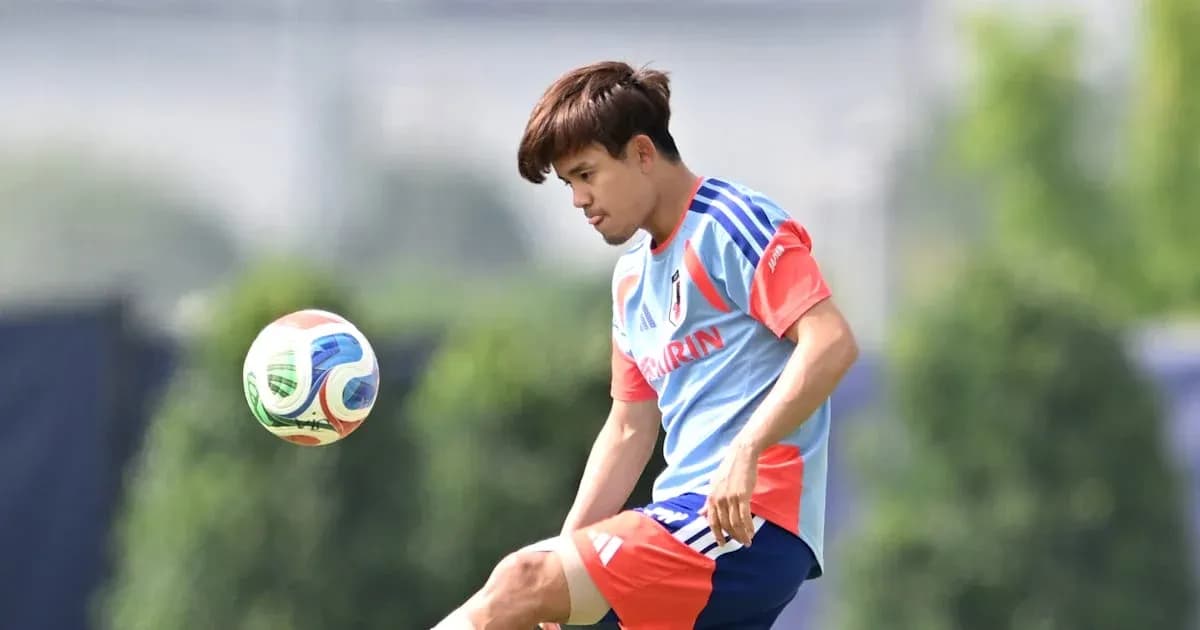
The tape on Kubo Takefusa’s left knee tells one story. His two words tell another.
“I’m good.”
On the eve of Japan’s FIFA World Cup round of 32 showdown with Brazil, the Real Sociedad playmaker offered that brief update, a defiant shrug in sentence form. The reality is harsher. Since going down in the tournament-opening draw with the Netherlands, Kubo has done little more than rehab and solo running. No real football. Heavy strapping. A tournament on pause.
And now, confirmation: he will not play against Brazil.
Japan coach Moriyasu Hajime made it clear on Sunday, 28 June, at his pre-match press conference. No miracle return, no late twist.
“I’m hoping for a speedy recovery and he’s doing everything he can to pick up his conditioning,” Moriyasu said.
For a country preparing to stay up until 1 a.m. to watch, the question lingers in living rooms and bars across Japan: what if?
A star sidelined, a nation restless
There is no disguising it. Japan are a better team with Kubo on the pitch. At 25, he brings flair, imagination and a left foot that can unpick defences in ways few of his team-mates can match. With Mitoma Kaoru, captain Endo Wataru and Minamino Takumi already ruled out through injury, Kubo had begun to grow into something more than a creator. He was becoming a voice, a reference point, a leader in a camp stripped of several of its headline names.
His influence stretched beyond the white lines: a presence in training, a standard-setter in meetings, a player others gravitated towards. For a squad with big ambitions, he was one of the faces of their belief.
Now, Japan must go into their biggest test of the tournament without him.
Depth as a weapon, not a slogan
Yet this is not a team built on one man’s magic. Moriyasu’s Japan have leaned on something sturdier: depth.
The numbers tell the story. Of his 26-man squad, the coach has used all but three players so far, and two of those are backup goalkeepers. That isn’t rotation for its own sake; it’s a statement that the level doesn’t collapse when he turns to his bench.
The “next man up” line often sounds like a convenient cliché in sport, a slogan to paper over cracks. In this Japan side, it has become an identity. Roles are shared, responsibility is spread, and the trust in the wider group is genuine.
Kubo’s absence hurts. It does not have to break them.
Fearless talk before a giant
The opponent, of course, is Brazil. The name alone once cast a long shadow over Japanese football.
When the J.League launched 33 years ago, Brazil were the gold standard. Japanese players grew up idolising the Selecao and Joga Bonito. Brazilian imports shaped the domestic league. Respect often bordered on reverence.
Listen to this Japan squad, and you hear a different tone.
Asked which teams he considered the strongest at this World Cup, Wolfsburg striker Shiogai Kento pointed to France and Argentina. Brazil did not make his shortlist.
“You don’t really hear about Brazil lately,” he said.
It was a striking line, the sort of comment that would have been unthinkable in 1993. Back then, Brazil were the dream, the unreachable model. Now, they are just another giant to be cut down.
Shiogai did not stop there. Neymar has tormented Japan in the past, scoring nine goals in five previous meetings. The numbers underline the threat. The forward’s response underlined Japan’s mindset.
“That’s Neymar of the old. I think we’re OK right now.”
Respect, yes. Intimidation, no.
A different Japan, a familiar question
This is where Japan stand on the eve of a defining night: without Kubo, without several other stars, yet without fear.
The country that once looked up at Brazil now looks them straight in the eye. The bold target has been set publicly – not just to beat Brazil, but to win the World Cup. It is an ambition that invites scrutiny, even ridicule, if they fall short. They know that. They lean into it.
Kubo will watch with the rest of Japan, his knee bound, his influence reduced to words and gestures from the sidelines. His team-mates will walk out knowing they are missing a touch of genius, but also knowing this campaign was never built on one player alone.
The belief has shifted. The hierarchy has blurred. The gap that felt unbridgeable three decades ago no longer looks so vast.
The only thing left to find out now is whether the result has changed with it.