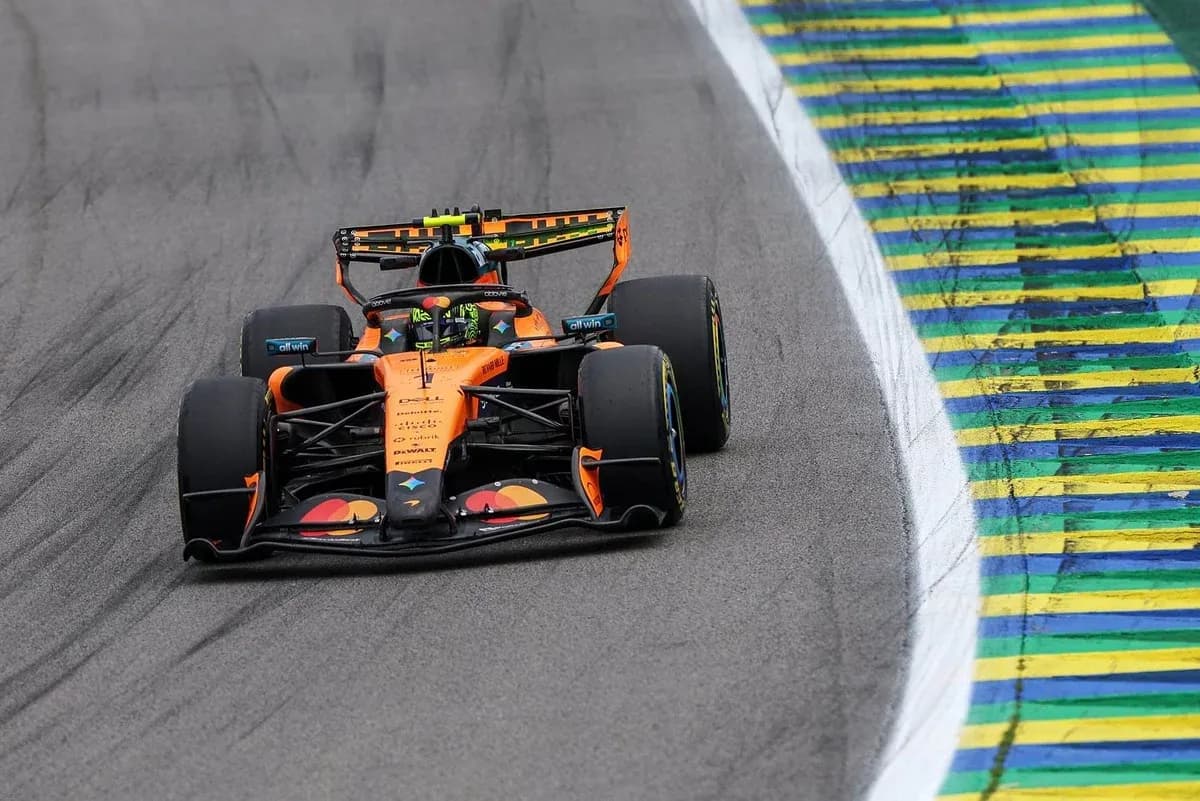
Lando Norris Sets Early Pace in Brazilian Grand Prix Practice
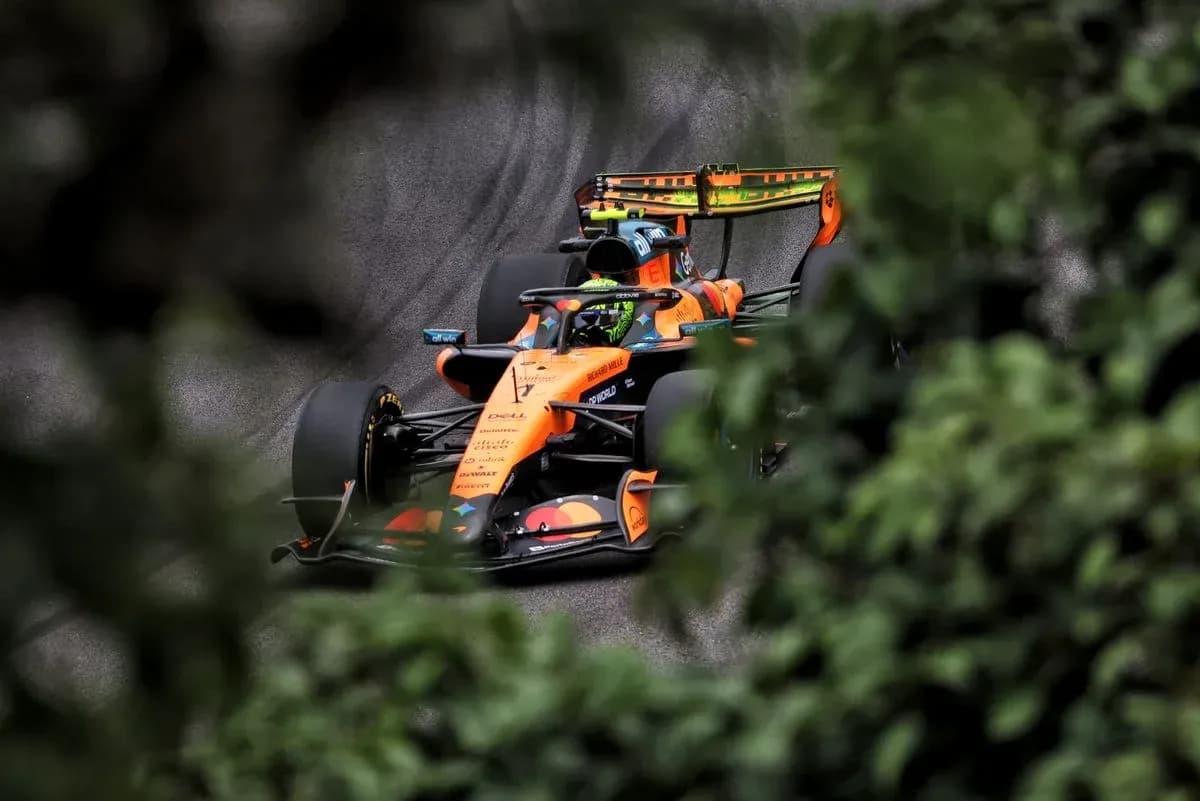
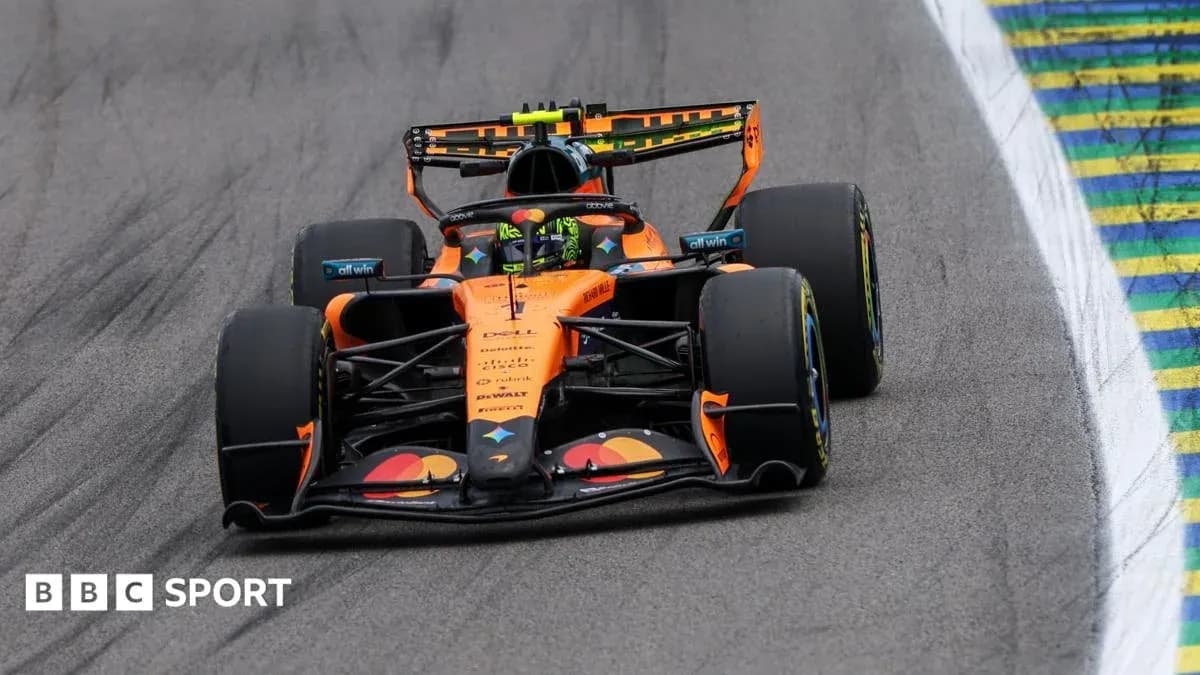
Lando Norris set the early benchmark at Interlagos, topping first practice for the Brazilian Grand Prix and underlining just how tight this four-team era has become.
The McLaren driver fired in a 1m11.717s on soft tyres to edge Mercedes prodigy Kimi Antonelli by 0.082s, with Max Verstappen and Lewis Hamilton lining up behind. Four drivers from four different teams, covered by barely three tenths. The gap at the front is a whisper now, not a gulf.
Verstappen, though, sounded anything but content.
Norris sharp, Verstappen seething
Norris looked immediately at ease on the short, flowing lap, stringing together a clean run on the soft compound while others searched for balance and grip. McLaren’s long-run pace will come later in the weekend, but as an opening statement, this was crisp and controlled.
Antonelli’s response for Mercedes was eye-catching in its own right. Still at the very start of his F1 education, he hustled the W15 to within a blink of Norris’s time, suggesting Mercedes have brought a car that can live in the same postcode as McLaren, Red Bull and Ferrari over a single lap.
Verstappen, third and 0.236s off Norris, spent much of the session fighting the RB22 rather than refining it. The Dutchman’s radio messages were laced with frustration as a familiar problem resurfaced.
“Unacceptable, man. Unacceptable, these downshifts. What the ****?” he snapped, as the gearbox once again jarred his rhythm on corner entry. Then another complaint: “There’s something wrong with my steering. It’s getting harder and harder to turn the wheel.”
The timesheet said Red Bull were in the game. The tone of Verstappen’s voice suggested he didn’t believe it yet.
Hamilton, in the Ferrari, slotted into fourth, three tenths away from Norris. It was a solid, if unspectacular, start for the seven-time champion, who kept his lap tidy while the team focused on understanding tyre behaviour on a track that punishes mistakes and overheats rubber in a heartbeat.
George Russell backed up Antonelli’s pace in fifth, with Isack Hadjar impressively sixth for Red Bull, both within half a second of Norris and giving their teams a strong data spread at the sharp end.
Rookies everywhere, and a home debut under the spotlight
If the front of the field looked familiar, the rest of the order felt like a glimpse into F1’s future.
Turn 1 became the great equaliser. Veterans and rookies alike locked up heavily into the Senna S, the downhill braking zone catching out even the most experienced. For some of the newcomers, it was a brutal first lesson in just how quickly Interlagos bites.
The most scrutinised of the rookies was Rafael Câmara. The Brazilian, already confirmed as Haas’s 2027 race driver, stepped into the car early at his home grand prix after Esteban Ocon’s fallout with the team. It was a big stage and a steep learning curve.
Câmara ended the session 18th, almost nine tenths slower than Haas team-mate Oliver Bearman. On paper, that margin looks hefty. In reality, a clean, largely incident-free session with 30 laps banked was exactly what Haas needed from him. The raw speed can wait; mileage cannot.
One debutant did manage to outgun the established name in the other car. Alpine’s Gabriele Minì delivered one of the standout performances of FP1, taking seventh with a 1m12.569s. He edged Franco Colapinto by 0.085s and parked himself firmly inside the top 10, a composed drive that will not have gone unnoticed in the Alpine garage.
No other rookie test driver cracked the top 10, but several quietly ticked important boxes.
McLaren’s Leonardo Fornaroli finished 11th, 1.116s down on Norris, but close enough to the midfield to show he belonged on the same circuit, if not yet in the same conversation. Williams prospect Luke Browning was 17th, just 0.080s shy of Alex Albon, who had his own session compromised by a mechanical issue.
At Cadillac, Colton Herta ended up 20th, 2.558s off Norris and 0.904s slower than team-mate Valtteri Bottas. On the surface, the gap was large. The story, though, was different: Herta’s run was largely trouble-free aside from a massive lock-up into Turn 1 that shredded a set of tyres but spared the car. That clean mileage should be enough to earn him the final point he needs for an FIA superlicence, clearing the last formal hurdle for a potential 2027 F1 seat if Cadillac choose to promote him.
Trouble at the back for Ferrari and Audi
Not everyone enjoyed such a productive hour.
Ferrari’s Dino Beganovic and Audi’s Freddie Slater propped up the classification after technical issues wrecked their plans. Both were denied representative laps on the soft tyre and saw their mileage slashed.
“The car has just switched off,” reported Slater over the radio, his stoppage triggering a red flag just 12 minutes into the session. He managed only seven laps. Beganovic completed 11. Their times – 21st and 22nd, on the hard compound – told you nothing about their potential and everything about their misfortune.
Ahead of them, the midfield formed its usual dense cluster. Gabriel Bortoleto put Audi eighth, Colapinto ninth for Alpine, and Liam Lawson rounded out the top 10 for Racing Bulls. Fernando Alonso could do no better than 13th for Aston Martin, with Lance Stroll 19th, as the team searched for balance on a circuit that has rarely been kind to green cars in recent years.
By the chequered flag, the picture was clear enough. Norris and McLaren had drawn first blood. Mercedes, Red Bull and Ferrari were close enough to feel encouraged, but each carried its own question mark – Antonelli’s inexperience, Verstappen’s fury at the car beneath him, Hamilton’s need for a sharper edge.
The rookies, scattered across the order, left their fingerprints on the session. Some with lap times, some with lock-ups, some with nothing more than a handful of laps and a red flag.
Interlagos doesn’t hand out answers on a Friday. It just sets the stage. And with four teams within touching distance and a generation of newcomers already jostling for space, the weekend now threatens to turn from a straight fight into a street brawl.