Lando Norris Triumphs at Interlagos Amidst Chaos
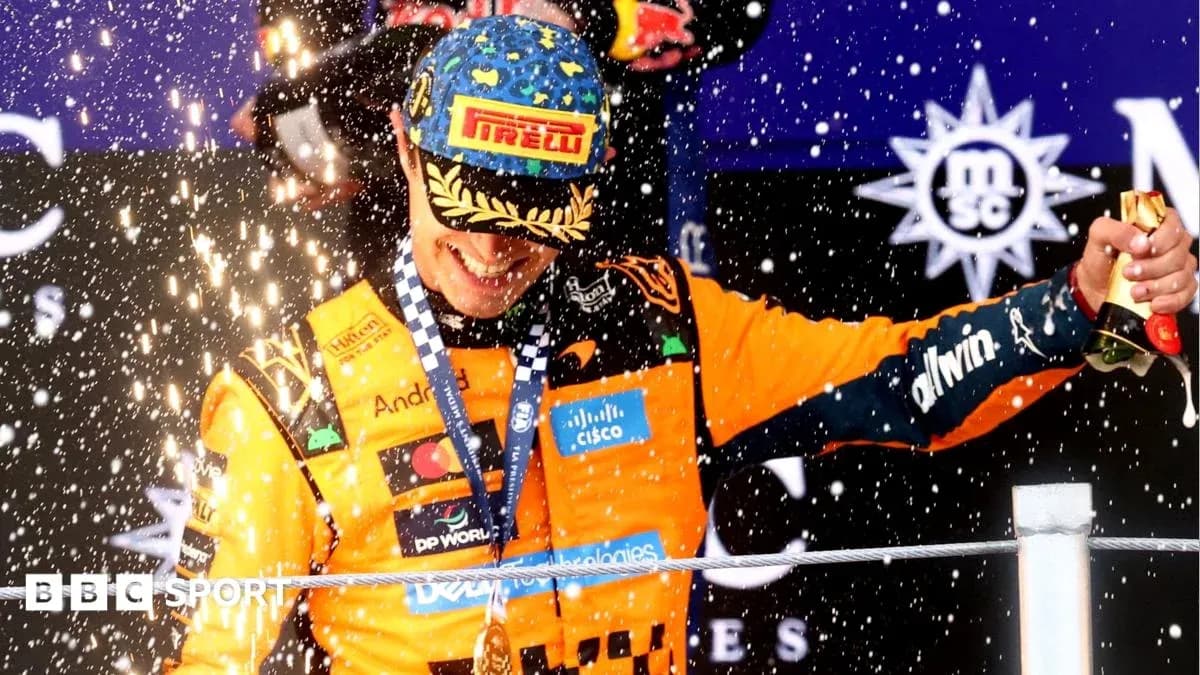
Lando Norris left Interlagos with a shattered champagne bottle, a singed hairstyle and one of the drives of his career.
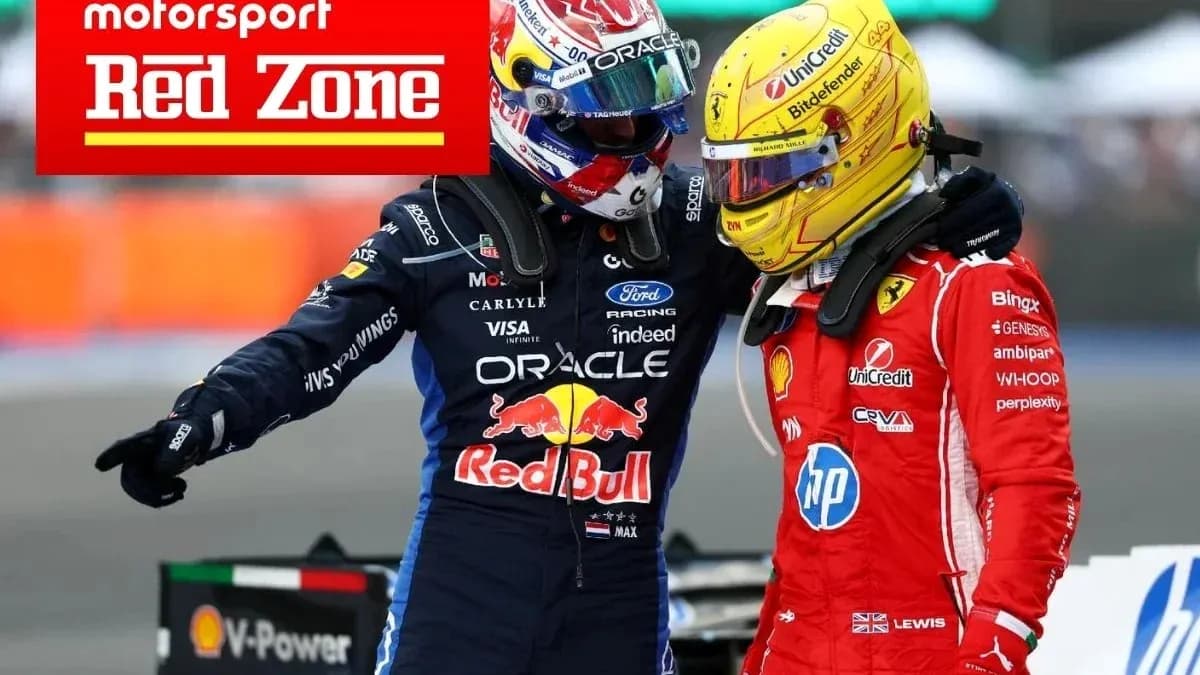
On the Sao Paulo podium, he misjudged his trademark celebration – leaping off the top step to crack the bottle on the floor – and smashed it clean in two. As he stepped back, grinning and holding the broken top aloft, he backed his head into the plume of fireworks erupting from the front of the rostrum. Max Verstappen and Isack Hadjar showed no mercy, soaking him with their own bottles.
It was chaotic, messy, very Lando. The race that came before it was anything but.
“This was one of the hardest races of the year in terms of focus,” Norris said later, “and therefore one of the best.” It looked that way from the outside, too.
A classic Interlagos test
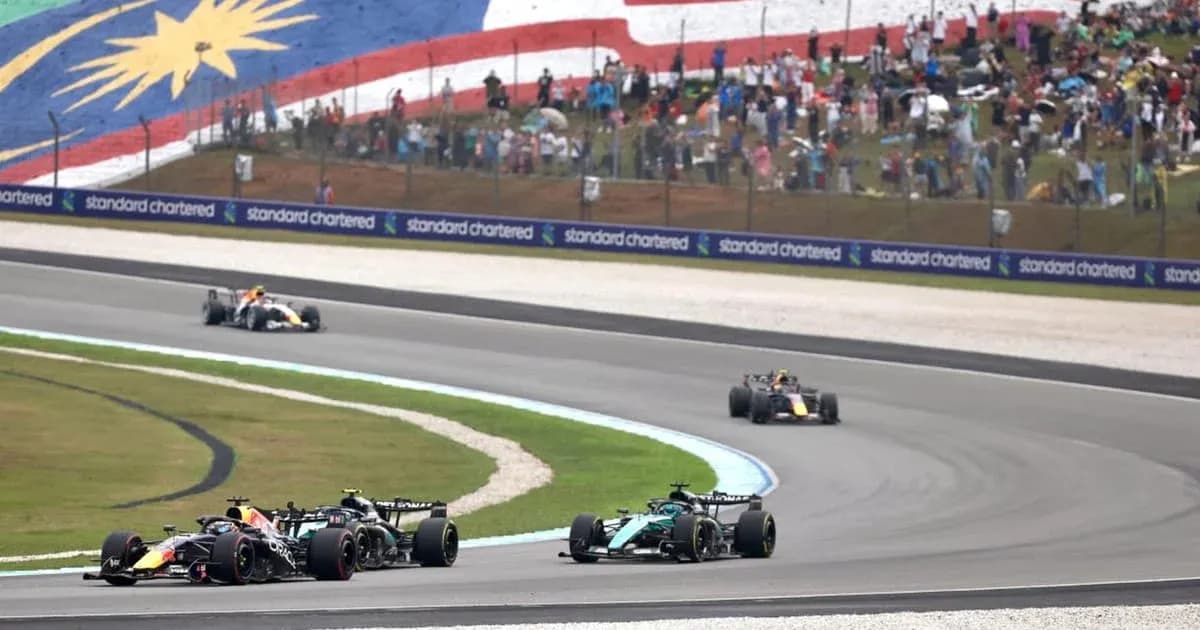
Interlagos delivered the full repertoire. The race began on a wet track, dried steadily, then turned nasty again with rain in the closing laps. Grip shifted corner by corner, lap by lap. It was the sort of afternoon that exposes hesitation and punishes the smallest misread of conditions.
Norris barely put a wheel wrong.
He made new world champion Kimi Antonelli look human for the first time all season, then stared down Verstappen at his most menacing – the Dutchman carving through the field from 21st on the grid – and never once looked rattled.
That Verstappen charge would normally dominate any Sunday. Not this one. Norris’ authority at the front, under constant threat and in constantly changing conditions, stole the show.
It had not started perfectly. From pole, Norris launched sluggishly compared with Antonelli and watched the Mercedes rocket into the lead. The Italian settled into a rhythm that suggested the script was writing itself: eight seconds clear after 13 laps, world title already secured a week earlier in Mexico, cruising towards another win.
Then the track began to swing.
The pivotal call
As the surface dried, McLaren made the call that changed the race. Norris stopped for slicks one lap earlier than Antonelli. The undercut was brutal. A seven‑second deficit vanished in a single stroke.
Norris emerged right behind the Mercedes, headlights practically in Antonelli’s mirrors, forcing the younger man to push harder than the conditions would allow. Three laps later, under that pressure and on a still-greasy track, Antonelli spun at Turn One. The new champion looped the car, the old one in waiting swept past.
From there, Norris never looked like giving it back.
“A lot was thrown at everyone,” he said. “We boxed one lap early on to the slicks, came out right behind him and forced him to push a bit more. He made the mistake and I could capitalise.
“From my side, just not making any mistakes, which is so easy to do on a day like today… certainly up there with one of the best I’ve ever had.”
Andrea Stella agreed. The McLaren team principal has seen Norris grow through awkward seasons and near-misses; this was the finished article.
“When Lando operates at his best, he’s definitely one of the best drivers on the grid,” Stella said. He highlighted Norris’ feel for “mixed variable conditions” – the half-wet, half-dry windows where races are often won. When the track sat between wet and dry, Norris was “probably gaining most on anybody else”.
Stella talked about adaptability, about Norris’ ability to sense grip and adjust the car around it. On a day when no set-up was perfect and no lap felt the same as the last, that trait separated him from the rest.
McLaren’s response
For Norris and McLaren, this was more than a trophy and a smoky podium. It was a statement that their mid-season fade had not broken their momentum entirely.
They had started the year on the back foot. Last season’s title double came at a cost: development on the 2026 car lagged as resources were pushed into sealing those championships. By early summer they had clawed back performance, Norris taking back-to-back wins around the summer break and narrowly missing another in Madrid.
Then the tide turned again. Rivals found gains, McLaren stumbled in qualifying, and the orange cars slipped out of the conversation at the sharp end.
Sao Paulo flipped that script, at least for a weekend. A batch of new parts, a circuit that suited the car’s traits, and a driver who thrives in the wet and on the knife-edge combined to put Norris back where he believes he belongs.
It was a reminder – to rivals as much as to McLaren themselves – that he has been one of the standout drivers of the season, even when the machinery fell short of his standards.
Verstappen’s charge, and its limit
For a while, it looked as though Verstappen might still tear it all up.
A grid penalty for exceeding his engine allocation dropped the four-time champion four places lower than the slot from which he had won in similar conditions at Interlagos two years earlier. No matter. Within 15 laps he was up to fifth, less than 15 seconds behind Antonelli, with the switch to slicks approaching and more rain on the radar.
At that point, the paddock felt the familiar chill. Verstappen, wet track, long race ahead. It usually ends one way.
Not this time. Once the field moved to dry tyres, the Red Bull’s threat faded. Norris controlled the gap, even when the heavens opened again in the final laps.
“That first stint went really, really well,” Verstappen said. “We got very quickly back into the top 10, and the pace wasn’t bad.
“But as soon as I switched to the slicks, I had an extreme amount of oversteer in the high-speed corners, which made it super difficult to drive.
“We need to understand if something broke on the car, some kind of aero loss or whatever, because this was not normal.”
He was satisfied with second from 21st, but convinced more had been possible with a fully healthy car. “Maybe next year I’d love to start a bit further up front instead of starting from the back or the pit lane,” he added, only half joking.
Even so, on a day when Verstappen in the wet, on a charge, could not get within striking distance, Norris’ stock rose again.
Antonelli’s rare error and Mercedes’ bigger prize
For Antonelli, Interlagos offered a sharp lesson just days after his greatest high.
He arrived in Brazil as Formula 1’s youngest ever world champion, the title sealed in Mexico. For a while, the script looked perfect: a storming start, a growing lead, a car that seemed to respond to every demand. Then came the spin.
“Very disappointing because we were on for the win up to that point,” he said. “Once I was able to get some temperature on slicks, I was getting to the rhythm, but the spin came, which still is something I need to look at because I don’t know why I lost the rear so quickly. No warning, nothing.”
It was not just Antonelli’s day that unravelled. George Russell, who had surged from seventh on the grid to third and then latched onto the back of Norris, also saw a potential victory slip away. At one stage, he looked like the only driver capable of matching the McLaren on pure pace.
Then he spun exiting the pits. A 1.2-second gap to Norris ballooned to 20. His chance was gone in an instant.
Even so, fourth for Russell and fifth for Antonelli were more than enough for Mercedes to secure the constructors’ championship – their ninth, but the first since 2021 after a bruising spell under the ground-effect regulations.
Antonelli parked his frustration quickly. “I’m going to put all this aside for now because the team take the title, we take the title for the team and they all deserve it. I’m very proud to be part of this group.”
Wolff’s warning about the new era
Toto Wolff, too, balanced celebration with caution. Mercedes had dominated the first half of the season, but the field has reeled them in. Recent upgrades did not deliver as hoped; the pack of Ferrari, McLaren, Red Bull and Mercedes now looks tightly bunched.
“Look at the last few races,” Wolff said. “We haven’t won. Then today at the beginning, Kimi was just storming away. It looked like this could be ours. But the competition has been getting tougher… four teams that can win races and will be challenging for a world championship. I have no doubt this is going to be very difficult for us next year.”
He is proud of the way Mercedes have hauled themselves back to the front after their early struggles in the current rules cycle, but he does not see another era of unchecked dominance on the horizon.
Those four years of confusion and incremental fixes, he said, tested the team’s resilience. Sealing both titles again underlined their capacity to regroup, but the sport has changed around them.
“It looks like the most maybe competitive era that is about to start,” Wolff said. Teams are too professional, too well-resourced, for anyone to run away with “four in a row or eight in a row” again. Upgrades can miss; a few bad races can drop a giant to third-best.
“It’s great for the sport,” he added. “I wished it was the era of Mercedes and me running away with another few championships. I don’t think it’s the reality.”
On Sunday, that reality meant a silver title for Mercedes and a papaya car out front, driven by a man who has spent the year insisting he belongs in the title conversation. In the rain, on a treacherous, evolving track, Lando Norris made that argument louder than ever.
The bottle might have slipped from his hands. The race never did.