Leeds United's Premier League Rise: Built to Last
Leeds United back in the heights – and this time, it feels built to last.
Elland Road has seen its share of false dawns since the early 2000s, but the current view of the Premier League table is jarring in the best possible way. Leeds, third after a 4-1 dismantling of Newcastle United on Monday night, are off to their best top-flight start since the 2001-02 season under David O’Leary.
Eight points from four games. Unbeaten. A throwback position, but a very modern rebuild.
The night everything changed
This surge did not begin in August. It started with a gamble in the cold of late November.
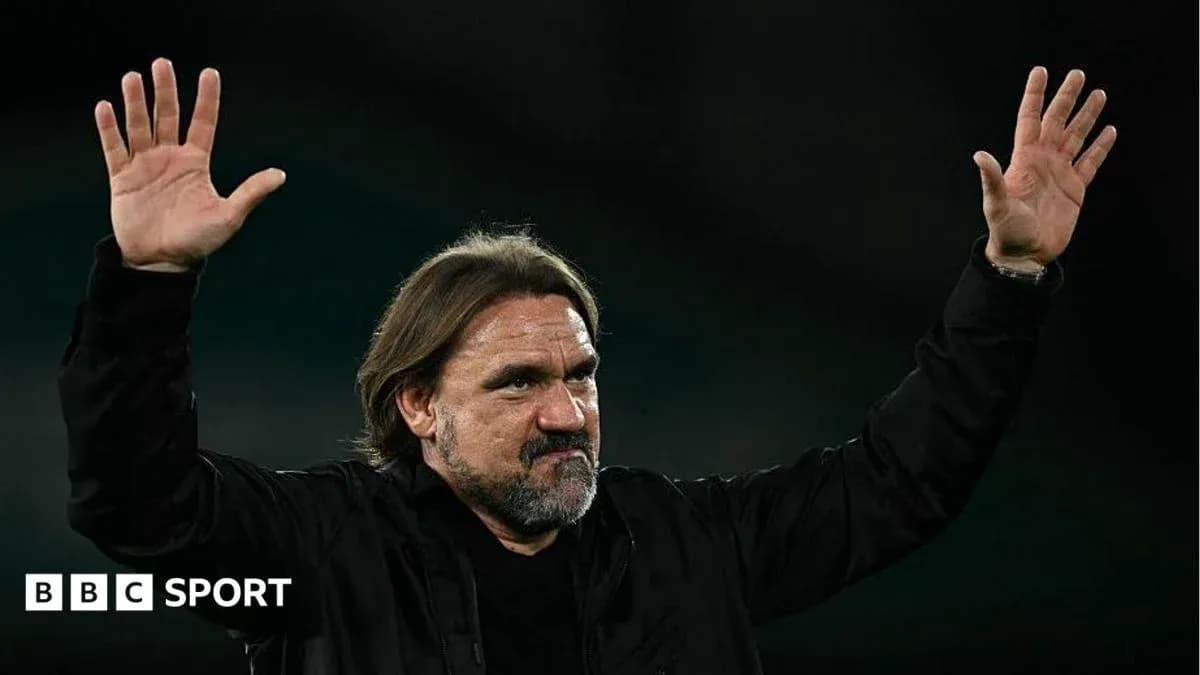
Leeds were 2-0 down at half-time away to Manchester City on 29 November. Outclassed, outgunned, heading for another sobering lesson at Etihad Stadium. Daniel Farke ripped up his back four and went with a back three.
The response was immediate. Leeds fought back to 2-2, dragged City into a scrap, and only succumbed in stoppage time. They lost the match, but found a blueprint.
From the very next league game – a home win over Chelsea on 3 December – the numbers have been startling. Across their past 29 league fixtures, Leeds have lost only five times. Stretch that form across the division and they would sit fifth in a hypothetical table for that period.
This is not a hot streak. It is the product of a structural shift.
Built for the Premier League, literally
Farke and new sporting director Adam Underwood went into the 2025 summer window with a clear idea: Leeds had to grow up, and grow taller.
They targeted height and power for the rigours of the Premier League. Of the 10 permanent signings, eight stand over 6ft – Jaka Bijol, Sebastiaan Bornauw, Dominic Calvert-Lewin, James Justin, Lukas Nmecha, Noah Okafor, Lucas Perri and Anton Stach. It was deliberate.
Farke explained it bluntly in July 2025. Leeds had been one of the smallest squads in the division. In a league of relentless crosses, set-pieces and aerial duels, that meant pressure, vulnerability, and points slipping away in the final minutes. So he set about changing the profile of his team.
This summer, after losing Pascal Struijk to Brighton, he doubled down. In came Bosnia-Herzegovina defender Tarik Muharemovic and Switzerland international Nico Elvedi, both with World Cup experience, to reinforce the back line.
Muharemovic has barely missed a beat. He has played every league minute so far, marshalling the defence in front of 6ft 5in England international James Trafford, who became the most expensive British goalkeeper in history for the second time when Leeds paid an initial £40m to prise him from Manchester City.
He did blot his copybook with the late error that allowed Bazoumana Toure a consolation goal for Newcastle, but that moment sits against a body of work that already looks impressive.
Add Harry Wilson into the mix – one of last season’s standout Premier League performers, signed on a free from Fulham – and Leeds’ recruitment looks not just coherent, but quietly ruthless.
From relegation fears to defensive steel
The transformation is even more stark when set against the panic of last season.
Leeds lost eight of their first 13 league games in 2025-26. They slumped to 18th, staring at an immediate return to the Championship. The side that had edged Burnley to the second-tier title suddenly looked overmatched, and reports swirled that Farke’s job was on the line.
The switch to a back three, though, did more than simply add an extra centre-back. It tightened the entire structure.
Since that change, among the clubs present throughout the period, only Arsenal, Manchester City and Nottingham Forest have conceded fewer goals. Leeds, once brittle and open, now defend with a snarl and a plan.
The new physical profile has changed the tone of games. Opponents no longer bully them at set-pieces. Crosses are attacked, not merely survived. Trafford, with his size and price tag, has brought authority behind a defence that suddenly looks purpose-built for the division.
Calvert-Lewin unleashed
The most obvious beneficiary of Farke’s tactical shift stands at the other end of the pitch.
Dominic Calvert-Lewin, once marooned as a lone striker in a 4-3-3, has been reborn. Previously he spent long spells isolated, starved of service and waiting for wingers to drift inside. Now he has company, angles, and chaos around him.
Since December, only Erling Haaland, Ollie Watkins and Joao Pedro have scored more Premier League goals than Calvert-Lewin’s 14. That is elite company, and it has not come by accident.
Farke’s alternating use of 3-4-3 and 3-5-2 has usually meant a genuine strike partner for his No 9. Nmecha and Okafor have shared that role, with Okafor especially sharp – seven goals and one assist in his last 11 league appearances underline his impact.
Calvert-Lewin himself has kept it simple: “I enjoy having bodies around me.” The numbers back him up. With runners close, knockdowns matter again. Crosses have targets. Leeds attack with layers, not hopeful punts.
History in sight, England in view
The momentum now carries a personal milestone.
Crystal Palace visit Elland Road on Saturday, and Calvert-Lewin is chasing a record that has stood since before the Second World War. If he scores, he will become the first Leeds player to find the net in six consecutive home league games since Arthur Hydes in 1932.
For a club that has produced its share of iconic forwards, that is a serious marker.
There is another incentive. Calvert-Lewin missed out on England’s World Cup squad, a painful omission for a striker who once looked central to the national team’s future. With three goals in all competitions already this season, he has timed his resurgence well.
On Friday, Thomas Tuchel names his squad for a Nations League quadruple-header. Calvert-Lewin’s form, Leeds’ rise, and the way he has adapted to Farke’s new system all push his case back onto the England manager’s desk.
Leeds are back near the top of the table, built on height, structure and a centre-forward finally surrounded on his own terms. The question now is not whether this is a throwback, but how far this version of Leeds United can go in a league that suddenly has to take them seriously again.