Liverpool Board Stands Firm Behind Slot Amid Turbulent Times
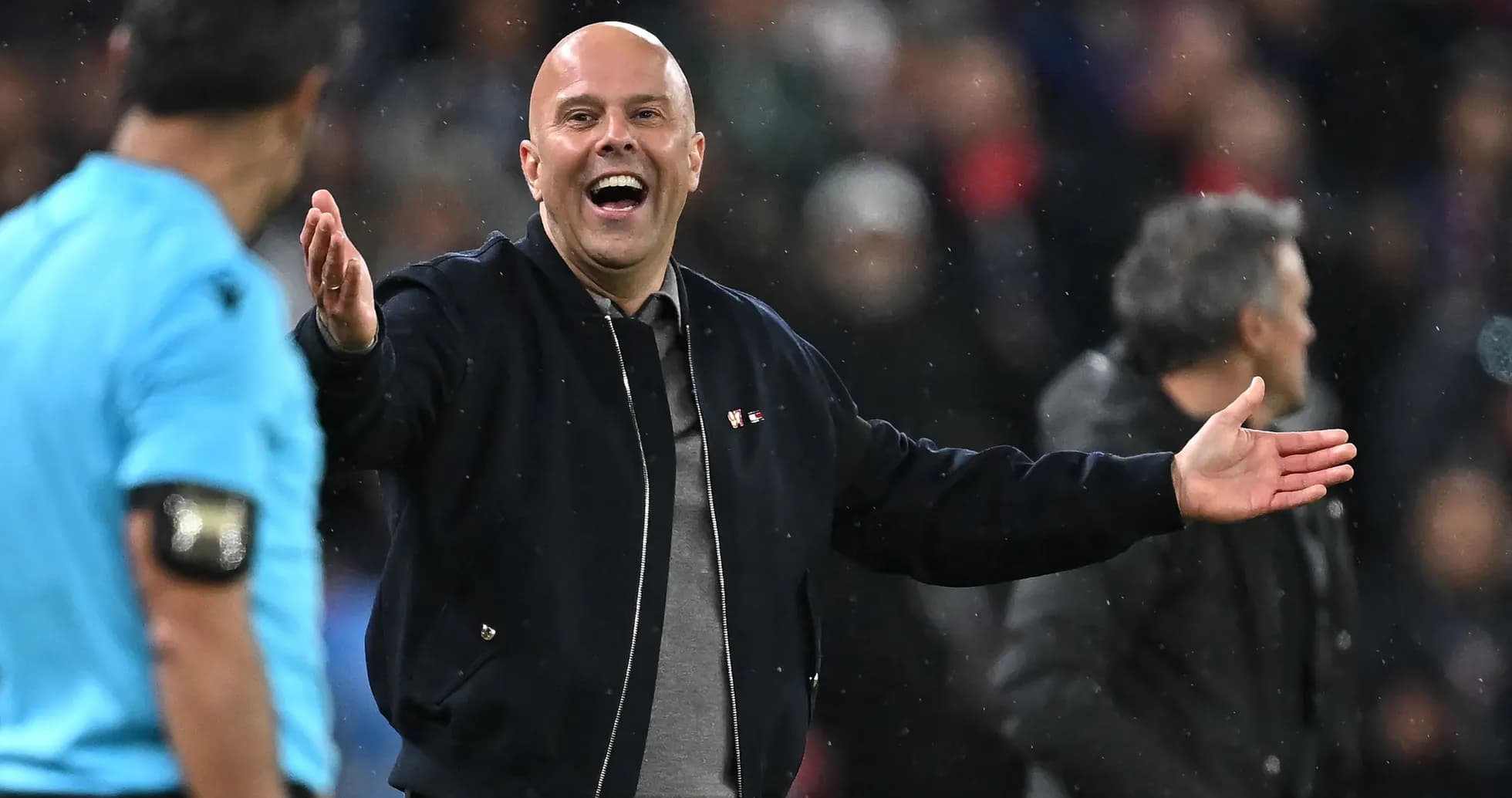
The mood around Anfield has curdled. What began as a bold new era under Arne Slot has, in recent weeks, turned into a tight, nervous watch, the kind where every misplaced pass feels like a referendum on the manager’s future.
The Champions League exit to Paris Saint-Germain in the quarter-finals stripped away the last illusion of a season that might yet feel like progress. Two 2-0 defeats, home and away, left Liverpool not just beaten but outclassed, their final route to silverware slammed shut. Days later, the conversation around Slot hardened.
“Slot is sleepwalking towards the sacking,” the Daily Mail declared after a bruising 4-0 FA Cup quarter-final defeat at Manchester City in early April.
It captured the mood: a sense of drift, of a title defence abandoned long before the run-in, of a team that had lost its edge at the worst possible time.
Inside the club, though, the tone is very different.
According to David Ornstein, Liverpool’s hierarchy remains locked into its long-term plan. Slot’s contract runs until 2027 and, as things stand, the board intend to see that project through, even if this season ends without a top-four finish. The message from the corridors of power is continuity, not panic.
That stance is about to be tested.
A Run-In With No Hiding Places
Liverpool sit fifth, clinging to a position that has become more precarious with every stutter. The Premier League’s new fifth Champions League berth offers a safety net of sorts, but only just. Chelsea, in sixth, lurk four points back and are gathering momentum.
The schedule offers no mercy. The Merseyside derby at Everton on Sunday will be laced with jeopardy, not just rivalry. After that comes Crystal Palace at home, then a brutal stretch that will define Slot’s second season: away to Manchester United, home to Chelsea, then on the road again to Aston Villa. Three six-pointers, three clubs with their own European ambitions, all crammed into a few unforgiving weeks.
On the final day, Liverpool travel to Brentford, currently seventh and very much in the mix for Europe themselves. There will be no dead rubbers here, no gentle fade into summer. Every game is a verdict.
From Dream Start to Harsh Reality
The irony is that Slot’s Liverpool story began like something out of a club brochure.
He arrived in 2024 as the man tasked with following Jürgen Klopp, the figure who had reshaped the club’s identity and expectations. The risk was obvious; the reward, potentially transformative. Slot’s first season delivered the maximum: a league title, a seamless transition that seemed almost too smooth to be true.
The second campaign started in the same vein. Five straight league wins, the swagger of champions, and the sense that Liverpool had found a way to evolve without losing themselves.
Then the gears slipped.
The EFL Cup campaign ended early. The FA Cup run died at City’s hands in that 4-0 demolition. The title race faded from view well before spring. Performances dulled, the press lost its bite, and the margins that had once fallen Liverpool’s way began to tilt the other direction.
The Champions League became the last stand. When PSG shut that door with ruthless efficiency, the scrutiny on Slot sharpened into something more personal.
The Isak Gamble That Backfired
In the second leg against PSG, one decision lit the fuse.
Slot started Alexander Isak at centre-forward, a player only just back from a three-month injury lay-off. On the bench sat Mohamed Salah and Cody Gakpo, two of Liverpool’s most reliable attacking threats. It was a call that surprised the dressing room, the stands, and the wider game.
Slot later explained his thinking. He wanted Isak on from the start rather than risk throwing him into the chaos of extra time after such a long absence. The plan, he said, was to manage the Swede’s minutes: “Playing him for 45 minutes, checking how he felt at half-time, then adding another five or ten minutes, was an option.” In the end, Isak offered little, and Gakpo replaced him at the break.
The nuance of the explanation did nothing to cool the reaction.
Dietmar Hamann, the former Liverpool midfielder, tore into the logic live on Sky. If Isak had not played for three months, Hamann argued, asking him to face what he called the best team in Europe from the start made little sense, especially if the manager did not trust him to last into extra time. Hamann said he had held “the utmost respect” for Slot but had “never heard of anything like this before,” wondering aloud whether any coach had tried something similar in a Champions League knockout tie.
The criticism cut to the heart of the debate around Slot: is he a bold, modern strategist willing to back his convictions, or a tinkerer overcomplicating big nights?
Backing the Project – For Now
Inside the club, the answer remains clear. Liverpool’s leadership see Slot as a long-term architect, not a short-term firefighter. The first-season title is proof, in their eyes, that his methods work when the pieces align. They are wary of ripping up a project at the first sign of turbulence, especially in a league where stability has become a rare commodity.
Outside, patience is thinner. Supporters remember how quickly Klopp’s teams could reset after setbacks. They look at a faltering title defence, early domestic exits, and a flat Champions League quarter-final, and they ask how far this Liverpool have already drifted from the standards they set under the previous regime.
The next few weeks will not just decide which European competition Liverpool play in next season. They will shape the atmosphere in which Slot begins year three of his reign.
A derby under pressure. A run of heavyweight clashes. A manager under fire, but still backed from above.
If Slot is to silence the noise about “sleepwalking towards the sacking,” it won’t be with words or explanations about substitutions. It will be with results, in a run-in that offers him no place to hide.