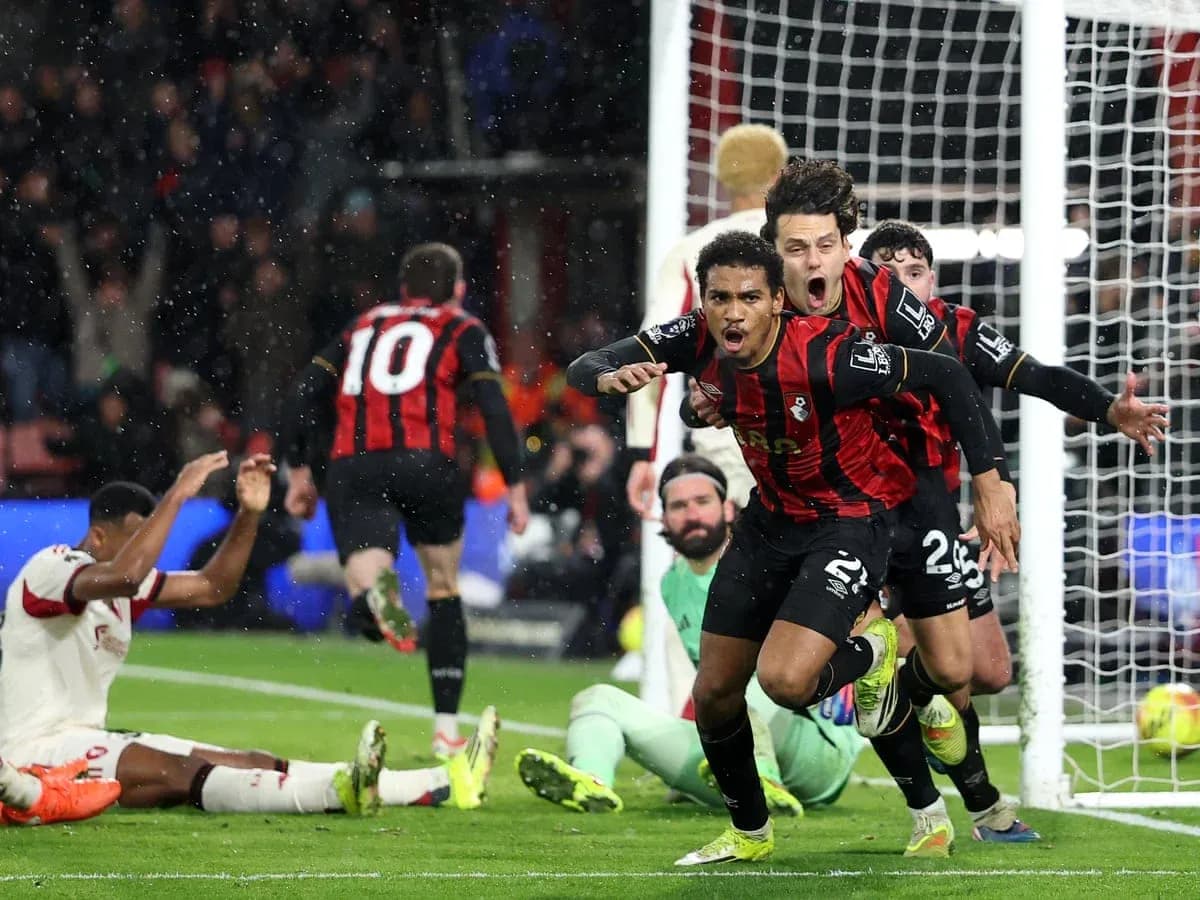
Liverpool vs Chelsea: Premier League Showdown at Anfield
On 9 May 2026, Anfield in Liverpool stages another chapter of a rivalry that rarely disappoints, as Liverpool welcome Chelsea with Europe, pride and momentum all on the line. The hosts are pushing to secure a Champions League place from a strong position near the top of the Premier League table, while the visitors arrive searching for a response to a brutal slump that threatens to turn a promising campaign into a flat finish.
Season Context
Liverpool come into this weekend in 4th place with 58 points from 35 matches, built on a positive goal difference of +12 (59 goals scored, 47 conceded). Their overall record shows a side more effective than flawless, with 17 wins from 35 games and a solid platform at Anfield where they have scored 32 times and conceded 18 across 17 home fixtures. A Champions League berth is within reach, but any slip now could drag them back into the scramble below.
Chelsea arrive in Liverpool sitting 9th on 48 points after 35 games, with a goal difference of +6 (54 goals for, 48 against). It has been an uneven league campaign: 13 wins, 9 draws and 13 defeats underline how inconsistent they have been, even if their away numbers are respectable with 7 wins and 30 goals scored from 17 away matches. The top four is out of sight, but European qualification and a statement win at a tough ground remain powerful incentives.
Form & Momentum
Liverpool’s recent league form line of LWWWL tells the story of a team that can look formidable but still prone to the occasional setback (17 wins and 59 goals from 35 league games). They have been strong at home, losing only 3 of 17 league matches at Anfield and averaging 1.9 goals per home game, evidence of an attack that usually finds a way through.
Chelsea’s form, by contrast, is in freefall: a stark LLLLL run in the standings data highlights a side in crisis (5 straight league defeats, 13 losses overall). They have still managed 54 goals in 35 games and an away average of 1.8 goals scored per match, but the fact they have conceded 48 times and lost 6 of 17 away fixtures shows how fragile they have become defensively.
Head-to-Head Patterns
Recent meetings between these two have swung back and forth, with neither side able to dominate for long. At Stamford Bridge, Chelsea have landed two significant league blows: a 2-1 home win over Liverpool in the Premier League on 4 October 2025 and a 3-1 victory in the Premier League on 4 May 2025 ([2-1] (Premier League, October 2025); [3-1] (Premier League, May 2025)). Those results underline that Chelsea can hurt Liverpool when their attacking play clicks.
Anfield, however, has often tilted the other way. On 20 October 2024, Liverpool beat Chelsea 2-1 in the Premier League, turning a tight contest into another home success ([2-1] (Premier League, October 2024)). And in a different competition but a similarly high-stakes setting, Liverpool edged Chelsea 1-0 in the League Cup final at Wembley Stadium on 25 February 2024 ([1-0] (League Cup, February 2024)), reinforcing the sense that Liverpool often find an extra gear in decisive encounters.
Tactical Preview
Liverpool’s statistical profile this year points towards a side built on a clear, front-foot structure. Their most common setup has been a 4-2-3-1, used in 31 league matches, with occasional switches to 4-2-2-2, 4-3-3 and 4-3-1-2 (each used between 1 and 2 times). That base shape supports a double pivot and an aggressive line of three behind the striker, and it suits the creative core of Mohamed Salah, C. Gakpo and D. Szoboszlai, all of whom rank among the league’s leading chance creators (Salah with 6 assists, Gakpo with 5, Szoboszlai with 5).
In possession, Liverpool’s 59 league goals and average of 1.7 goals per game reflect a multi-source attack rather than reliance on a single scorer. H. Ekitike has contributed 11 league goals, while Salah and Gakpo add both goals and creativity (Salah 7 goals and 6 assists; Gakpo 7 goals and 5 assists). Behind them, D. Szoboszlai has been a two-way engine, with 6 goals, 5 assists and 2,055 completed passes at 87% accuracy, indicating how much of Liverpool’s build-up flows through his right-sided half-space role.
Out of possession, Liverpool’s numbers show a team that presses but can be exposed if the first line is beaten (47 goals conceded, 1.3 per game). They have kept 10 clean sheets in the league, but their biggest defeats (including a 0-3 home loss and a 3-0 away loss in their record) hint at occasional collapses when the structure breaks. The card data also suggests a side that can become stretched late on, with a high share of yellow cards arriving in the final quarter of games, which may influence how aggressively they press if the match is still finely balanced.
Chelsea, too, are heavily associated with a 4-2-3-1, deployed in 30 league games, with 4-3-3, 4-1-4-1 and 5-4-1 used more sparingly. That primary structure offers them a double pivot—often anchored by M. Caicedo, who has been a defensive fulcrum with 83 tackles, 56 interceptions and 1,877 completed passes at 92% accuracy. His ball-winning and distribution are crucial if Chelsea are to resist Liverpool’s central pressure and launch transitions.
Going forward, Chelsea’s 54 league goals and 1.5 per game average have been driven above all by João Pedro, who stands out as one of the league’s most productive forwards with 15 goals and 5 assists from 33 appearances. His 48 shots (28 on target) and 29 key passes underline his dual threat as both finisher and creator. Around him, C. Palmer’s creative profile and the wide options such as Pedro Neto and others from the squad list give Chelsea multiple ways to stretch Liverpool’s back line, especially if they can isolate full-backs in one‑v‑one situations.
Defensively, though, Chelsea’s issues are stark. They have conceded 48 league goals and kept only 9 clean sheets, while their disciplinary record is a concern: M. Caicedo has collected 10 yellow cards and one red card, and several defenders and even goalkeeper Robert Sánchez also appear among the league’s red-carded players. That combination of defensive looseness and a high card count raises the risk of late-game chaos, particularly under sustained Anfield pressure.
Given both sides’ typical shapes, this match is likely to hinge on the battle between Liverpool’s attacking midfield line and Chelsea’s double pivot. If Szoboszlai and Gakpo can receive between Chelsea’s midfield and defence, they will look to feed Ekitike or A. Isak and combine with Salah cutting in from the right. Conversely, Chelsea will aim to exploit transitions through João Pedro dropping off the front and linking with runners from deep, especially if Liverpool’s full-backs push high.
Statistical Snapshot
- Competition: Premier League, season 2025 — 9 May 2026.
- Venue: Anfield, Liverpool.
- Prediction: Win or draw — Double chance : Liverpool or draw.
- Win Probabilities: Home 45% / Draw 45% / Away 10%.
- Model: Liverpool 65.2% — Chelsea 34.8%.
Betting Verdict
The prediction model leans clearly towards Liverpool avoiding defeat, and the market broadly agrees, with home-win prices clustered around 1.80–1.93 and the draw and away win both out beyond roughly 3.5. Liverpool’s stronger league position (4th with 58 points), superior recent form and Anfield record, combined with Chelsea’s disastrous LLLLL run and defensive frailty (48 goals conceded), all support a pro-Liverpool stance. Head-to-head history shows Chelsea can win at Stamford Bridge, but Liverpool have taken key victories in recent high-stakes games and at Anfield, which reinforces the idea that the hosts are more reliable in this environment. The most data-aligned angle is to follow the model and back Liverpool on a cautious side, with “Liverpool or draw” and home-focused bets preferred over chasing a Chelsea upset at longer odds.