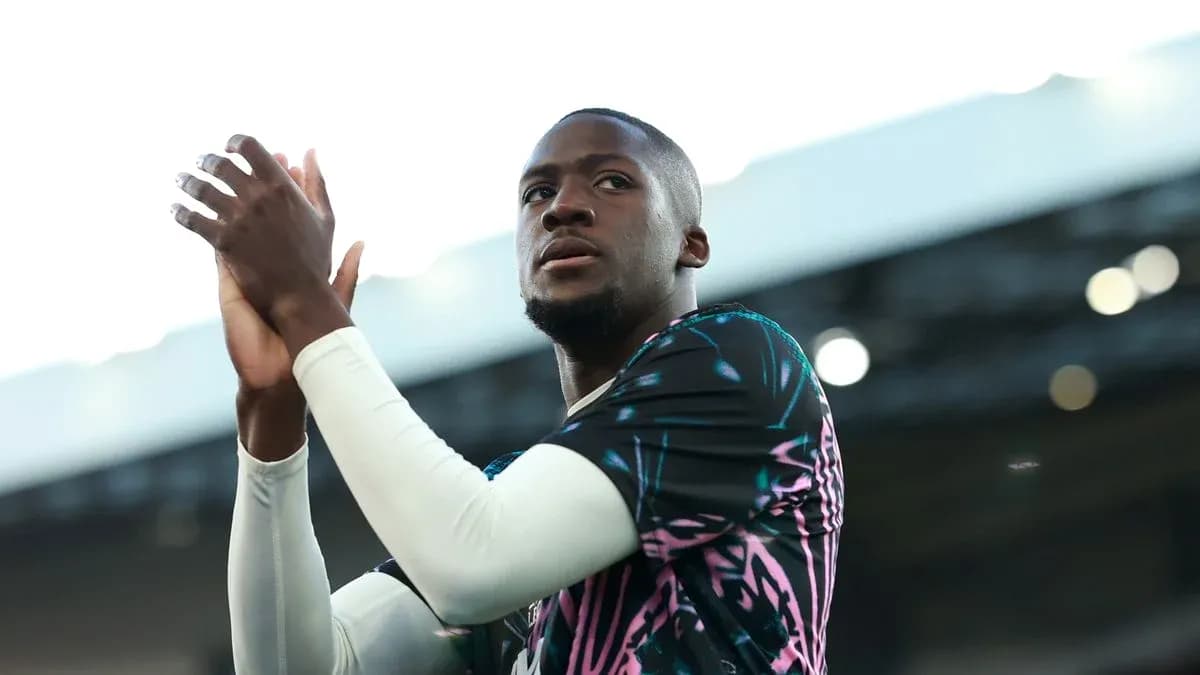
Liverpool Faces Defensive Rebuild After Konaté's Departure
Liverpool have rolled the dice on Ibrahima Konaté. And lost.
No agreement on a new contract, no fee coming in, and a starting centre-back walking away for nothing when his current deal expires. For a club that built its modern era on smart trading, this is a brutal outcome.
Konaté will follow Andy Robertson and Mohamed Salah out of Anfield this summer, the latest pillar of a great side to slip away for free. Add Trent Alexander-Arnold’s sale to Real Madrid last year and the numbers look stark: four of the most influential Liverpool players of the last decade have brought in a combined £10 million.
That is not squad churn. That is an exodus.
Arne Slot and new sporting director Richard Hughes now stare at the most expensive shop window in football: the market for top-level centre-backs. Konaté has been Virgil van Dijk’s main partner since 2021, the physical enforcer next to the captain’s calm authority. Replacing that profile, at that level, rarely comes cheap.
Four names sit in the frame. All of them solve a different problem. None of them are straightforward.
Jan Paul van Hecke – Familiar Face, Familiar Football
Jan Paul van Hecke ticks a lot of Liverpool boxes.
The Brighton defender has already been linked from reports in his native Netherlands and looks tailor-made for a team that wants the ball and plays high up the pitch. He’s operated in both a back three and a back four under Roberto De Zerbi, an important detail for a Liverpool side still working out how best to house last summer’s big-money arrivals.
On the ball, van Hecke is composed and ambitious. Three goals and three assists in the Premier League this season underline a defender who doesn’t just recycle possession, he affects games. He’s comfortable in a possession-heavy team, used to building from the back under pressure.
The numbers back up the eye test. One of Konaté’s underrated strengths is how often he draws fouls when pressed, buying Liverpool breathing space. Van Hecke has been fouled 1.21 times per 90 in the league this season, virtually identical to Konaté’s 1.19. That matters in a side that invites a high press and asks its centre-backs to play through it.
Out of possession, he plays on the front foot. He sits in the 72nd percentile of Premier League centre-backs for interceptions per 90 (1.32), stepping in rather than simply dropping off. At 6'3" he has the frame, even if he doesn’t dominate the air quite like Konaté.
Next to Van Dijk, and with imposing young defender Jeremy Jacquet due to join up for pre-season, van Hecke would complement rather than replicate what Liverpool already have.
There is another advantage: chemistry. Van Hecke has 10 caps for the Netherlands and has been called up for the Dutch World Cup squad ahead of Matthijs de Ligt and Stefan de Vrij. He is expected to play a meaningful role alongside Van Dijk in North America. That understanding could travel straight back to Merseyside.
The catch? Timing and price. Van Hecke will enter the final year of his Brighton contract this summer, a situation that usually encourages movement but also invites competition. Tottenham have been circling as De Zerbi reshapes his squad, and Chelsea are also said to be interested. Brighton are expected to demand around £50 million.
If Liverpool want him, they either move early before the World Cup or wait and risk a bidding war.
Joachim Andersen – The Stop-Gap With Substance
Joachim Andersen is a different kind of answer.
The Fulham defender, once an unlikely Fantasy Premier League cult hero at Crystal Palace, offers a more old-school profile: aerial dominance, defensive leadership, and a willingness to put his head where it hurts. Yet he is no dinosaur on the ball, just not as progressive as van Hecke.
What he does do is mirror some of Konaté’s other strengths. He ranks highly for interceptions and clearances, reads danger well, and thrives in the physical battles that define Premier League games. At 29, he brings six years of English top-flight experience and 49 caps for Denmark.
The data paints a clear picture. Andersen sits in the top 10% of Premier League centre-backs for touches and aerial duels won. Crucially, his profile means he can also deputise for Van Dijk, giving the Liverpool captain the chance to rest after a season in which he played more minutes than any other 34-year-old.
He joined Fulham for £30 million two years ago and would almost certainly be the cheapest option on Liverpool’s shortlist. That matters if Hughes decides the long-term successor to Konaté is already in-house.
Because behind the headlines, Liverpool have quietly assembled a group of defenders who look, in the data, very similar to Konaté. Jacquet is one of them. Giovanni Leoni is another. If the club believes those players can grow into the role, Andersen becomes the classic bridge signing: solid, reliable, and experienced, without blocking the path for the next generation.
If Liverpool do go down the stop-gap route, there are not many better-qualified candidates than the Dane.
Jarell Quansah – The One That Got Away… Then Comes Back?
This is the strangest name on the list, and in some ways the most revealing.
Jarell Quansah left Liverpool for Bayer Leverkusen only last summer in a £35 million deal. Now, a year on, he sits firmly back on the radar because the market for right-sided centre-backs in Liverpool’s preferred age range is thin, and because he has exploded in Germany.
The decision to sell him already looks uncomfortable in the cold light of the Konaté situation. Quansah came through the Liverpool academy, showed poise and personality, and looked like a natural long-term fit. But his confidence took a hit during Arne Slot’s first season, most notably when the Dutchman hooked him at half-time in his first game in charge.
The move to Leverkusen changed everything. Under Xabi Alonso, Quansah has re-established himself as one of the outstanding young defenders in Europe. He has earned a call-up to England’s World Cup squad this summer and arrives at the tournament as one of the Bundesliga’s most efficient stoppers.
The numbers are startling. He was dribbled past only twice in the entire league season. His pass completion sits at 90.3%, and he averages 0.55 successful dribbles per 90 – evidence of a defender who not only resists pressure but can break lines himself.
Liverpool know exactly what they let go. They also built a safety net into the deal.
A multi-tiered buy-back clause allows them to re-sign Quansah this summer for £69.4 million, with pre-negotiated contract terms already in place. German outlet BILD, though, have suggested that any return is more likely next year, when that clause drops to £52 million.
From a development perspective, another year at Leverkusen makes sense. Quansah is thriving, learning, and playing under a coach who has elevated his game. But when you’ve sold arguably the best pure defensive prospect to come out of your academy since Jamie Carragher, and your starting right-sided centre-back is walking away for free, the logic behind last summer’s sale looks increasingly bizarre.
Liverpool must now decide whether to pay a premium to correct their own mistake.
Alessandro Bastoni – The Dream Name, Wrong Profile?
Alessandro Bastoni is the headline name. The one that excites supporters. The one that doesn’t quite fit the Konaté-shaped hole.
The Inter defender is more naturally a long-term Van Dijk successor than a like-for-like replacement for the Frenchman. He is left-footed, comfortable stepping out to the flank, and can also operate at left-back. That versatility would help soften the blow of Robertson’s departure and the uncertainty around Kostas Tsimikas, while Milos Kerkez continues to find his feet.
But Bastoni’s status changes the equation. He is not coming to be a rotation piece. He would expect to start centrally, which likely pushes Van Dijk over to the right of the pairing – a significant shift for a 34-year-old who has spent his Liverpool career on the left side.
On the ball, Bastoni is outstanding. He ranks in the top 10% of Serie A centre-backs for assists, successful passes, and accurate long balls. He sits in the top 5% for big chances created, total touches, and xG conceded while on the pitch. He controls games from the back and does so with authority.
For a while this year, a move away from Milan felt more plausible. Abuse following his red card against Bosnia and Herzegovina, which triggered Italy’s collapse and exit from World Cup qualification, left his future under a cloud. Barcelona were linked, the speculation grew.
Then Inter president Giuseppe Marotta spoke to DAZN and made the club’s stance clear, saying Bastoni “has absolutely not expressed his desire to leave.” Once again, he looks set to stay in Milan.
If there is any opening at all, Liverpool should be at the table. Players of Bastoni’s calibre, at his age, rarely come onto the market. He may not be the perfect Konaté replacement, but he could be the cornerstone of the next back line.
Konaté’s departure has dragged Liverpool into a defensive rebuild they would rather have controlled than reacted to. The options in front of them are imperfect, each with its own compromise: price, profile, timing, or pride.
The question now is not just who replaces Konaté, but what kind of defence Liverpool want to build around Van Dijk’s final years – and who they trust to lead it when he is gone.