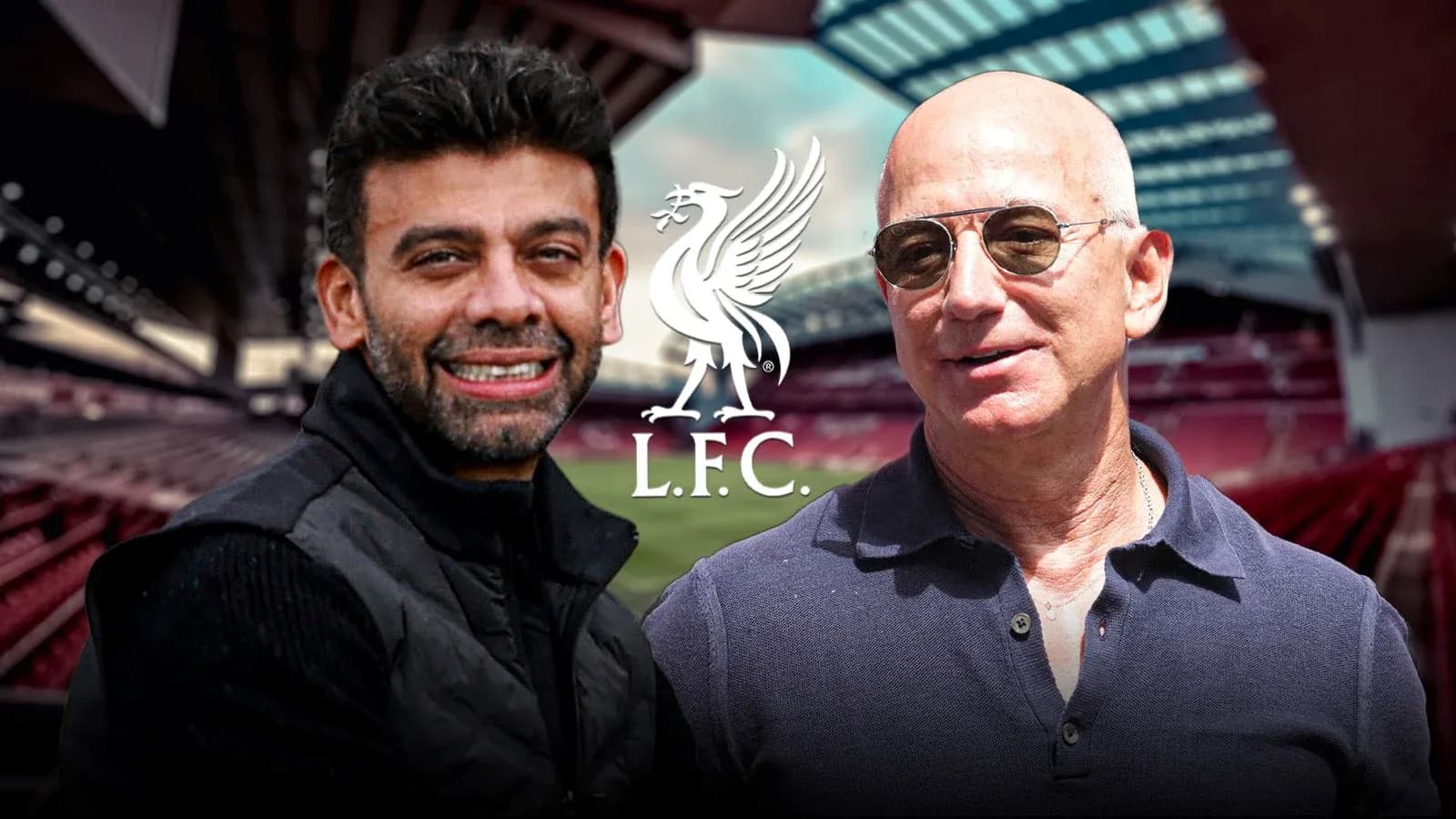
Liverpool Ownership Shift: Bezos and Bhatia Join
Liverpool are braced for one of the most eye-catching ownership moves in modern football – a slice of Anfield sold to some of the biggest names in global tech and finance.
Fenway Sports Group (FSG) are close to agreeing a deal to sell roughly a one-third stake in Liverpool to a consortium fronted by former QPR co-owner Amit Bhatia and featuring Amazon founder Jeff Bezos and Facebook co-founder Eduardo Saverin, according to Sky News. The transaction would value the club at around £4.4bn ($6bn), pushing Liverpool into the rare air of the sport’s richest-ever deals.
This is not a full takeover. It is, though, a seismic shift in who sits around the table.
The money behind the move
Bezos needs little introduction. The Amazon founder, whose empire grew from a Seattle garage in 1994 into one of the most powerful companies on the planet, is estimated by Forbes to be worth about $281bn (£209bn). Only Elon Musk and Google co-founder Larry Page are richer.
His portfolio stretches from e-commerce to space, via Blue Origin, and into media through Nash Holdings, the vehicle that owns The Washington Post. He has circled elite sport before, exploring potential bids for the Washington Commanders and the Seattle Seahawks, but he does not currently hold a significant stake in any major sports franchise.
Bhatia is a different kind of heavyweight. The 46-year-old British Indian entrepreneur comes from an investment banking background and runs AyBe Capital, a multi-asset investment firm with interests across technology, media, property and real estate, consumer retail and health.
His connections run deep. Bhatia is married to Vanisha Mittal Bhatia, daughter of steel magnate Lakshmi Mittal, whose own fortune is estimated by Forbes at £23.2bn, placing him among the wealthiest people on earth.
Saverin, 44, brings another strand of Silicon Valley wealth and know-how. The Facebook co-founder has already dipped a toe into Premier League waters, having been part of a consortium that unsuccessfully bid for Chelsea in 2022.
The identities of any additional investors in the Liverpool syndicate remain under wraps for now.
Bhatia’s sporting footprint
If Bezos is the headline name, Bhatia is the football insider.
He arrived in English football at just 28, joining the QPR board and becoming vice-chairman in 2007 after the Mittal family bought a 20 per cent stake in the club, alongside Bernie Ecclestone and Flavio Briatore. He later served as QPR chairman from 2018 to 2023, steering the London side through a turbulent period on and off the pitch.
Bhatia remained a director and co-owner until earlier this week, when he transferred his stake to majority owner Ruben Gnanalingam. That exit now looks like the prelude to a far bigger stage.
Through AyBe Capital, Bhatia has already positioned himself at the intersection of sport, technology and media. He is an investor in TGL, the high-tech golf league fronted by Rory McIlroy and Tiger Woods, which features six teams and some of the game’s biggest names in a season-long, tech-driven competition. His firm also backs Switch Hitter, the Kevin Pietersen-founded media brand focused on exclusive cricket content.
The sporting reach of the wider family is growing too. Earlier this year, Lakshmi Mittal acquired a 75 per cent stake in the Rajasthan Royals IPL franchise, underlining the Mittal-Bhatia axis as a rising force across multiple sports.
Why FSG are ready to deal
FSG are not a distressed seller. Far from it.
Since buying Liverpool for £300m in October 2010 – during the chaotic final days of Tom Hicks and George Gillett’s ownership – the Boston-based group have overseen a transformation that delivered the Premier League, Champions League, FA Cup, League Cup, Club World Cup and UEFA Super Cup.
They have turned Liverpool into a commercial powerhouse and the fourth most valuable football club in the world.
But the modern game is an arms race. Stadium expansions, training ground upgrades, spiralling wages, transfer inflation – all of it demands fresh capital. FSG signalled as far back as 2022 that they were open to new investment, and a small step came with the sale of a minority stake to Dynasty Equity in 2023, a deal worth £164m and valuing the club at more than $4.5bn.
This is the next leap.
A sale of around one-third of the club at a £4.4bn valuation would crystallise a huge profit on their original £300m outlay while allowing them to retain overall control. It also hands Liverpool access to a new pool of capital and strategic partners just as the financial landscape of elite football continues to harden.
For FSG, it looks less like an exit and more like a recalibration.
Who actually owns Liverpool now?
Right now, FSG hold complete control of Liverpool. Around them sit a cluster of private equity players with smaller positions.
RedBird Capital and Arctos Sports Partners already own minority stakes, while Dynasty Equity are passive investors following last year’s injection. None of those groups, though, challenge FSG’s grip on the steering wheel.
The incoming Bezos–Bhatia–Saverin consortium would join that group of minority shareholders, but on a scale not seen before at Anfield. A one-third stake at the proposed valuation would be one of the most significant single investments in a European football club.
Control stays in Boston. The money and influence, however, become far more global.
What happens next?
The deal, first reported at the end of last month, has accelerated quickly. There is no fixed deadline, but an announcement could come as early as this week, with the possibility it edges into next week if paperwork and final approvals drag.
For Liverpool supporters, the immediate questions are obvious. What does this mean for transfer spending? For Anfield’s ongoing development? For the long-term vision of a club that has spent the last decade trying to balance tradition with modernity?
Those answers will come not in press releases but in decisions – in windows, in wage structures, in how aggressively Liverpool compete with state-backed and billionaire-owned rivals.
What is clear already is this: if the world’s third richest person and one of football’s most connected investors are about to buy into Anfield, Liverpool’s place in the sport’s financial hierarchy is about to be tested – and potentially redefined – all over again.