Lucas Herrington's Heartbreaking World Cup Moment
Lucas Herrington never should have worn this defeat on his face alone.
Eighteen years old, the youngest starter the Socceroos have ever fielded at a World Cup, thrust into a night that was meant to announce a new era. Instead, it has branded him to one of Australian football’s cruellest exits.
His run-up in the shootout looked calm enough. Side-foot, measured, the sort of penalty he has probably buried a hundred times in training. This one climbed. Too high, too soon. It smashed the crossbar and flew out, the sound echoing around the vast roofed arena in Arlington like a gavel.
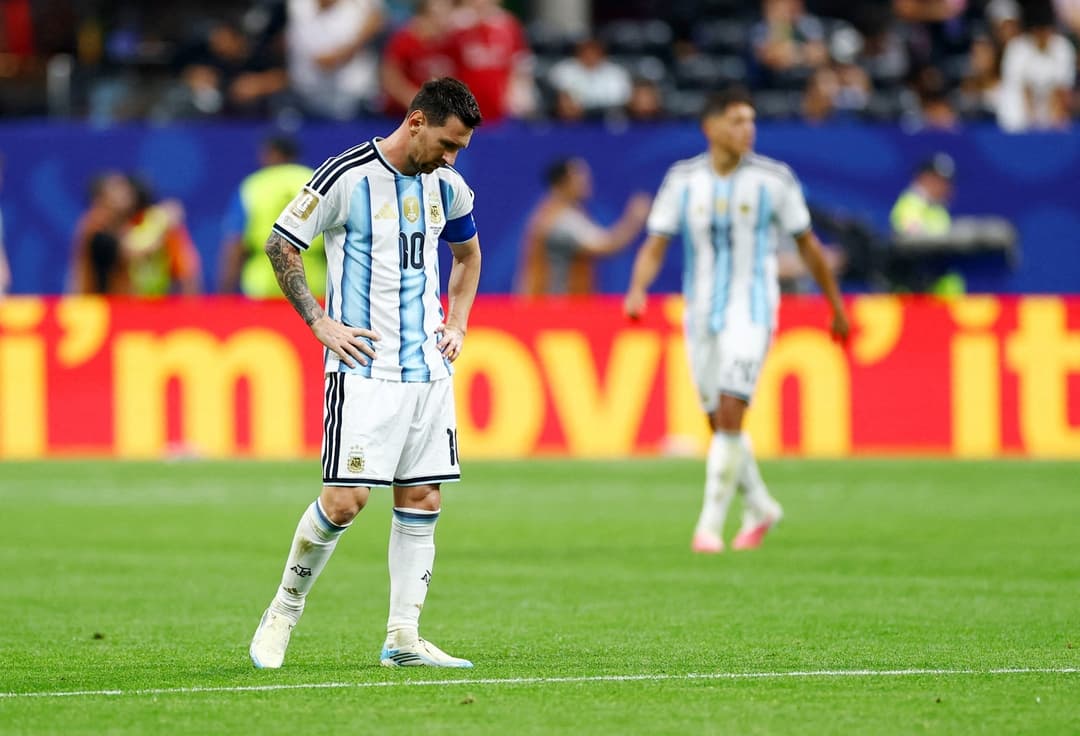
Before he could even process it, Awer Mabil was sprinting towards him, arms out, an instinctive act of protection as much as consolation. When Egypt completed the job moments later, Herrington turned his back on the crossbar that had betrayed him, one arm buried in his mop of curls, shoulders folding in on themselves.
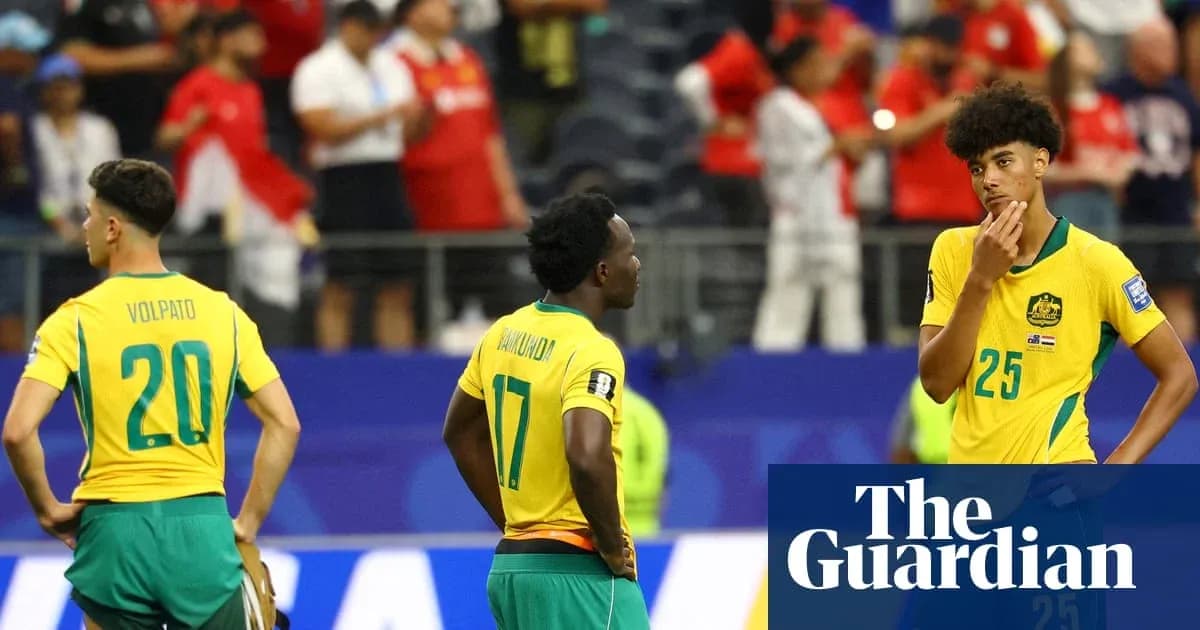
Jackson Irvine reached him first, reading the body language, knowing those emotions because he has worn them himself. Nestory Irankunda followed, a foot shorter, wrapping both arms around the teenager. Two players who are supposed to carry Australia forward, standing in the middle of a moment that dragged them brutally back.
A chance like this may not come again soon.
Australia will now wait at least another four years for that first win in the World Cup knockout rounds. The sense that this was the window – Egypt on neutral turf, a night that never quite caught fire – will linger long after the plane home.
Herrington, of course, was not alone in his torment. Harry Souttar had gone first in the shootout, after a 120‑minute slog that left him visibly drained. The big defender walked to the spot with heavy legs, and his penalty told the story. It lifted over the bar, a scoop rather than a strike, handing Egypt immediate control of a contest that had left both sides running on fumes.
Tony Popovic had played his final card by then. Captain Maty Ryan came on in the dying stages, a specialist summoned for a familiar ordeal. It made no difference. Egypt converted all four of their penalties with icy precision, ending the contest early and sending the Socceroos into the night.
For long stretches it looked like Australia would not even reach that point.
Three hours into their tournament without a goal and trailing 1-0, they trudged into half-time with morale scraping the floor. It sank even lower when Jordy Bos tested his left knee after a challenge, tried to push off, and realised he could not walk without pain. The bright, daring full-back who had lit up the early exchanges was suddenly gone, and with him much of Australia’s attacking thrust.
Up to that point, the game had been a tactical arm wrestle, both sides preoccupied with escaping each other’s press. Half chances, nothing more. The Socceroos had begun with a spark – a Cristian Volpato effort that skimmed the crossbar, a surging Bos run into the box that hinted at chaos – but the opening goal smashed that optimism apart.
It came down Australia’s right, where they yielded ground too easily as their press fractured. On the edge of the area, Irvine was caught out by Ziko and clipped him. The foul gave Egypt a platform, and they punished the lapse with ruthless clarity.
Emam Ashour took the free-kick, his first effort blocked by Irvine. The danger should have passed. It didn’t. The ball was recycled, floated back into the box, and there was Egypt’s No 8, ghosting in unmarked at the back post to head home. One lapse, one lost runner, and the Socceroos were chasing.
Bos did not re-emerge for the second half. Kai Trewin came on for his World Cup debut at right-back, and within 10 seconds he had been exposed. His man burst through and almost scored, a chaotic opening that threatened to kill the contest before Australia had time to adjust.
They survived that scare and, slowly, steadied. Then they did something they had not managed all tournament: they scored while behind.
Officially, the equaliser will go down as a Mohamed Hany own goal. It deserves a different inscription. Aiden O’Neill, drifting into space on the left side of the box, shaped his body and dropped a looping delivery into the danger zone. The ball arced beautifully, begging for a touch, any touch. Hany obliged, diverting it into his own net under pressure.
At last, Australia had a lifeline.
The setting could hardly have been more grand. This stadium in Arlington, ringed by 24,000 parking spaces, is a cathedral to American sport. On this night, it belonged to football. Yet the spectacle never quite matched the stage. Stoppages, delays, and long passages of caution strangled the rhythm. After 100 minutes, the two teams had managed just four shots on target between them.
For those in green and gold, and those draped in red, it barely mattered. The tension grew with every minute at 1-1. Crosses flew in and were hacked clear. Patrick Beach punched one, then another, under pressure. Egypt’s undersized back line threw themselves at everything, somehow keeping the damage to a minimum.
Then Mo Salah finally stepped into the game.
For most of normal time, Egypt’s captain had been a quiet presence, drifting, probing, waiting. In the final minutes he suddenly exploded into life. He whipped in a cross that found Ramy Rabia, who seemed certain to score until Beach flung up a hand and clawed the ball over the bar. Minutes later Salah had a shot of his own, then threaded a pass that produced one last opening, Souttar hurling himself in front of a goal-bound effort that looked destined for the corner.
Any doubts about Salah’s fitness evaporated in that spell, and in the grin he flashed at Souttar during the coin toss for extra time. Even he, though, showed his limits. Early in the additional 30 minutes, a ricochet bounced invitingly to him. The goal opened up. He leaned back and lashed it over.
Egypt tightened the screw as the clock bled away, laying siege to the Australian penalty area. Beach and his defenders clung on, blocks and clearances piling up. Both sides knew exactly what was at stake: a first-ever World Cup knockout victory, history waiting for whoever could land one more punch.
Neither could. Not in open play.
The shootout, brutal in its simplicity, offered only one team that slice of history. For Australia, it left a teenager staring at a crossbar and a generation wondering how long it will be before they stand this close again.