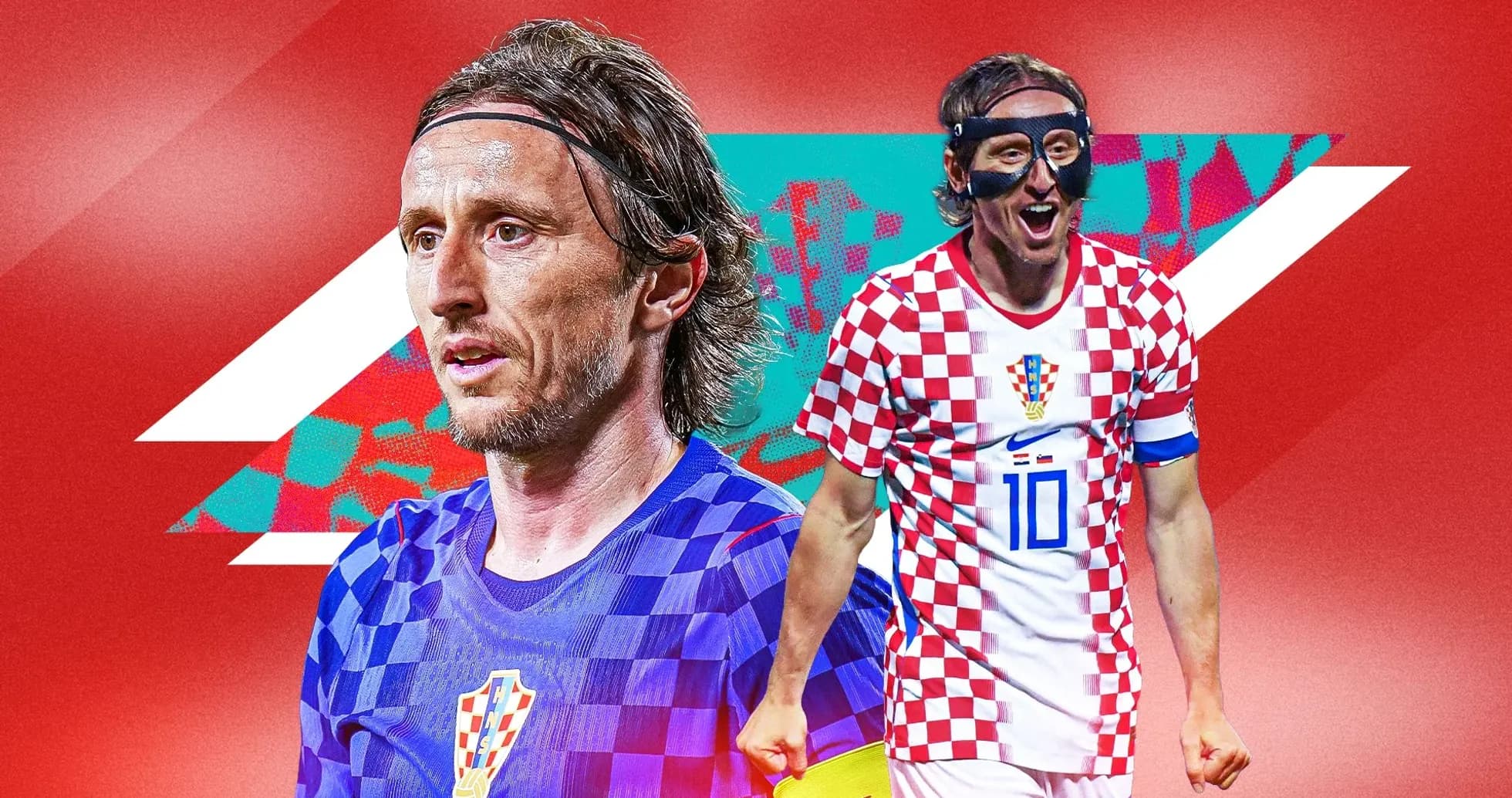
Luka Modric: A Career on the Brink of Change
Luka Modric stood under the harsh lights in Leipzig with a trophy in his hands and defeat in his eyes. Player of the Match, but out of Euro 2024. It looked and felt like an ending.
He had dragged Croatia to the brink of the last 16, scoring from the rebound after his own missed penalty against an Italy side that had offered almost nothing. Then, in the 98th minute, Mattia Zaccagni’s curling strike ripped through Croatian hearts and rewrote the script. Italy through. Croatia out. Modric left staring into the middle distance as if someone had cut the final chapter from his career.
This was not how it was supposed to finish.
In the press room that night, the emotion was raw. Italian journalist Francesco Repice did what many in the game had probably wanted to do for years: he thanked Modric directly. Not for one performance, but for a career. For the way he played, the way he competed, the way he carried a country. Then he pleaded with him: don’t ever retire.
Modric, 38 at the time, smiled and told the truth. He would love to play forever, he said, but he knew there would come a moment to hang up his boots. He just didn’t know when.
The remarkable thing is that, even now, he still doesn’t.
From Madrid Legend to Milan Engine
When Modric left Real Madrid last summer after 13 seasons and a mountain of trophies, the move to AC Milan carried the warm glow of nostalgia. A boyhood fan of the Rossoneri, drawn in by Zvonimir Boban, finally pulling on the shirt he once idolised. It sounded romantic. It sounded like a farewell tour.
He made it clear it was nothing of the sort.
Modric arrived in Milan convinced he could still shape games, still shape seasons. He believed he could help revive a club that had lost its way too often in recent years. On the evidence of this season, he was right.
The signing drew headlines across Italy, but also raised eyebrows. How much could a 39-year-old really give to a top Serie A side chasing Champions League football? Milan had already brought in Samuele Ricci, a 24-year-old midfielder tipped to be a long-term pillar of the team. Some argued Modric was a luxury, not a necessity.
Inside the dressing room, the debate never started. Ricci watched Modric train, watched him compete, watched him lead, and had no complaints about sitting behind him in the pecking order. He simply called him the strongest player he had ever played with, stunned by the intensity and humility of a man who had seen and won almost everything.
Italian reporters, used to seeing greats fade gently into the background, found themselves reaching for new superlatives. One, Alberto Polverosi, joked that if Modric really was 40, science should get to work and clone him.
A Force of Nature at 40
To those who know him, there was nothing mystical about it. Kaka, who shared a dressing room with Modric at Real Madrid, described him as a “force of nature” in his 40th year. The Brazilian lifted the lid on the mindset behind the performances: the hunger that never dulled, the obsession with passing on knowledge, the constant calls to team-mates, the readiness to fight every three days.
That energy spilled into everything at Milan. Training sharpened. Standards rose. The tempo of games changed when he played. His technique remained pristine, but it was the authority with which he used it that struck a chord across Serie A.
Coach Massimiliano Allegri leaned into it. He trusted Modric in big games, tight games, messy games. He trusted him so much that talk even surfaced of the Croatian becoming Allegri’s assistant in the near future. The idea said as much about Modric’s brain as his legs.
There was a downside. Milan began to rely on him too heavily.
When the Mask Arrives
The turning point came late in the season. In a bruising 0-0 draw with Juventus on April 26, Modric suffered a fractured cheekbone. It sounded minor in the context of a long career. It wasn’t. He couldn’t start any of Milan’s final four league matches. Without their metronome, the team fell apart.
Three defeats in four. Third place gone. Fifth place confirmed. Champions League football slipped through their fingers. Allegri paid with his job.
The numbers told a simple story: with Modric, Milan looked like a side ready to step back into Europe’s elite. Without him, they looked lost.
Now the future is clouded. Allegri has gone. Milan’s direction is uncertain. Modric has spoken warmly about the club and the city, about the passion, about the sense of belonging. At the same time, Real Madrid are waiting in the background, ready to welcome him back to the Bernabeu in a new role if he chooses to stop playing this summer.
He hasn’t given an answer yet. He rarely does when it comes to his own horizon.
One Last Tournament
What does seem clear is that this will be his final major tournament with Croatia. The body of work is complete: a World Cup final, a World Cup semi-final, a Ballon d’Or, a generation carried far beyond its supposed ceiling. Whatever happens next, his place in football history is secure.
Yet here he is, heading into a World Cup expected to wear a protective mask, the fractured cheekbone still a factor. The conditions will be demanding, the schedule unforgiving. Most players would see it as a final burden. For Modric, it looks like one last challenge to embrace.
He has spent his career answering doubts with performances. Too small. Too slight. Too old. Too tired. Each time, the same response: he plays, he leads, he decides games. His own words sum it up neatly: he never really cared what anyone else said; it only pushed him harder.
So who dares write off Luka Modric now, at 40, masked and still dictating the rhythm?
Certainly not in England. They’ve seen this film before, and they know how it usually ends when you bet against him.