Mahli Beardman Shines in ODI Opener as Australia Defeats England
Australia 132 for 3 (Marsh 50, Atkinson 1-40) beat England 131 (Atkinson 29*, Beardman 6-24, Johnson 3-42) by seven wickets
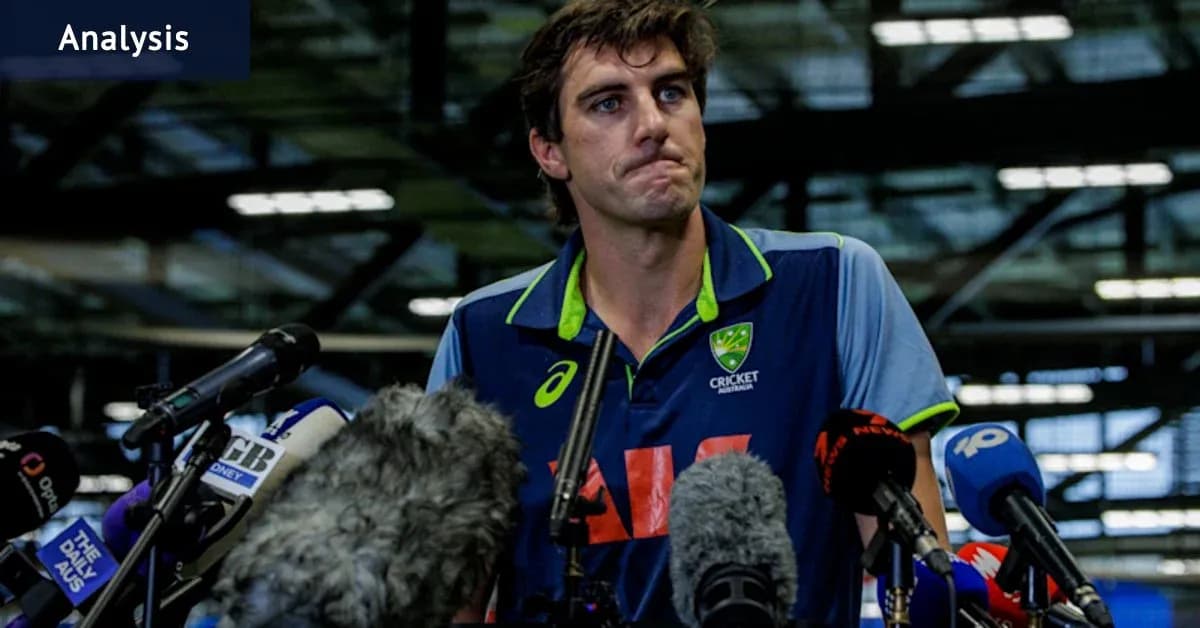
Hours after Pat Cummins walked out of an extraordinary press conference in Sydney, the conversation around Australian cricket snapped back to what happens with ball in hand. In Perth, under a hard blue sky and on a surface built for fast bowling, a 21-year-old quick with a fragile back and a fearless streak tore England apart.
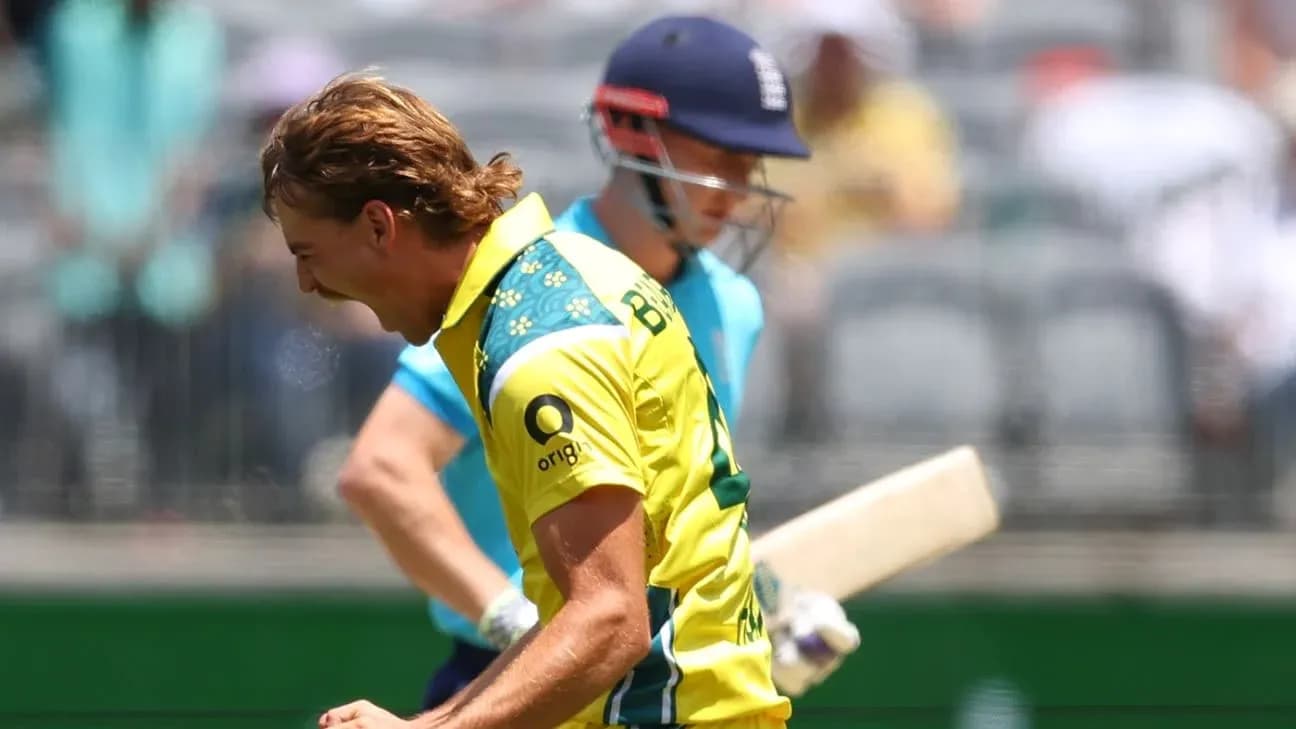
Mahli Beardman, on ODI debut, ripped through England with 6 for 24 in 7.4 overs, the best figures by an Australian in his first one-day international and the fourth-best debut return in the format’s history. England were bundled out for 131 in 33.4 overs, and a crowd of 27,313 at Perth Stadium roared a new name into the national conversation.
By the time Mitchell Marsh cracked his way to a 29-ball half-century and Australia cruised home in the 24th over, the drama of the week had been replaced by something far more reassuring for Australian fans: raw pace, ruthless intent, and a glimpse of the future.
Beardman’s day, at last
The noise around Beardman started before a ball was bowled. When the teams were announced, his name drew the loudest cheer. Perth knows fast bowling, and it knows promise when it sees it. It also knows how fragile that promise can be. Beardman’s early career has been stalled by a string of back injuries, the kind that can quietly end a quick’s dreams before they begin.
Marsh chose to bowl first under pristine sunshine, leaving the new ball to Xavier Bartlett and left-armer Spencer Johnson. Beardman had to wait. He didn’t waste the time.
First came a flash of athleticism: a one-handed diving stop on the rope at fine leg that saved a certain boundary. It was a small moment, but it told the crowd something. He was switched on.
Bartlett set the tone with a perfect outswinger that beat Tom Banton’s bat. Johnson pushed speeds and bounce, too. But when Beardman entered in the 10th over, the game changed gear.
His first over was a maiden, heavy with intent. Back of a length, accurate, brisk in the mid-140 kph range. No looseners, no nerves on show. Just a young fast bowler hitting the deck hard and testing technique and temperament.
Then came the ball that will sit on highlight reels for years. To Harry Brook, Beardman angled it in, then jagged it away late. Brook followed, edged, gone. A pearler. A proper fast bowler’s dismissal.
Joe Root, playing his 200th ODI, walked in to the familiar soundtrack of “Hey Joe” from a healthy contingent of England supporters. The occasion never matched the reception. Root scratched around, looking oddly out of rhythm. Dropped on 3 by Cooper Connolly at backward point, he crawled to 12 from 33 balls. A thick inside edge off Beardman finally gave him a boundary, the ball threading through his legs. It felt accidental, not authoritative.
Moments later, Beardman went fuller, shaping the ball away. Root edged again. This time there was no reprieve. Another high-class delivery, the kind that had David Warner recently likening Beardman’s movement to Dale Steyn. On this evidence, it did not feel outlandish.
By now, Perth was in full voice. Every Beardman run-up drew a rising swell of applause, a rhythm that stirred memories of Dennis Lillee, the fast-bowling great who has mentored the young quick. Beardman fed off it. He nicked off Jordan Cox, then bounced out Sam Curran, who was never truly comfortable against the steep bounce. Liam Dawson followed, caught at backward point as Beardman raised the ball to the stands. Five wickets in 28 balls – the fastest five-for by an Australian in ODIs.
England were reeling, and Beardman wasn’t done. He returned to end the innings by removing Jofra Archer, finishing with 6 for 24 and walking off to thunderous applause that felt less like appreciation and more like anointing.
England undone by bounce and nerves
This was not supposed to be a 131-all-out pitch. It was quick, yes, and lively. But brutal? Only if you let it be.
Banton and Ben Duckett arrived looking to extend a flourishing opening partnership that had thrived on the flat tracks of the recent tri-series in Pakistan. Perth, though, is not Rawalpindi. The bounce was searing, the margin for error slim.
Banton survived early, a thick edge off Johnson flying over the slips when an attempted pull went wrong. Duckett never settled. On 9, he chose the wrong shot for the surface – a square drive on the up – and sliced Johnson to backward point. Risky stroke, predictable outcome.
Root’s struggle deepened the tension. When Bartlett finally drew Banton’s edge to first slip, England’s top order had been worked over by the new-ball trio without any of them really imposing themselves.
Beardman’s onslaught shredded the middle order. England’s innings shrank from a platform to a salvage job. At 9 down, their lowest total against Australia in ODIs – 86 in Manchester in 2001 – loomed into view.
Gus Atkinson and Will Jacks at least showed some resistance. Their 37-run stand for the ninth wicket dragged England away from that particular humiliation. Atkinson’s unbeaten 29 gave the scoreline a faint veneer of respectability. It never looked like a total that would trouble a batting line-up as powerful as Australia’s on this ground.
Johnson, operating with sharp left-arm angle, backed Beardman superbly with 3 for 42. Bartlett, though wicket-light, had already done damage by keeping England pinned and uncomfortable. This was a fast-bowling performance with layers: swing early, hostility through the middle, and no let-up.
Marsh answers questions the best way he knows
If the first act belonged to Beardman, the chase belonged to Marsh.
Australia’s reply started with a familiar jolt. Travis Head, so often a tone-setter, lasted one ball. Dragging on in the second over, he chopped Gus Atkinson’s first delivery onto his stumps for a golden duck. A booming wicket maiden for the debutant quick, and a brief crack of light for England.
That was as good as it got.
Marsh, still under the spotlight after being grilled over his role on the 2018 South Africa tour and the sandpaper scandal, looked far more at ease with bat in hand than microphone in front of him. On his home ground, he took one look at Jofra Archer’s short-pitched plan and tore it up.
In the space of three balls, Marsh launched two huge sixes over the leg side, treating Archer’s bouncers with open disdain. He then drove powerfully down the ground, muscling his way to a half-century from just 29 balls. It was his fourth consecutive ODI fifty, following a prolific series in South Africa, and it came with the air of a captain intent on dictating terms, not surviving them.
Then, just as he looked set to finish the chase himself, he was gone. On the very next ball he faced after reaching fifty, Marsh flicked Jamie Overton straight to deep square leg. A sudden end, but the damage had long been done.
At No.3, Cooper Connolly played with composure and a touch of flair, stroking 27 from 30 balls. His dismissal – hitting Archer straight to backward point – felt more like a gift than a breakthrough created by the bowler.
Josh Inglis and Matt Renshaw took care of the rest, nudging and driving Australia to a seven-wicket win with 26 overs and plenty of authority to spare. The result gave Australia a 1-0 lead in the three-match series and, more importantly, a clean on-field story at the end of a turbulent week.
England’s selection questions, Australia’s fast-bowling answers
England arrived with their own headaches. They again left out Adil Rashid, preferring left-arm spinner Liam Dawson, just as they had for much of the Pakistan tri-series. On a day when seam dominated and Dawson never bowled a ball, that call will only fuel the ongoing debate around England’s balance and bravery in selection.
Atkinson’s early strike and late resistance with the bat offered some positives. So did Jacks’ fight at No.10. But this was a day when England were bounced out technically and mentally. Their top order misread the conditions, their middle order was blown away, and their attack never truly threatened once Marsh took charge.
Australia, by contrast, walked away with clarity. Beardman, long talked about, finally delivered on a big stage, his pace and shape evoking memories of eras that Australian fans cherish. Johnson’s left-arm angle and Bartlett’s discipline rounded out a pace trio that looks built for home conditions.
On a day when off-field storms still rumbled in the background, Australian cricket found a different kind of noise in Perth – the thud of a new fast bowler hitting his length, the nick through to the cordon, the roar of a crowd sensing that something, or someone, might just be worth believing in again.
If this is how Mahli Beardman announces himself, what does the rest of the summer hold?