Pat Cummins Takes Charge at Press Conference Amid Scandal
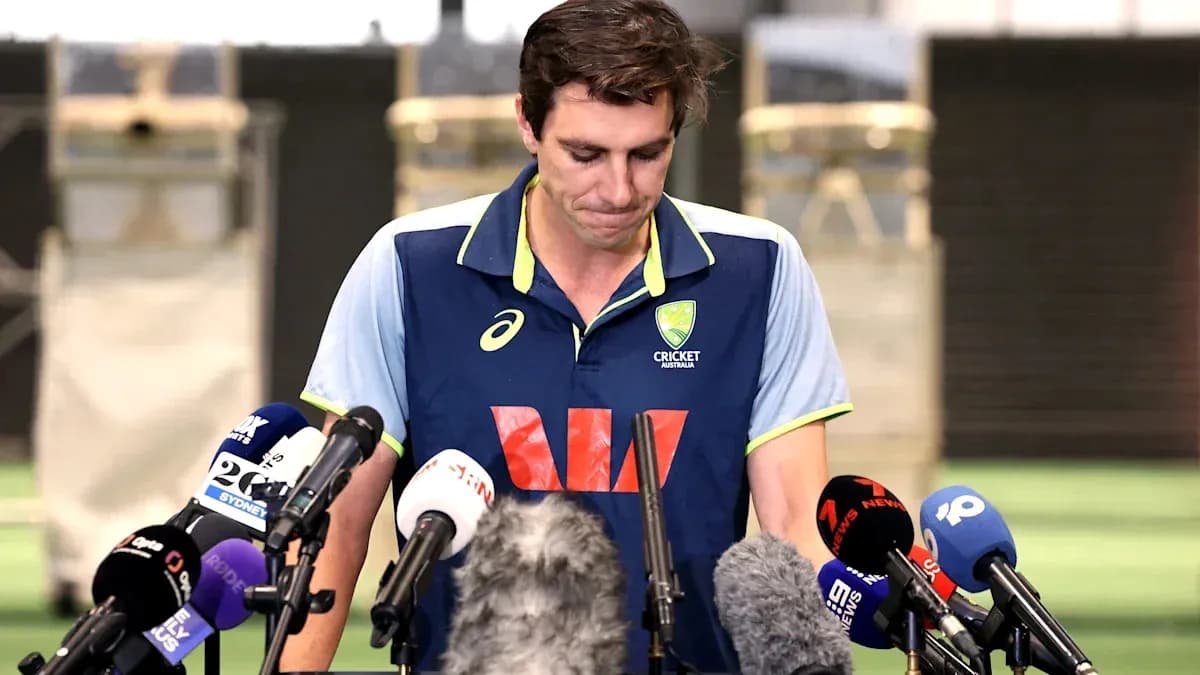
Pat Cummins arrived at Cricket NSW headquarters on Friday morning with Australian cricket in turmoil and his integrity on the line.
Sixty-nine minutes later, he walked back out having delivered one of the most gripping press conferences modern Australian sport has seen.
No spin doctors. No soft questions. No hiding.
Just a Test captain, a stack of notes, and a scandal that refuses to die.
A press conference for the ages
The build-up felt more like a World Cup final than a media call.
Cummins didn’t leave it to Cricket Australia’s machinery. He announced the press conference himself on social media, effectively inviting the nation to judge him in real time. By 9.30am, close to a hundred journalists, photographers, camera operators and officials were wedged into the indoor nets at Cricket NSW, waiting for the captain to front up over Usman Khawaja’s claims in his book, Sabr, about what players knew during the 2018 Sandpapergate scandal.
Breakfast TV trucks had been parked outside since first light. They didn’t see him arrive. Cummins slipped in through a back entrance, wearing a Cricket Australia polo, having already workshopped his words with his wife, Becky, and his manager, Neil Maxwell.
When he finally appeared, he was armed with typed notes, a clear agenda and, as it turned out, a couple of short balls aimed squarely at Khawaja.
When it was all done, Cummins wandered back out to bowl alongside Mitchell Starc and Josh Hazlewood, then strolled into the public café for a sandwich and photos with fans. The contrast was striking: the biggest integrity crisis since Cape Town handled in the nets, then back to being just another cricketer grabbing lunch.
Leadership under fire
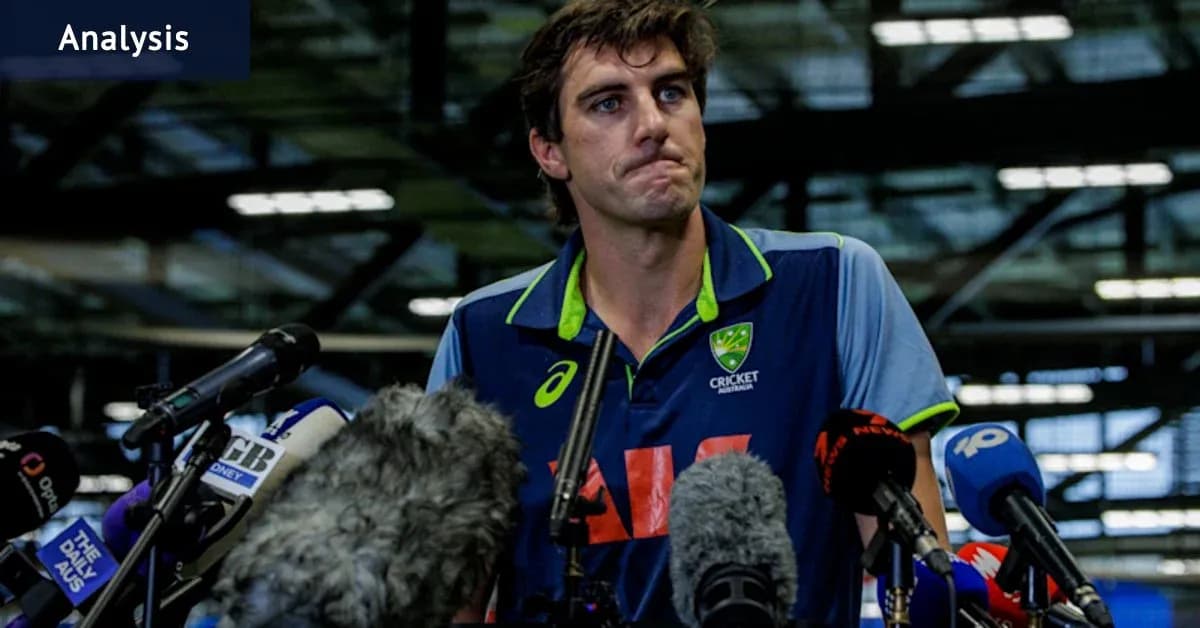
Under the lights, Cummins didn’t flinch.
No media manager stepped in. No questions were ruled out. Journalists kept coming and he kept answering, to the point that the sheer volume of material almost overwhelmed the story.
This was Cummins at his most commanding as captain. Whether you buy his version of events or not, he owned the space.
He spoke clearly, worked through the allegations point by point and, crucially, admitted when his memory failed him. He said he had contacted former teammates to cross-check details from 2018. But on the central issue – whether he knew of any plan to use sandpaper on the ball in South Africa – he was absolute: he did not.
He didn’t rush into this. Khawaja’s claims had been public for days. Cummins waited, gathered information, decided what he would address and what he would not. Then he walked in and took every question until the room ran out of breath.
At one stage, an SBS journalist quietly took their microphone and left. Someone joked about taking a drinks break at the hour mark. Cummins stayed at the crease and kept playing shots.
The longer it went, the more the mood shifted. Early aggression gave way to something else: a sense that, at the very least, the captain had fronted up in full.
Anger behind the calm
For all the poise, the anger sat close to the surface.
Cummins has been dragged back into a scandal he thought he’d left behind. His integrity – the core of his public image – is being questioned by a former teammate and friend.
One of the more revealing moments came when he spoke about Becky’s reaction. She was angry too. The saga had literally reached their doorstep, with The Australian filming the couple in a heated discussion outside their Sydney home after arriving there by chance. The paper did not buy the footage, but the intrusion underlined how far this has spiralled.
Cummins still found room to lighten the mood. As the Sheffield Shield match between NSW and South Australia played out on the adjacent field, he glanced over and called “not out” to an lbw appeal, drawing laughs from a pack of reporters with their backs to the game. He also poked fun at suggestions he and Becky had been arguing, quipping that he’d simply put the wrong bin out.
There was nothing light about his words on Khawaja, though. Cummins called him a friend, then admitted he didn’t know where their relationship stood now. That line hung in the air.
This isn’t just a disagreement over a paragraph in a book. It’s a fracture in a long-standing bond inside the Australian dressing room.
A dressing room with an “ugly underbelly”
The press conference also peeled back the curtain on the culture that led to Sandpapergate.
Cummins, who missed chunks of international cricket through injury before 2018, didn’t pretend he had lived every moment of that era. But he gave one of his frankest assessments yet of the environment that produced one of the darkest days in Australian cricket.
“I think we had a win-at-all-costs mentality, had an ugly underbelly, and there were too many silos within the team,” he said. “They were traits that I hope that everyone’s seen and I tried very hard to eradicate for the last six years as captain.”
It was a blunt admission: the Australian team of that time was fractured, aggressive and out of control. The conditions were ripe for someone to cross the line.
Cummins has spent his captaincy trying to drag the side away from that edge. On Friday, he effectively acknowledged just how far over it they’d once gone.
Sandpaper, zippers and the dark arts
Then came one of the most fascinating passages of the morning: the nuts and bolts of ball management.
Lost in the shouting of the past week has been a basic distinction – the difference between legally maintaining a ball and illegally altering it. Players can shine, clean and work on one side. That doesn’t automatically mean they’re cheating.
Cummins explained that Australia had used sandpaper in training to rough up balls to practise facing reverse swing. That alone jolted the room. Sandpaper, in the nets, as a tool. Legal in that context. Loaded with baggage in any other.
He then opened the door on the kind of “dark arts” that swirl around dressing rooms at every level.
“I’d heard zippers,” he said. “I’d heard superglue on wicketkeepers’ gloves. I’d heard layers and layers of nail polish. I bite my fingers, so I’d be terrible. Obviously, Murray Mints is one, too. I’d heard … from a long time ago that sandpaper was actually taped in between fingers.
“These are all discussions that I’m sure every suburban change-room has. It’s one thing to talk about it but then it’s another thing to go ahead and do it.”
It was a reminder that Sandpapergate didn’t spring from nowhere. The tricks are known, traded, joked about. Someone in Cape Town moved from talk to action. The argument now is who knew, and when.
Real cricket pushed to the margins
While the country obsessed over old wounds, actual cricket unfolded almost unnoticed.
On the same ground, NSW teenager Sam Konstas hammered 173 in a Sheffield Shield match less than a month out from the first Test of the summer. In any other year, that would dominate headlines. On Friday, it was background noise.
Konstas wasn’t alone. Mahli Beardman had taken six wickets on ODI debut against England, a dream start for a young fast bowler. That achievement, too, has been drowned out by the roar around Khawaja’s book and Cummins’ response.
Khawaja has argued his words no longer affect the team now that he’s retired. Maybe not inside the rooms. Outside them, the effect has been seismic. Cummins hinted at that frustration, the sense that the sport itself has become the undercard.
Cricket NSW were so wary of the circus that they pulled Konstas from media duties on Thursday after he reached three figures. On Friday, after play, he finally spoke and laughed about the chaos.
“It was a bit hectic,” he said. “Obviously there was a lot of media today with Pat. We’ve got a massive job to do [in this game].”
And the car park?
“I thought they were all coming for me,” Konstas grinned. “They were all here for Pat.”
Two stories, one scandal, no end in sight
Strip away the emotion and the situation is stark.
Cummins says Khawaja is wrong. Khawaja and David Warner dispute Cummins’ version and that of the bowlers. Two sharply different accounts of what players knew in South Africa now sit side by side, both coming from inside the same dressing room.
As Cummins pointed out, international changing rooms are big, noisy places. Conversations splinter into small groups. Information doesn’t always travel far. One pocket can be plotting while another is oblivious.
Crucially, Cummins said Khawaja had not asked him for his recollection of events from 2018 before publishing his book. That detail will sting. It suggests teammates who shared a decade in the same colours are now airing grievances without even comparing notes.
Several major figures from that tour remain publicly silent on Khawaja’s latest claims. Steve Smith, Cameron Bancroft, Nathan Lyon, Josh Hazlewood and Tim Paine have not yet unpacked them in detail. Brad Haddin, then assistant coach and now NSW coach, hasn’t either.
Warner, meanwhile, keeps pressing his case on air, challenging the established narrative during Fox Cricket’s coverage and ensuring Sandpapergate never quite fades.
Khawaja has worn plenty this week. His awkward interview on ABC’s 7.30, where Sarah Ferguson pressed him on specifics from his book, made for uncomfortable viewing. He is due to appear on The Grade Cricketer podcast, though after Cummins’ intervention on Friday, that booking suddenly looks less certain.
For now, the public is split. A live poll on this masthead, with more than 18,000 votes at the time of writing, showed 46 per cent of respondents believe “everyone” knew about the use of sandpaper in South Africa. Another 44 per cent don’t think every Australian player was aware. Ten per cent are undecided.
Friday felt like a clear win for Cummins in that shifting court of opinion. He fronted, he argued his case, he showed the steel behind the easy smile.
But the numbers tell their own story. Nearly half the country still thinks the whole dressing room knew. The captain can’t bowl that away.
So where does Australian cricket go now, with a new summer beginning and an old scandal still casting a shadow over the crease?