Mallorca and Valencia Share Points in Tense 1–1 Draw
Mallorca and Valencia shared the points in Palma after a tense 1–1 draw in which the hosts’ control and creativity were matched by Valencia’s efficiency and a flurry of second-half changes that reshaped the contest.
The Story of the Match
The first half at Estadi Mallorca Son Moix was cagey and controlled, with Mallorca probing patiently and Valencia largely content to absorb pressure. The only real flash of controversy before the break came when Stole Dimitrievski was booked for delaying the game in the 41st minute, a sign of how keen Valencia were to slow the rhythm and disrupt Mallorca’s build-up.
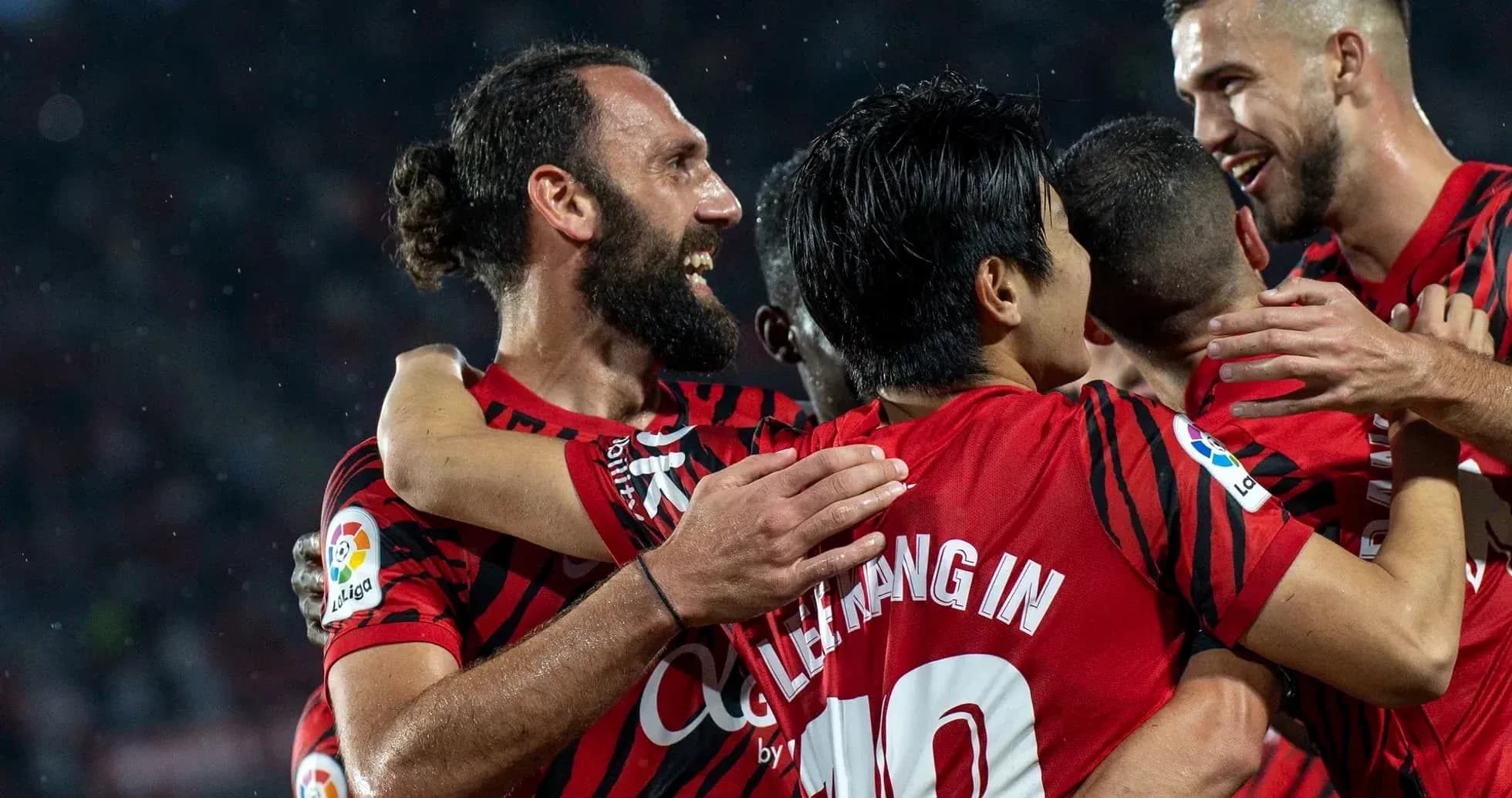
A tactical shift from Mallorca after the interval brought the breakthrough. Just four minutes into the second half, the hosts finally turned their possession into a goal. From a well-worked move, Samu Costa arrived from midfield and finished clinically in the 49th minute, assisted by S. Darder, rewarding Mallorca’s sustained pressure and dominance of territory.
The momentum then swung dramatically around the hour mark. Carlos Corberan rolled the dice with a triple substitution on 60 minutes, injecting fresh legs and attacking intent: A. Danjuma replaced L. Beltran, L. Rioja came on for F. Ugrinic, and J. Guerra entered for D. Lopez. The impact was swift. In the 67th minute, J. Guerra justified his introduction by supplying the assist for U. Sadiq, who levelled for Valencia with a composed finish, turning a previously controlled game for Mallorca into an open contest.
From there, Mallorca chased a winner, making their own changes. T. Asano made way for J. Virgili on 56 minutes to freshen the front line, before A. Sanchez replaced O. Mascarell and D. Lopez came on for M. Morlanes in the 76th minute to add energy in midfield. P. Torre, who had set up the opener, was withdrawn for J. Llabres on 85 minutes as Martin Demichelis searched for one last creative spark.
Valencia’s final substitution came deep into stoppage time, with J. Vazquez replacing L. Ramazani at 90+5, a move more about managing the closing seconds than changing the pattern of play. Despite Mallorca’s late pressure and territorial dominance, Valencia’s defence and Dimitrievski’s handling stood firm. The whistle confirmed a draw that felt like two points dropped for Mallorca and a hard-earned point for Valencia.
The Numbers Behind the Game
- xG (Expected Goals): Mallorca 1.81 vs 1.49 Valencia (full-match totals)
- Possession: Mallorca 59% vs 41% Valencia (full-match totals)
- Shots on Target: Mallorca 8 vs 3 Valencia (full-match totals)
- Saves: Mallorca 2 vs 7 Valencia (full-match totals)
Mallorca’s higher xG and shot volume underline how often they worked good positions in and around the box, while Valencia relied on fewer but more selective efforts. Dimitrievski’s seven saves highlight how busy he was as the game opened up, whereas Leo Román faced far less but was beaten once by Sadiq’s precise strike.
The Aftermath: Impact on the Table
For Mallorca, the draw moves them to 36 points, with their goals for rising to 41 and goals against to 50, leaving them on a goal difference of -9. It is another small step away from danger, but the sense will be that this was an opportunity to climb further that slipped away.
Valencia, meanwhile, climb to 37 points. Their goals for increase to 36 and goals against to 48, keeping their goal difference at -12. The point steadies them after a patchy run and maintains a slim cushion over the teams below, even if it does little to dramatically alter their mid-table position.
Personnel and Tactical Shapes
Mallorca set up in a 4-3-1-2 under Martin Demichelis, a shape built to dominate central areas. With three central midfielders and P. Torre operating just ahead of them, the hosts looked to overload the middle, feed the channels for the full-backs, and provide a steady supply to the strike pair. The structure was evident in how often they pinned Valencia back and recycled possession, reflected in their superior passing numbers and territory.
Valencia responded with a 4-4-2 under Carlos Corberan, initially quite conservative. The back four sat relatively deep, with the wide midfielders tasked with tracking Mallorca’s full-backs. The double act of Guido Rodríguez and F. Ugrinic in the centre tried to clog passing lanes into Darder and Torre. As the game wore on and they trailed, the system became more flexible, with the introduction of J. Guerra and L. Rioja adding drive and width, and Danjuma offering a more direct threat alongside Sadiq.
Starting XIs
- Mallorca: Leo Román; Pablo Maffeo, Martin Valjent, Omar Mascarell, Johan Mojica; Samú Costa, Sergi Darder, Manu Morlanes; Pablo Torre; Vedat Muriqi, Takuma Asano
- Valencia: Stole Dimitrievski; Thierry Correia, César Tárrega, Pepelu, Jose Gaya; Diego López, Filip Ugrinić, Guido Rodríguez, Largie Ramazani; Umar Sadiq, Lucas Beltrán
Mallorca’s substitutions – J. Virgili for T. Asano, A. Sanchez for O. Mascarell, D. Lopez for M. Morlanes, and J. Llabres for P. Torre – were all geared towards maintaining intensity and adding fresh legs in advanced areas as they chased a winner. Valencia’s raft of changes around the hour mark, bringing on A. Danjuma, L. Rioja and J. Guerra, transformed their 4-4-2 into a more adventurous, fluid unit that ultimately produced the equaliser.
Editorial Analysis
This was a match that Mallorca largely controlled but failed to kill, and the statistics support that reading (59% possession, 20 total shots, 8 on target, xG 1.81). Demichelis’ 4-3-1-2 gave them superiority in midfield, with Samu Costa and Sergi Darder dictating the rhythm and P. Torre linking play between the lines. The goal, a Costa finish from Darder’s assist, was a logical outcome of their territorial dominance.
Yet Valencia’s resilience and Corberan’s in-game management deserve equal mention. The visitors, outshot and out-possessed (10 shots, 3 on target, xG 1.49, 41% possession), stayed in the contest through disciplined defending and clever game management – even Dimitrievski’s first-half yellow for time-wasting spoke to a plan to disrupt Mallorca’s flow. The triple substitution at 60 minutes was the turning point, injecting J. Guerra’s creativity and L. Rioja’s width, and it was no coincidence that the equaliser came via Guerra’s assist to U. Sadiq shortly afterwards.
From Mallorca’s perspective, the frustration will lie in their inability to translate control into a second goal, despite repeatedly working Dimitrievski (7 saves for Valencia’s goalkeeper). Their structure worked for long spells, but once Valencia raised the tempo, the home side struggled to reassert the same level of control, even with fresh midfield legs from A. Sanchez and D. Lopez.
For Valencia, this draw feels like a reward for adaptability and mental resilience. They absorbed pressure, adjusted intelligently, and made their best spell count. In a season where both sides are hovering in mid-table, this 1–1 does not radically change their trajectories, but it underlines a pattern: Mallorca are hard to beat at home yet still lack a ruthless edge, while Valencia, even when second-best in the numbers, have enough individual quality and tactical flexibility to escape difficult away days with something to show for it.