Manchester United vs Brentford: Tactical Battle Summary
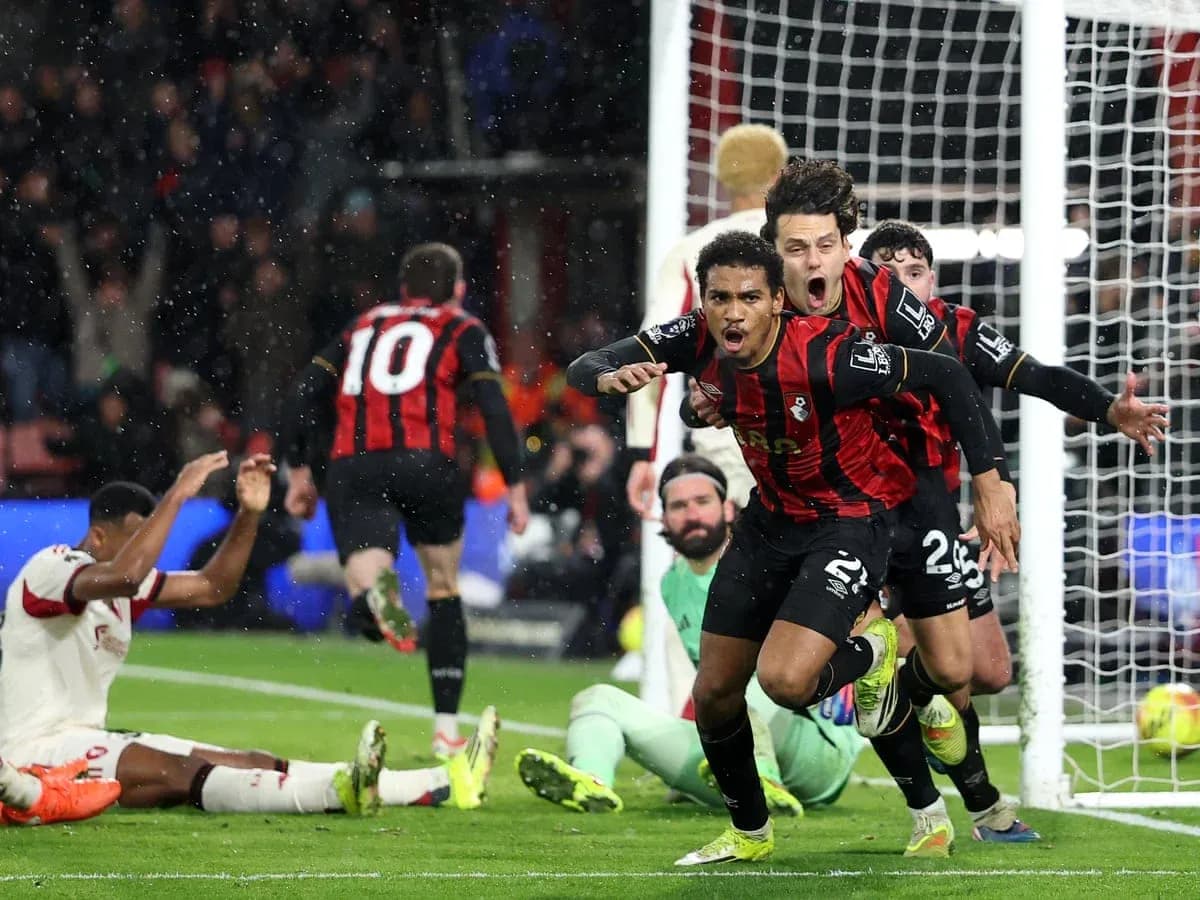
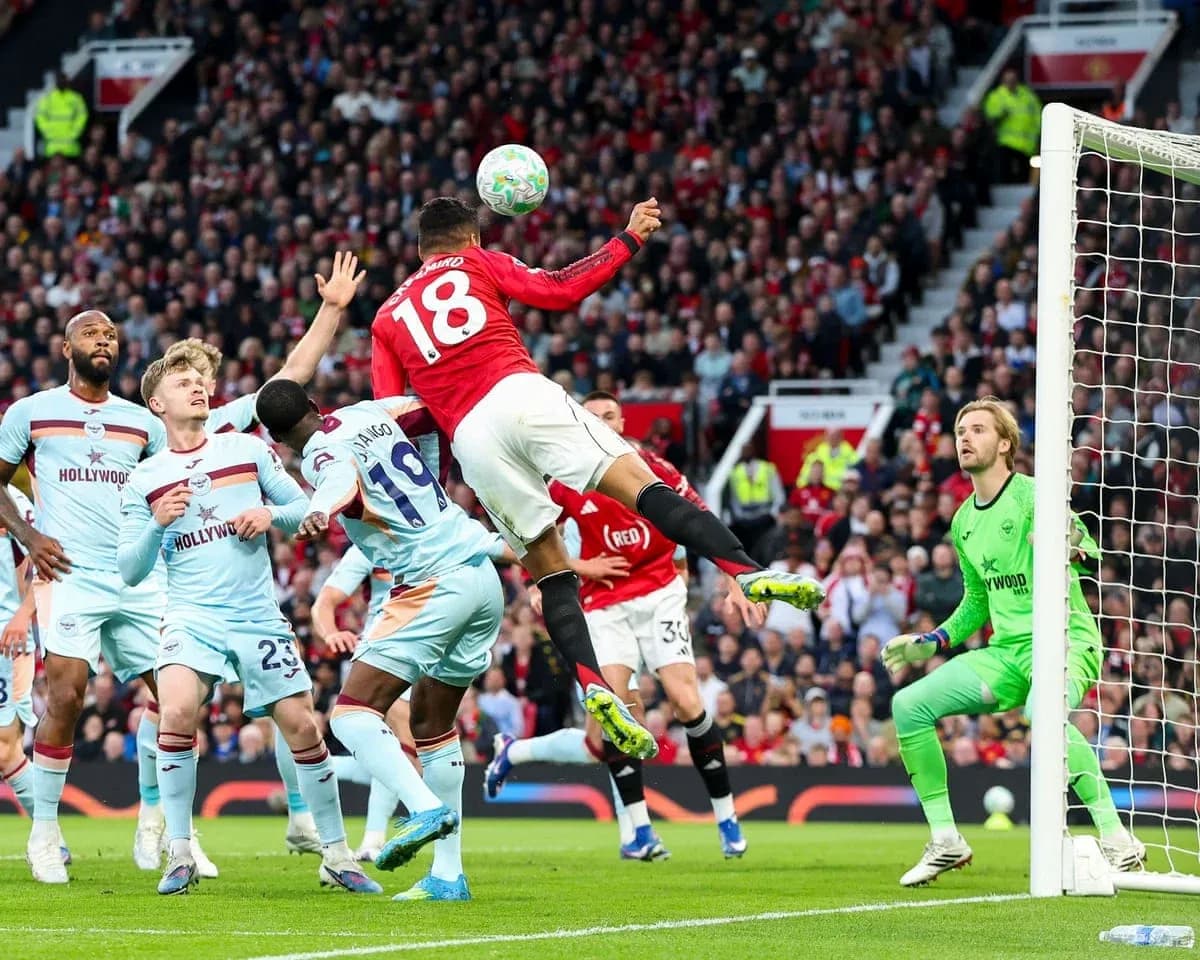
Manchester United edged a high‑stakes tactical contest at Old Trafford, beating Brentford 2–1 in Premier League Round 34 despite conceding territory for long spells. Michael Carrick’s side built a decisive 2–0 lead before half-time through Casemiro and B. Sesko, then survived a late Brentford surge capped by M. Jensen’s 87' strike. The match pitted United’s compact 4-2-3-1 and direct transitions against Keith Andrews’ more patient 4-2-3-1, which delivered a 55% possession share and a 12–11 shot edge but not the points. With xG at 1.36 vs 1.17, the scoreline reflected United’s superior penalty-box efficiency rather than overall control.
Scoring Summary
In terms of scoring, United struck first on 11'. From a set phase of sustained pressure, Casemiro arrived from the double pivot to finish after H. Maguire’s involvement, punishing Brentford’s loose marking of the second line. The second goal on 43' came from classic United verticality: B. Fernandes found B. Sesko, whose movement across the front line exploited space behind Brentford’s centre-backs for 2–0.
Disciplinary Incidents
Disciplinary incidents began early. Luke Shaw received a yellow card for a foul at 6', a warning sign about United’s need to contain transitions down Brentford’s right. Sepp van den Berg was booked for a foul at 40', reflecting Brentford’s growing desperation to stop counters as they chased the game at 1–0. After the break, Dango Ouattara’s yellow on 71' for dangerous play underlined Brentford’s aggressive attempt to recover the ball high. Igor Thiago followed with a yellow for a foul on 76', as United increasingly drew contact to break Brentford’s rhythm.
Late game management brought further cards. Joshua Zirkzee, introduced in the closing stages, was booked for time wasting at 90+2', emblematic of United’s shift into pure game control. Nathan Collins then saw yellow for argument at 90+6', a product of Brentford’s frustration after Jensen’s 87' goal—created by substitute R. Nelson—had given them brief hope of snatching a point.
Substitutions
Substitutions were used by Carrick primarily to preserve structure and legs rather than to change shape. At 46', N. Mazraoui (IN) came on for A. Diallo (OUT), a move that rebalanced the right side: Dalot could push higher, while Mazraoui provided extra defensive stability against K. Lewis-Potter and overlapping threats. This subtly shifted United from a more aggressive 4-2-3-1 pressing shape to a hybrid that could resemble a 3-2 build-up when Dalot inverted.
On 73', L. Yoro (IN) came on for L. Shaw (OUT), a direct response to Shaw’s early yellow and Brentford’s increasing volume of crosses. Yoro’s aerial presence and freshness were aimed at protecting the back post against Brentford’s 8 corners and 9 shots inside the box. A minute later, M. Mount (IN) replaced B. Mbeumo (OUT) at 74', moving United toward a more conservative 4-3-3 out of possession, with Mount adding pressing energy and ball retention in the half-spaces.
For Brentford, R. Nelson (IN) came on for K. Schade (OUT) at 73', a like-for-like attacking swap but with a different profile: Nelson offered sharper one‑v‑one threat and more direct runs in behind. That change paid off on 87', when Nelson assisted M. Jensen’s goal, attacking the half-space and finding Jensen arriving from midfield to finally convert one of Brentford’s many box entries.
United’s final change saw J. Zirkzee (IN) come on for B. Sesko (OUT) at 88'. This was less about adding goals and more about hold-up play and drawing fouls as United attempted to run down the clock and defend deeper, which is consistent with Zirkzee’s subsequent yellow for time management.
Goalkeeping Performance
In goal, S. Lammens delivered 5 saves for Manchester United, a key figure given Brentford’s 12 shots and 9 efforts inside the area. While his goals prevented metric is listed at 0, the raw save volume was crucial in a second half where United increasingly ceded territory. His handling on crosses and shots from tight angles underpinned the side’s Defensive Index on the night: United allowed more shots but largely kept them to manageable locations until the late Jensen strike.
At the other end, C. Kelleher made 3 saves for Brentford. With United generating 6 shots on goal from 11 total attempts and an xG of 1.36, Kelleher was beaten twice in the first half but then largely protected by a more compact block after the break. Brentford’s defensive structure improved as they pushed their line higher, compressing the space between midfield and defence and forcing United into longer clearances rather than controlled build-up.
Statistical Overview
Statistically, Brentford’s 55% possession, 497 total passes and 87% pass accuracy contrasted with United’s 45%, 414 passes and 82% accuracy, underlining a pattern where Brentford controlled the ball but not the key zones early. United’s 7 corners to Brentford’s 8 and similar total shots (11 vs 12) show that chance volume was relatively balanced; the real difference lay in timing and execution. United converted their early dominance into a 2–0 half-time lead, exactly matching the half-time scoreline, while Brentford’s late pressure only narrowed the margin.
Overall Form
From an Overall Form perspective, United’s ability to win without territorial control will encourage Carrick, especially given the efficiency in front of goal and the resilience under late pressure. Brentford’s Defensive Index was compromised by first-half lapses—particularly tracking Casemiro and Sesko—despite the underlying metrics (xG 1.17, 4 shots on target) suggesting they were close to a result. Ultimately, United’s early structural superiority and Lammens’ shot-stopping defined a tight tactical contest.