Liverpool's Tactical Dominance Against Crystal Palace
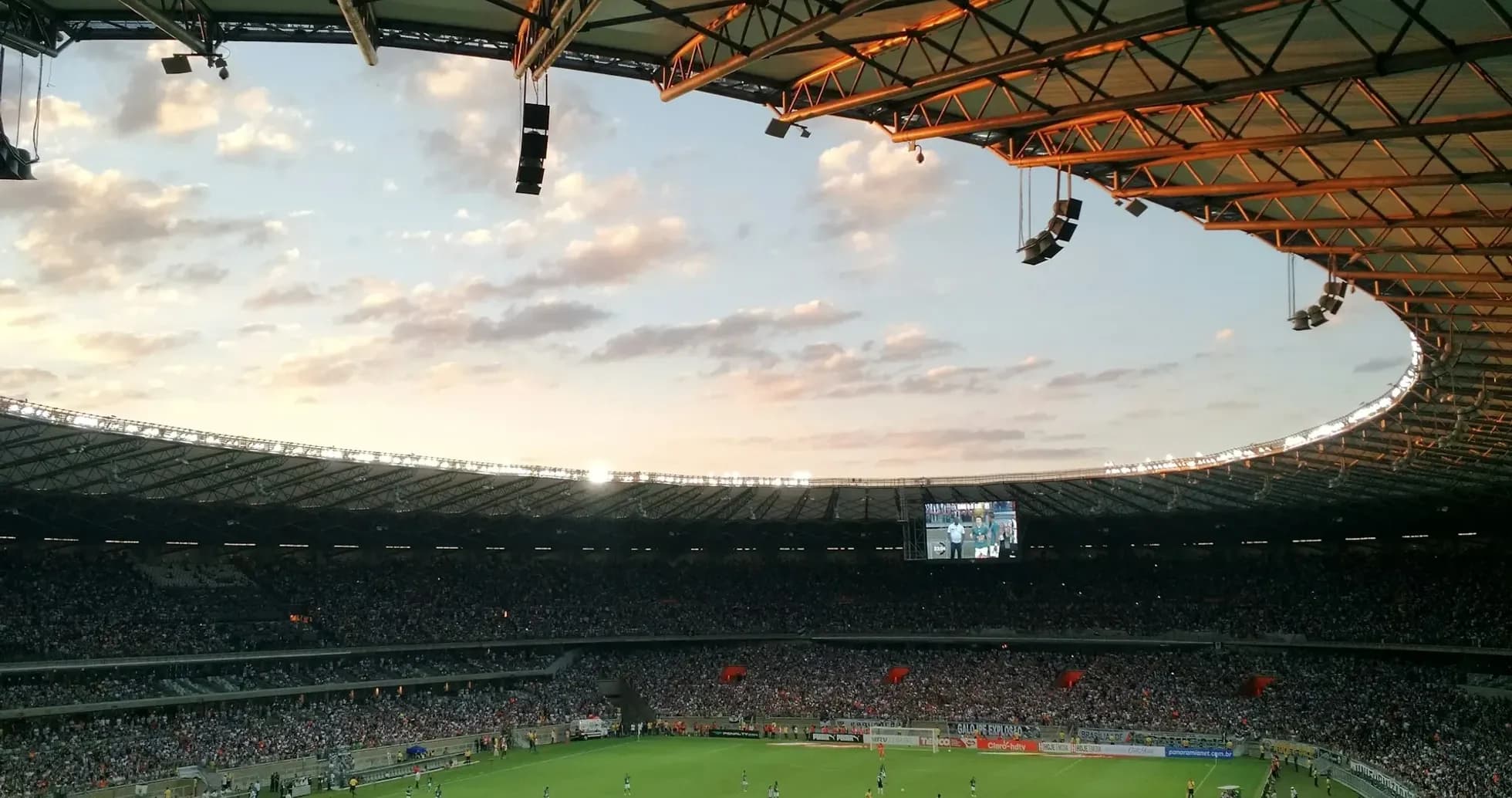
Anfield under grey Merseyside skies, Premier League round 34, and a fixture that felt like a crossroads rather than a routine home date. Liverpool, 4th in the table heading into this game with 58 points and a goal difference of 13 (57 scored, 44 conceded overall), welcomed a Crystal Palace side sitting 13th on 43 points, their own goal difference a slender -3 (36 for, 39 against overall).
By full time, the scoreboard read 3–1 to Liverpool (2–0 at the break), a result that reinforced the season’s underlying patterns as much as it illuminated its tactical nuances. At Anfield this campaign, Liverpool had been a high-variance, high-output machine: 32 goals for and 18 against at home, averaging 1.9 goals scored and 1.1 conceded per home match. Palace arrived as one of the league’s more awkward travellers, with 20 goals scored and 20 conceded away, averaging 1.3 for and 1.3 against on their travels.
Arne Slot doubled down on Liverpool’s season-long identity, rolling again with the 4‑2‑3‑1 that has been used in 31 league matches. Oliver Glasner, true to his blueprint, kept Palace in their familiar 3‑4‑2‑1, the shape that has framed 30 of their league outings. This was a meeting between a possession-heavy, line-breaking host and a compact, transition-hunting visitor.
Tactical Voids and Structural Adjustments
The team sheets told a story of absences before a ball was kicked. For Liverpool, the spine had been chipped away: Alisson (muscle injury), Wataru Endo (foot), S. Bajcetic (hamstring), C. Bradley (knee), H. Ekitike (Achilles), G. Leoni (knee) and G. Mamardashvili (injury) were all ruled out. The consequence was a reconfigured axis: F. Woodman in goal, protected by a back four of A. Robertson, V. van Dijk, I. Konate and C. Jones, with A. Mac Allister and D. Szoboszlai as the double pivot.
The knock-on effect was subtle but significant. Without a natural destroyer like Endo, Liverpool’s midfield screen was more about control and circulation than pure ball-winning. Mac Allister’s tempo-setting and Szoboszlai’s vertical passing became the first line of counter-pressing rather than a classic holding shield.
For Palace, the absence of C. Doucoure (knee), E. Guessand (injury) and E. Nketiah (thigh) removed both bite and rotation options. It placed extra responsibility on A. Wharton and D. Kamada in central midfield, and on J. Mateta as the primary reference point up front.
Disciplinary trends framed the emotional temperature. Liverpool’s season card profile shows a pronounced late-game edge: 30.00% of their yellow cards have arrived between 76–90 minutes, with an additional 16.00% in 91–105. Palace, by contrast, spread their cautions more evenly, but with notable spikes in the 31–45 and 46–60 ranges (both 18.84%). That suggested a contest where Liverpool’s intensity might crescendo late, while Palace risked disciplinary strain around half-time and just after the restart.
Key Matchups
Up front, the duel between J. Mateta and Liverpool’s defensive structure was always going to be central. Mateta came into the fixture with 10 league goals in total, off 52 shots (30 on target), and a profile built on physical duels (270 contested, 101 won). His presence pinned V. van Dijk and I. Konate, forcing Liverpool’s centre-backs to defend not just space but a genuine penalty-box predator.
Liverpool’s “shield” was a collective one. Overall this campaign, they had conceded 44 goals in total across 34 matches, 18 of those at Anfield. The 3‑1 scoreline underlined a familiar pattern: Liverpool can be breached, but they tend to outgun opponents at home. Palace, with 36 goals scored overall and 20 on their travels, posed enough threat to test that balance; their single goal here was a reminder that Slot’s side remains vulnerable to direct, vertical attacks.
On the other side, Liverpool’s own “hunter” threat was distributed. H. Ekitike’s 11 league goals made him the club’s top scorer overall, but his Achilles injury removed that option. Instead, the creative burden fell on Mohamed Salah and C. Gakpo. Salah arrived with 7 goals and 6 assists in total, underpinned by 48 key passes and 42 shots; Gakpo added 6 goals and 5 assists overall, also with 48 key passes and 48 shots. Both started as part of the three behind A. Isak, forming a fluid band with F. Wirtz.
Against a Palace defence that had conceded 39 goals overall and exactly 20 away, the question was whether their back three—M. Lacroix flanked by C. Richards and J. Canvot—could contain Liverpool’s multi-source threat. Lacroix’s profile is that of a modern stopper: 16 blocked shots, 40 interceptions and 293 duels contested, with 179 won. Yet his disciplinary record (3 yellows, 1 red in total, plus 2 penalties committed) hinted at how fine the margins could be when repeatedly exposed to Salah’s and Gakpo’s movement.
Engine Room
The midfield battle was defined by contrast. For Liverpool, Szoboszlai is the metronomic aggressor: 5 goals, 4 assists, 1,988 completed passes with 61 key passes and an 87% accuracy overall. He has also walked the disciplinary tightrope, collecting 8 yellow cards and 1 red this season, and crucially he has missed 1 penalty—an important detail in understanding his high-risk, high-responsibility profile.
Opposite him, A. Wharton and D. Kamada were tasked with threading the needle between containment and progression. Their job was to disrupt Liverpool’s central lanes into Wirtz and Gakpo while still providing clean outlets for wide runners I. Sarr and T. Mitchell. In Palace’s 3‑4‑2‑1, those wing-backs are not just auxiliary full-backs; they are the launchpads for transitions that look to isolate Liverpool’s full-backs 1v1.
Statistical Prognosis and Tactical Verdict
Following this result, the underlying numbers feel almost inevitable. Liverpool’s home scoring average of 1.9 goals was exceeded with three on the day, while Palace’s away average of 1.3 found expression in a solitary, consolation strike. The structural trends held: Liverpool remain a side that wins by imposing volume and variety in attack, even if it means living with a degree of defensive exposure.
In xG terms—while exact figures are not provided—the pattern of the season points towards a Liverpool side that reliably generates strong chances at Anfield, backed by 57 goals in total at an average of 1.7 per game overall. Palace, with 36 goals overall at 1.1 per match, are more opportunistic, leaning on moments rather than sustained siege.
The late-game disciplinary profiles matter for future fixtures. Liverpool’s 30.00% share of yellow cards in the 76–90 window suggests that as matches stretch, their aggression can shade into recklessness. Palace’s red-card split—1 in 46–60 and 1 in 61–75—highlights a vulnerability in the early second-half phase, precisely when tactical adjustments bite hardest.
Tactically, the 3‑1 is a validation of Slot’s 4‑2‑3‑1 as the club’s seasonal backbone: a double pivot that can both build and press, three creative threats behind a central forward, and full-backs who provide width without completely unbalancing the rest defence. Glasner’s 3‑4‑2‑1 remains a coherent away structure, but it depends heavily on Mateta’s hold-up play and the back three’s discipline. When the latter bends under repeated stress—as it did here against Salah, Gakpo and Wirtz—the margins that have kept Palace competitive on their travels begin to erode.
From a squad-analysis lens, this match underlines Liverpool’s depth in advanced areas even without H. Ekitike, and exposes Palace’s reliance on a relatively fixed core. In the run-in, Liverpool’s Champions League push will lean on the creative spine of Szoboszlai, Mac Allister, Salah and Gakpo; Palace’s mid-table security will depend on keeping Lacroix on the pitch, Mateta in form, and the 3‑4‑2‑1 structurally intact against the league’s heaviest artillery.