Manchester United vs Nottingham Forest: A Premier League Thriller
Old Trafford has seen its share of season-defining afternoons, and this Premier League meeting between Manchester United and Nottingham Forest – finished 3-2 to the hosts – felt like another chapter written in that tradition. Following this result, United sit 3rd with 68 points and a goal difference of 16, a reflection of a campaign built on attacking volume and just enough defensive resilience. Forest, 16th on 43 points with a goal difference of -3, remain a side living on the edge, capable of scoring in bursts but constantly flirting with danger.
I. The Big Picture – Structures and Seasonal DNA
Michael Carrick doubled down on Manchester United’s dominant identity with a 4-2-3-1, the same shape they have used in 19 league matches. At home they have been ruthless: 13 wins from 19, with 39 goals scored and 24 conceded. That translates to 2.1 goals for and 1.3 against at Old Trafford, underlining why this stadium has become a platform for front-foot, high-risk football.
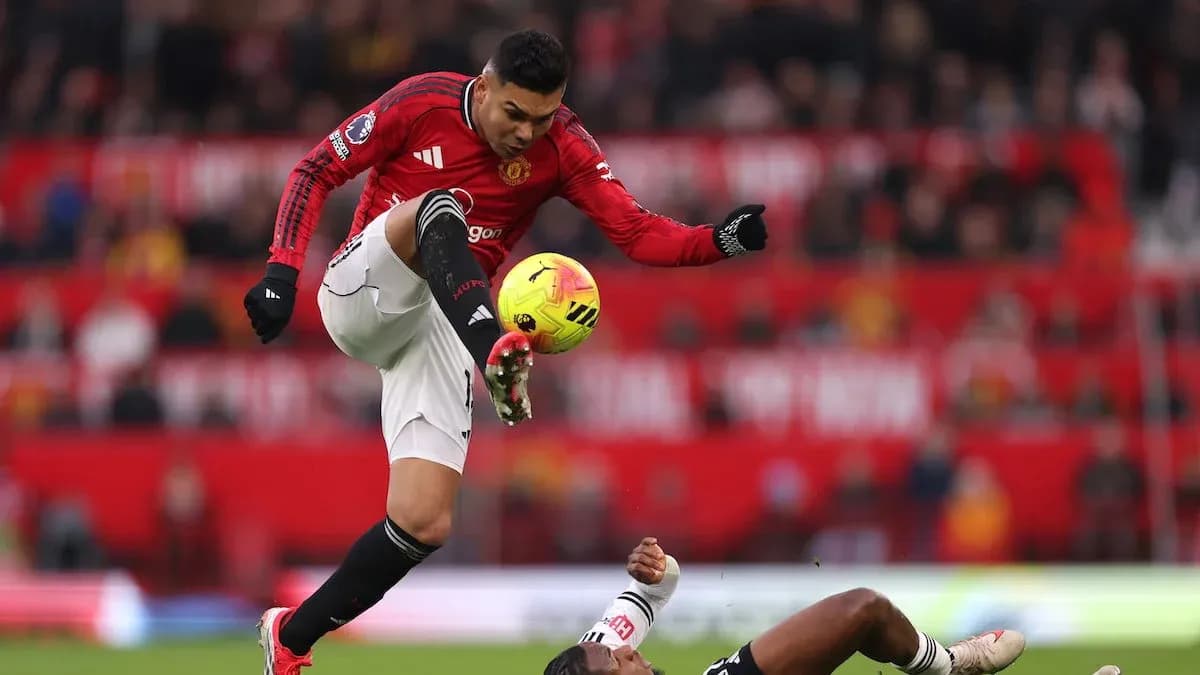
The starting XI told the story. S. Lammens behind a back four of D. Dalot, H. Maguire, L. Martinez and L. Shaw gave United a blend of aerial power and aggressive ball progression. Ahead of them, the double pivot of Casemiro and K. Mainoo acted as the hinge between control and chaos. The line of three – A. Diallo, Bruno Fernandes and Matheus Cunha – sat behind B. Mbeumo as the nominal striker, though in reality the front four constantly rotated to overload half-spaces.
Forest’s response was pragmatic. Vitor Pereira shifted into a 4-4-2, a shape he has used sparingly this season compared to his preferred 4-2-3-1. On their travels, Forest have been braver than their league position suggests: 7 away wins from 19, scoring 28 and conceding 28, an away average of 1.5 goals for and 1.5 against. The selection of C. Wood and Igor Jesus up front, with M. Gibbs-White nominally from midfield, signalled a plan built on directness, second balls and quick counters.
Yet the season’s numbers framed the risk. Overall, United score 1.8 goals per match and concede 1.4; Forest mirror that with 1.3 scored and 1.4 conceded. Both sides live in games that stretch and open. This fixture, finishing 3-2, felt almost inevitable given those underlying rhythms.
II. Tactical Voids – Absences and Discipline
The absentees shaped the tactical voids. For United, B. Šeško and M. de Ligt were both ruled out, stripping Carrick of his most direct centre-forward and a premium organiser at the back. In practice, that pushed Mbeumo into the central lane and increased the creative burden on Cunha and Bruno Fernandes. Without de Ligt, Maguire and L. Martinez had to manage Forest’s aerial threat more conservatively, especially against Wood.
Forest’s injury list was even more defining. O. Aina, W. Boly, C. Hudson-Odoi, Murillo and N. Savona all missed out. The absence of Boly and Murillo removed a great deal of Forest’s central defensive presence, leaving N. Milenkovic and Morato as the core pairing, shielded by N. Dominguez and E. Anderson. Without Hudson-Odoi, Forest lost a direct outlet on the flank, pushing O. Hutchinson into a more prominent wide role.
Disciplinary trends added another layer. United’s season-long yellow-card profile spikes between 46-60 minutes and again from 76-90, each window accounting for 20.63% of their bookings. Casemiro is the embodiment of that edge: 10 yellow cards and 1 yellow-red this season, underlining how his aggression can both anchor and endanger United’s structure. Forest, meanwhile, accumulate 25.42% of their yellows between 46-60 minutes and 22.03% from 61-75, suggesting a side that becomes increasingly stretched and desperate as matches tilt into the second half.
N. Williams is the symbol of Forest’s disciplinary knife-edge. With 6 yellows and 1 red, he is both a relentless defender and a potential liability, especially in a game where he must repeatedly face Cunha and Shaw on his flank.
III. Key Matchups – Hunter vs Shield, Engine Room
The “Hunter vs Shield” duel centred on Forest’s main weapon, M. Gibbs-White, against a United defence that concedes late and often. Gibbs-White’s season – 14 goals and 4 assists, with 57 shots and 31 on target – makes him Forest’s primary threat between the lines. His ability to drift from midfield into pockets around Casemiro and Mainoo was always going to test United’s defensive organisation.
United’s seasonal goals-against distribution reveals a clear vulnerability: 29.41% of their conceded goals arrive between 76-90 minutes, and another 23.53% between 46-60. Forest’s attacking profile dovetails almost perfectly with that. On their travels and overall, they score 26.53% of their goals in the 76-90 window and 20.41% between 46-60. The intersection is stark: United are most fragile precisely when Forest are most dangerous. In a game that ended 3-2, that late volatility felt baked into the matchup.
In the “Engine Room”, Bruno Fernandes and Casemiro faced Forest’s double pivot of Dominguez and Anderson. Bruno’s numbers this season are extraordinary: 8 goals, 20 assists, 54 shots, 133 key passes and 1,940 total passes at 82% accuracy. He is the league’s top creator, and his role between the lines against a Forest midfield that can be overrun was always going to dictate territory. Casemiro, with 90 tackles, 27 blocked shots and 32 interceptions, is the enforcer who allows Bruno to roam.
For Forest, Dominguez and Anderson had to compress the central corridor, deny Bruno time to thread passes into Mbeumo’s runs and Cunha’s drifts, and protect Milenkovic and Morato from being isolated. When they failed to close those lanes, United’s 2.1 home goals-per-game profile loomed large.
Out wide, Williams versus Cunha and Shaw was another decisive duel. Williams’ 94 tackles, 17 blocked shots and 45 interceptions speak to his defensive volume, but his 69 dribbles attempted and 30 successful underline how often he steps high. Against United’s rotations, every aggressive step risked leaving channels for Mbeumo and Diallo to attack.
IV. Statistical Prognosis – xG Shape and Defensive Solidity
Even without explicit xG values, the season-long data offers a clear probabilistic sketch. Heading into this game, United’s home attack – 39 goals in 19 matches, with 24.62% of their goals coming between 76-90 minutes and 18.46% between 31-45 – suggested a team that builds pressure in waves, then overwhelms opponents late. Forest’s away record – 28 goals and 28 conceded in 19 matches, with 31.25% of goals against arriving in the 76-90 window – pointed towards a fragile closing phase.
Combine those curves and a high-scoring contest always looked likely. United’s penalty record (4 from 4, 100.00% conversion, no misses) added another layer of threat in a match where Forest’s defenders, especially Williams, live on a disciplinary tightrope. Bruno himself has won and taken responsibility from the spot, scoring 4 but also missing 2 this season – a reminder that even United’s most reliable weapons carry an element of jeopardy.
Defensively, neither side offers true solidity. Both concede an overall average of 1.4 goals per match, and both show late-game spikes in goals against. That statistical symmetry is precisely what produced a 3-2 scoreline: United’s superior attacking structure and creative ceiling, led by Bruno, Cunha and Mbeumo, just edged Forest’s resilience and Gibbs-White’s individual brilliance.
Following this result, the numbers feel validated rather than surprised. United remain a high-event, high-output side whose 4-2-3-1 at Old Trafford is built to overwhelm. Forest, even in defeat, showed why their away form keeps them afloat: they can hurt almost anyone, especially in the final quarter of games. But when the match becomes a shootout, the deeper squad, sharper creator and more refined attacking patterns still live in red.