Cagliari vs Torino: Tactical Insights from a 2–1 Victory
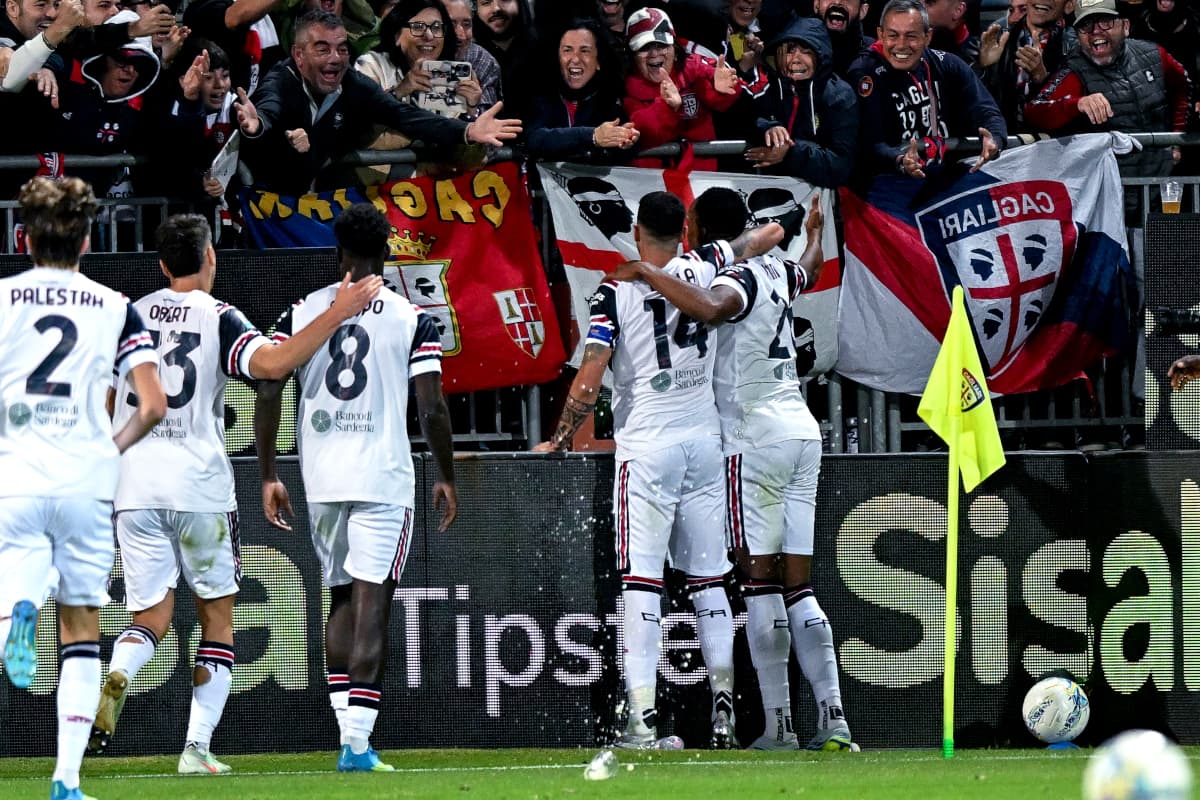
Under the lights of the Unipol Domus, Cagliari’s 2–1 win over Torino felt less like a dead‑rubber in Round 37 and more like a statement of survivalist intent. Following this result, the table still tells of struggle – Cagliari 16th on 40 points with a goal difference of -14 (38 scored, 52 conceded), Torino 12th on 44 with a harsher -19 (42 for, 61 against) – but the ninety minutes in Sardinia revealed two squads heading into the final weekend with very different emotional trajectories.
I. The Big Picture – Shapes, context, and a narrow margin
Cagliari leaned into flexibility with a 4‑3‑2‑1 under Fabio Pisacane, a shape that sought to stabilise a season marked by tactical restlessness. Across the campaign they have used 11 different formations, but the choice here made sense: four at the back to protect a defence that has conceded an overall average of 1.4 goals per game, and a narrow band of creators behind a lone forward to exploit Torino’s vulnerability on their travels, where they concede 1.8 goals per game.
Torino, under Leonardo Colucci, went with a familiar 3‑4‑2‑1, echoing a season in which back‑three systems have been the default (3‑5‑2 is their most used setup, followed by 3‑4‑1‑2 and 3‑4‑2‑1). The idea was clear: use width and the physical presence of D. Zapata with the penalty‑box instincts of G. Simeone, whose 11 league goals underline his status as Torino’s primary finisher.
The scoreboard mirrored the season’s tendencies. Cagliari, who at home average 1.2 goals for and 1.2 against, edged a tight contest by that same one‑goal margin. Torino, whose away record – 4 wins, 5 draws, 10 defeats – has been defined by thin margins and defensive lapses, once again left with nothing despite the attacking talent on the pitch.
II. Tactical Voids – Absences and discipline shaping the night
Both squads arrived diminished in key zones. Cagliari’s absentee list was long and strategically painful: M. Felici, R. Idrissi, J. Liteta, L. Mazzitelli and L. Pavoletti were all unavailable, with J. Pedro suspended for yellow cards. That stripped Pisacane of a traditional penalty‑box reference and an experienced creative hub, forcing him to trust P. Mendy as the spearhead and lean heavily on the ball‑carrying and chance creation of S. Esposito and G. Gaetano.
Torino had their own fractures. Z. Aboukhlal and A. Ismajli were sidelined by muscle injuries, F. Anjorin by a hip problem, and G. Gineitis suspended. The absence of Gineitis, in particular, weakened Torino’s ability to compress space in midfield and protect the back three, leaving more room for Cagliari’s advanced midfielders to operate between the lines.
Discipline has been a season‑long subplot for both sides. Cagliari’s yellow‑card profile is heavily back‑loaded: 27.85% of their cautions arrive between 76–90 minutes, with another 24.05% between 46–60. Their only red‑card cluster is also late, with 100.00% of reds shown from 76–90. Torino, meanwhile, accumulate cards steadily, with a late swell: 20.00% of yellows between 76–90 and 21.43% in added time (91–105). Their lone red this season came between 46–60.
In a match that finished 2–1 after Cagliari had already led 2–1 at half‑time, those numbers frame the narrative: two teams prone to emotional spikes after the break, but Cagliari – for once – managing to ride out the turbulence without a costly dismissal.
III. Key Matchups – Hunter vs Shield, and the battle for control
The headline duel on paper was “Hunter vs Shield”: G. Simeone’s penalty‑area craft against a Cagliari defence that, overall, concedes 1.4 goals per match and has kept only 8 clean sheets in total. Simeone’s season numbers are impressive: 11 goals from 31 appearances, 58 shots (28 on target), and a willingness to graft without the ball (15 tackles, 2 blocked shots, 5 interceptions).
Yet the key to blunting him lay in the left‑sided presence of A. Obert. The Slovak defender has been Cagliari’s disciplinary lightning rod – 9 yellow cards and 1 yellow‑red – but also their most active backline protector: 65 tackles, 18 successful blocks, and 40 interceptions. Obert’s aggression, backed by the aerial presence of Y. Mina and the covering intelligence of A. Dossena, allowed Cagliari to contest every cross and second ball aimed at Simeone and Zapata.
Behind the forwards, the “Engine Room” duel tilted the match. For Cagliari, S. Esposito has been the creative metronome of the season: 7 goals, 5 assists, 954 passes with 67 key passes, and a 75% accuracy rate. His ability to receive between the lines, turn, and feed runners was central to exploiting the spaces around Torino’s midfield two of E. Ilkhan and M. Prati. Esposito’s defensive work – 52 tackles, 4 blocked shots, 16 interceptions – also meant Cagliari could counter‑press immediately after losing possession, preventing Torino from launching clean transitions.
Torino’s wing‑backs, M. Pedersen and R. Obrador, were tasked with stretching Cagliari’s back four and pinning the full‑backs, particularly G. Zappa. But with Cagliari’s narrow front three of Gaetano, Esposito, and P. Mendy collapsing centrally, Torino’s possession often became congested, forcing hopeful deliveries rather than crafted chances.
IV. Statistical Prognosis – What this performance says about both squads
Following this result, the broader statistical canvas still paints Cagliari as a fragile but stubborn side. Overall they average 1.0 goals for and 1.4 against per match, have failed to score in 14 of 37 games, yet have produced pockets of high‑ceiling performance – a biggest home win of 4‑0 and 6 home clean sheets. The win over Torino fits that pattern: when their structure holds and Esposito dictates, they can edge games by fine margins.
Torino remain an enigma. Overall they score 1.1 goals per game and concede 1.6, with 12 clean sheets suggesting a side that can be defensively solid in spells, but their away record – 17 goals scored and 34 conceded across 19 matches – underlines a chronic imbalance. Their biggest away defeat, 6‑0, looms over every risky press and high line.
From an xG‑style reading, Cagliari’s compact 4‑3‑2‑1, their home averages, and Torino’s away concessions point to a narrow home edge that this 2–1 scoreline broadly validates. Cagliari created the higher‑value situations through central overloads and second‑ball pressure; Torino relied more on individual quality in the final third.
As both squads look beyond this fixture, the blueprint is clear. Cagliari must continue to build around the passing and pressing of Esposito and the defensive steel of Obert, while managing their late‑game discipline. Torino, for all Simeone’s cutting edge, need a more robust midfield screen and a calmer defensive line away from home if they are to turn their sporadic clean sheets into a consistent platform rather than an exception.