Manchester United's Struggles: Carrick and Wilcox Under Pressure
The boos started before the final whistle. Not a furious roar, more a weary soundtrack of frustration as Manchester United slipped out of the Carabao Cup on Wednesday. Mixed in were pockets of apathy, which said even more.
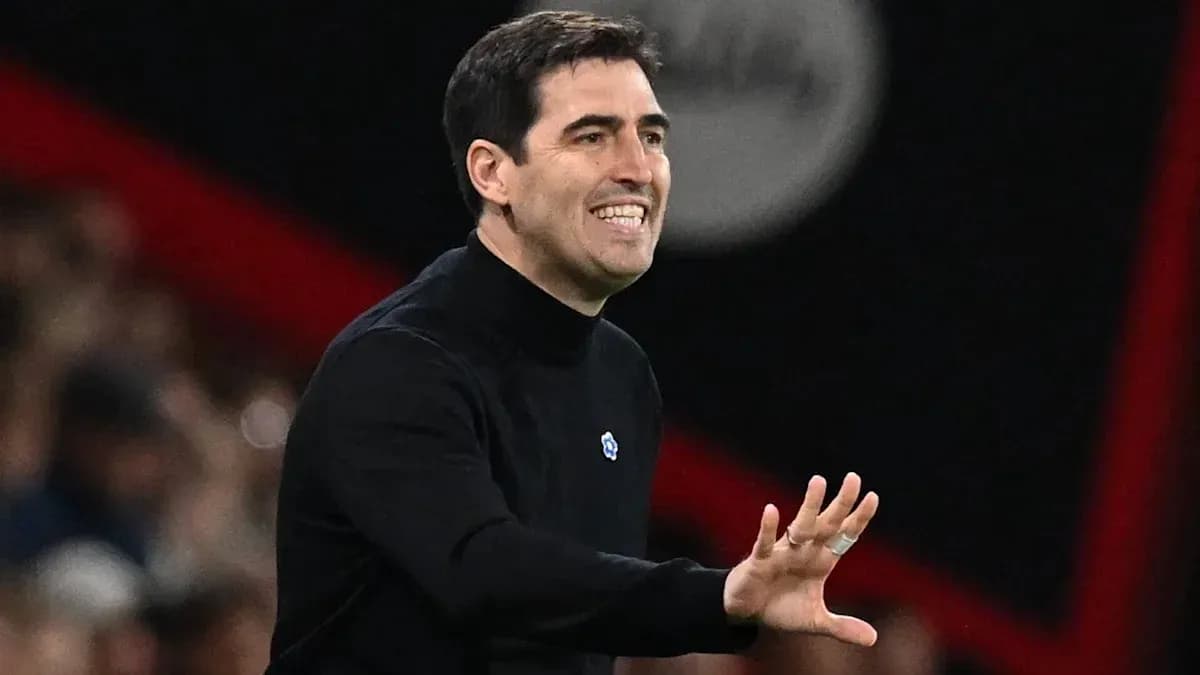
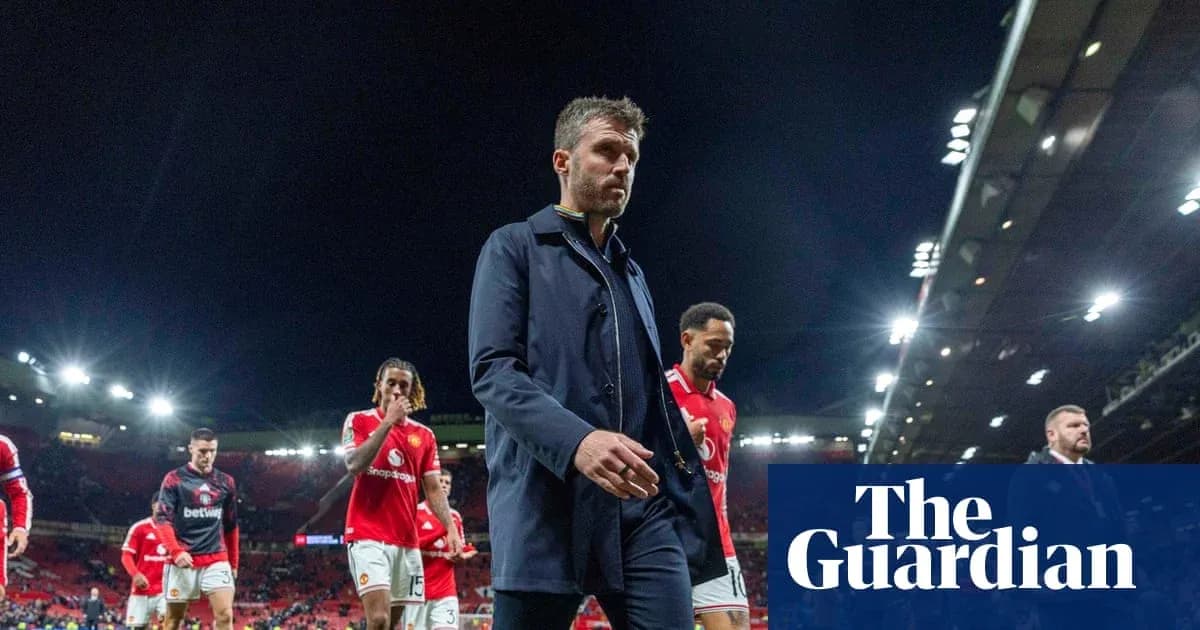
Michael Carrick stood on the touchline, expression fixed, as the discontent rolled down from the stands. He and his players absorbed the anger. Jason Wilcox, the director of football, left the directors’ box looking anything but impressed. Yet for all the focus on the dugout, the responsibility stretches far beyond the head coach.
This is the natural order in football. Supporters know what they are watching and judge quickly. They see Carrick and his squad as the visible face of the club – the ones fronting press conferences, the ones paraded in sponsor campaigns, the ones whose names get chanted or booed. The head coach, in particular, becomes the lightning rod for everything: tactics, selections, transfers, even when those decisions are not truly his.
Carrick only came back to United in January. The broader strategy predates him and sits above him. But the job comes with a target on the back. Lose at Fulham on Sunday and that target grows larger.
United’s fans are not naïve. They know exactly who runs their club. Protests against the Glazer family and Sir Jim Ratcliffe have become a regular backdrop. They understand that not every misplaced pass or tactical flaw is down to the man on the touchline or the 11 on the pitch. The boos on nights like Wednesday are for the performance. The apathy is reserved for something deeper.
What stings is the wider context. United are back in the Champions League, yet were outspent in the summer by promoted clubs. After years of financial mismanagement, this is where they find themselves: counting pennies while rivals spend freely, and hoping that every pound is used wisely.
On the pitch, the warning signs are glaring. Racing into a two-goal lead against Brighton inside 10 minutes, then barely laying a glove on them for the remaining 80 and deservedly losing, is not just a bad night. It is a symptom. Carrick knows it.
Brighton rotated heavily but still fielded an exciting, coherent side stitched together by smart scouting and bold recruitment. This summer they bought from seven different countries. United, by contrast, took four players from fellow Premier League clubs. Where Brighton embraced risk and imagination, United stuck to the familiar. The irony is sharp: their most effective signing last summer, pound for pound, was Senne Lammens from Royal Antwerp.
Carrick and Wilcox will be judged more fairly once Carlos Baleba, the most expensive of the three summer signings, is available. His mobility and profile are supposed to address a glaring weakness. Targeting central midfielders after Casemiro’s departure and Manuel Ugarte’s struggles made sense on paper. But it was not the only area in need of surgery.
Inside the club, there was no denial about the squad’s overall shortcomings. Yet the way they chose to strengthen – three big-money buys for the same area of the pitch – already looks naïve. Buying within the Premier League offers quicker adaptation, but it rarely comes cheap. And with a shortage at left-back and Joshua Zirkzee still failing to convince, committing £50m to Andrey Santos rather than sourcing a cheaper midfield option has left the squad lopsided.
Someone above Carrick needs to explain why £155m went on three players in broadly the same position while other holes gaped open. Instead, the outside world is left to guess, and Carrick is left to cobble together a plan B when Luke Shaw, as many feared, disappears onto the injury list again.
Wilcox has spoken publicly – but only when the sun was shining. On 30 October 2025, after three straight wins, he sat down with United’s in-house media and outlined a long-term vision. Two months later, that plan was ripped up when Ruben Amorim was sacked. Since then, beyond formal statements on dismissals, Wilcox has kept his counsel as results have dipped and the team has slumped to 13th.
Across Europe, sporting directors front up to the media as part of the job. In the Premier League, the trend has been slower to catch on. At United, the silence is deafening.
Wilcox’s rise has been rapid. He arrived from Southampton in 2024 as technical director and played a key role in the decision to keep Erik ten Hag after an eighth-placed finish. Ten Hag did not survive the poor start to the following season. Amorim came in from Sporting with a clear philosophy but a squad ill-suited to his ideas and no budget for the overhaul he needed. The result was grim: 15th in the league and a tame Europa League final defeat to Tottenham.
When Amorim was sacked after 14 underwhelming months, Wilcox was given another chance to get it right. Carrick became the next man in.
He is not blameless. This United side are underperforming, and thrashings of promoted Ipswich and Azerbaijani side Sabah cannot disguise the broader pattern. The defence has leaked seven goals in four league games. Against Brighton, the partnership of Leny Yoro and Ayden Heaven looked alarmingly out of their depth. Up front, the attack has rarely looked like a cohesive unit.
Wilcox’s reputation was forged at Manchester City’s academy, where colleagues praised his work and saw him as ideally suited to that environment. At United, in a more senior role, his decisions are under a harsher spotlight. If JJ Gabriel leaves, many supporters will be furious, but in this case Wilcox would not be the villain. He has pushed hard to keep the teenager, even engaging with his inner circle to try to persuade him to stay.
Still, the broader point remains. At United, power has clustered in certain offices, but only one man is consistently forced to carry the can. Ten Hag and Amorim paid with their jobs. Others have continued largely unchallenged.
Carrick and Wilcox are both heavily invested in making this work. Both know the stakes. Yet as the boos grow louder and the league table hardens into something more than an early-season quirk, it feels like only one of them will truly face the consequences if United do not turn.