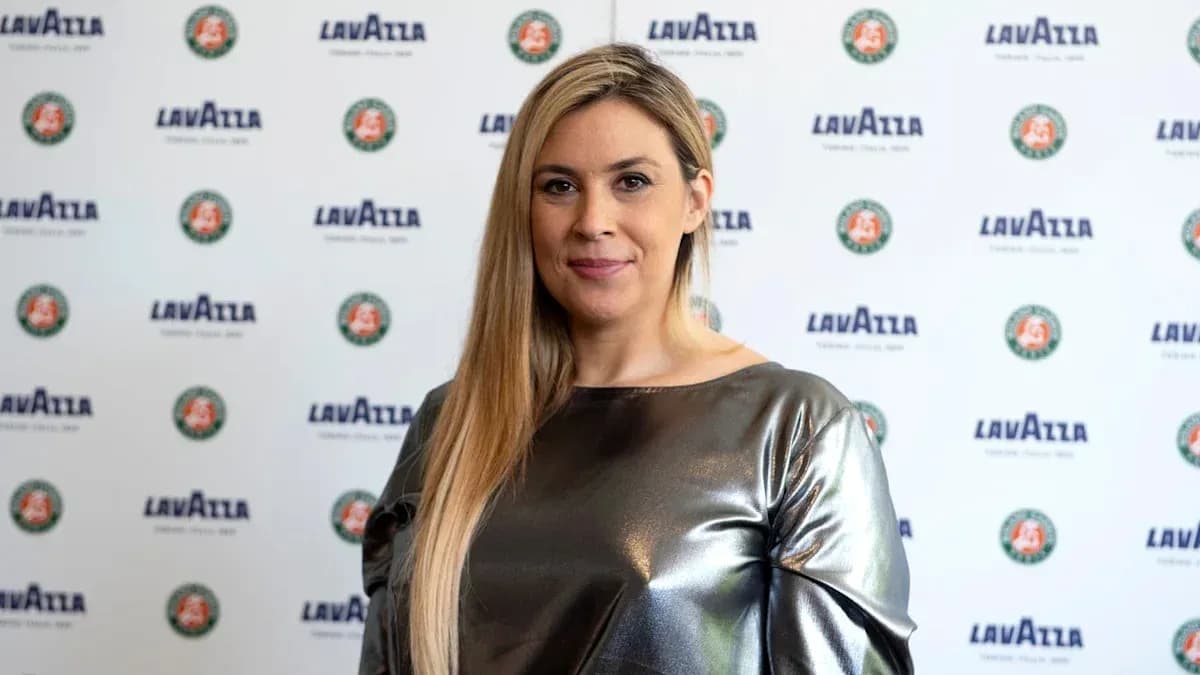
Marion Bartoli Reflects on Wimbledon Triumph and Body Image Attack
Marion Bartoli still cannot quite believe it. Not the Wimbledon title, not the improbable run in 2013 that ended with her lifting the Venus Rosewater Dish. The comment.
A decade on from the greatest day of her professional life, the former Wimbledon champion says she "still can't understand" how, in the glow of that moment, a broadcaster chose to attack her appearance.
Bartoli had just beaten Sabine Lisicki to win Wimbledon, the summit of a career built on stubbornness and repetition, on playing through pain and pushing past constant criticism of her unorthodox technique, her ability, her body. While she stood on Centre Court as a Grand Slam champion, BBC commentator John Inverdale, on 5 Live, wondered aloud whether her father and coach, Walter, had told her as a child that she would have to "be scrappy and fight" because she was "never going to be a looker" like Maria Sharapova.
The line was condemned across the sport. The BBC apologised and called the remarks "insensitive". For Bartoli, the sting never really faded.
Speaking to The Times, she said: "I still can't understand the comment he made. How on earth, when someone just achieved a childhood dream, can you say that?
"It is just absolutely disgusting, so yes, unfortunately it's been a constant pressure. And it's only on female [players]. A male would never be treated that way."
That pressure did not arrive in isolation. It landed on an athlete whose entire journey had already been framed, often cruelly, through the lens of how she looked rather than how she played. She answered with a Wimbledon title, then, astonishingly, walked away.
Forty days after her triumph, Bartoli retired, her body broken by years of toil. She spoke of constant pain, of injuries that no longer allowed her to compete at the level she demanded of herself. The decision shocked many, but those close to her knew how long she had been pushing the limits.
She tried to come back in 2018. The return was brief, another attempt cut short by the same physical problems that had chased her out of the game in the first place.
The real battle, though, unfolded away from the tour.
In the years after that first retirement, Bartoli descended into a life-threatening struggle with anorexia. By Wimbledon 2016 she had lost 30kg. The once relentless ball-striker, who thrived on repetition and power, had become frighteningly frail. She was eventually hospitalised for months before her health began to turn.
A key intervention came from within the sport she loved. That summer, then-All England Club chairman Philip Brook told her she was too unwell to compete in the Wimbledon legends' invitational event. It was a blunt message, but a necessary one.
She told The Times: "That's when I really hit the lowest of the low, because you can take everything away from me, but not tennis.
"Tennis is my true passion. When the racket is in my hand, that's when I'm happiest, so that's when I thought, 'I have to get myself back up somehow. I can't let this destroy me.'
That conversation forced her to confront a reality she had been resisting.
"I will be forever thankful to Philip because I was in such denial that I think otherwise I would have kept hurting myself. He was strong enough to tell me and that got me to understand that I had to recover."
Today, Bartoli is back in tennis in a different role, coaching British player Harriet Dart, trying to pass on the resilience that carried her through both the public scrutiny and the private darkness. Her words still carry the sharp edge of someone who has not forgotten how a historic victory was undercut by a throwaway line.
The Wimbledon trophy sits in her past. The scars of what followed, and the standards she demands for the next generation of female players, very much belong to the present.