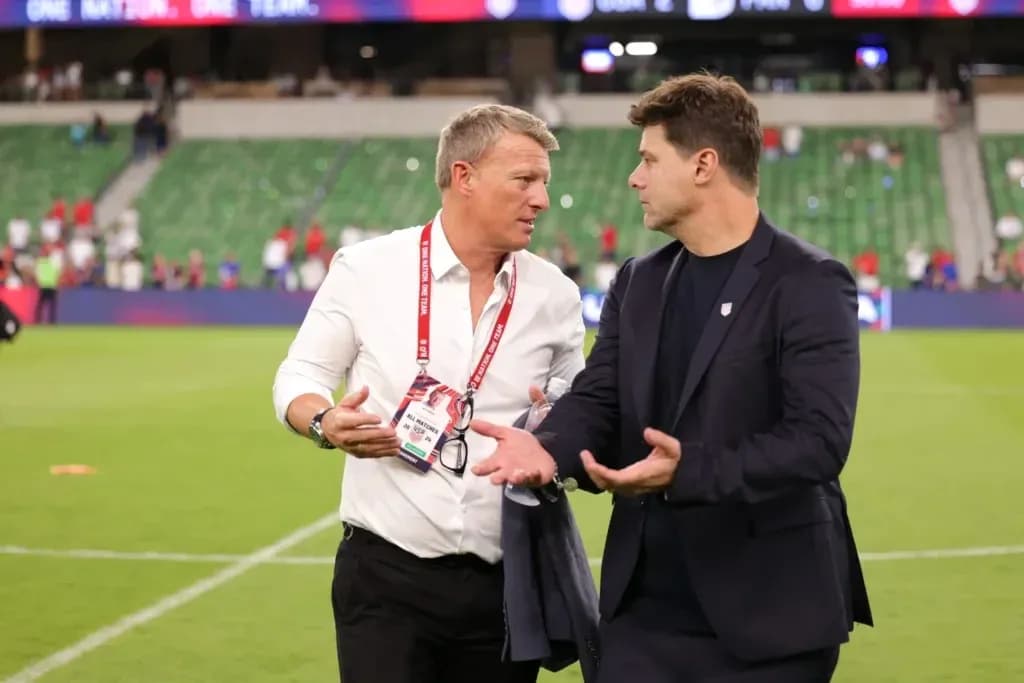
Matt Crocker Leaves U.S. Soccer for Saudi Arabia Role Ahead of World Cup
Matt Crocker has walked away from U.S. Soccer with immediate effect, leaving his post as sporting director to take a similar job with Saudi Arabia, multiple sources confirmed on Monday. The timing is jarring on paper: less than two months before the U.S. men open a home World Cup.
Inside U.S. Soccer, the message is simple — and defiant: the plan is built, the work is done, and the tournament will not wait for anyone.
A sudden departure, a shared workload
With Crocker gone, the federation will spread his responsibilities across three senior figures. Assistant sporting director Oguchi Onyewu, head of women’s development Tracey Kevins, and COO Dan Helfrich will collectively oversee the sporting side in the run-up to the 2026 FIFA World Cup, co-hosted by the United States, Canada and Mexico.
The U.S. men start their campaign on June 12 against Paraguay in Los Angeles. That date has been circled for months. Crocker will not be there in an official capacity. His blueprint will.
Helfrich, stepping into a more public-facing role, was adamant the change at the top will not seep into the dressing room or the training ground.
“I anticipate zero impact on World Cup preparation as a result of Matt's decision,” he said on Monday. “Mauricio and his staff have full control of the preparations for this summer's tournament, and we have full confidence in them. This transition in no way impacts those plans, which have been long-established.”
The message is clear: Mauricio Pochettino runs the football side of the men’s team now. That was Crocker’s hire. It is now U.S. Soccer’s anchor.
Crocker’s brief but pivotal tenure
Crocker arrived in April 2023 from Southampton, then in the English Premier League, stepping into the job vacated by Earnie Stewart, who left to take over Dutch club PSV Eindhoven. The Welshman, born in Cardiff, did not ease his way in. He attacked the two most important coaching appointments in the federation’s modern history.
On the women’s side, he secured Emma Hayes, long courted and widely regarded as one of the elite managers in the global game. Hayes promptly justified the pursuit, guiding the U.S. women’s national team to a fifth Olympic gold medal at the 2024 Summer Games in Paris. That success reset standards after a bruising 2023 World Cup.
On the men’s side, Crocker landed Pochettino in September 2024, a statement hire in every sense. The Argentine arrived with heavyweight credentials from Chelsea and Paris Saint-Germain, and with him came the expectation that the U.S. would no longer simply be a plucky host in 2026, but a serious tournament operator.
Those two appointments defined Crocker’s almost three years as the federation’s chief on-field executive. His day-to-day presence is gone now. His fingerprints remain on both national teams.
Succession search begins — with familiar names in the frame
Even as they insist the World Cup build-up will not be derailed, U.S. Soccer has already started looking beyond Crocker.
Helfrich said the federation has launched “a thoughtful and comprehensive search for a successor” and stressed the scope of that search will be wide.
“I anticipate we will look both domestically and globally in that process,” he said.
One name will draw inevitable attention: Oguchi Onyewu. The former USA defender, who played at the 2006 and 2010 World Cups, was a serious candidate for the sporting director job three years ago before Crocker ultimately got the nod. Now Onyewu steps into a shared leadership role at a moment of maximum visibility, helping steer preparations for a home World Cup while the federation weighs its options.
Tracey Kevins, a key figure in the women’s pathway, and Helfrich, who already sits at the heart of the organization’s operations, complete the interim trio. None carries Crocker’s title. All will carry pieces of his portfolio.
World Cup focus, with an eye on the future
The immediate test is not a boardroom hire but a match: Paraguay, June 12, Los Angeles. Pochettino and his staff control the training sessions, the tactical plans, the squad decisions. Crocker’s departure does not change the schedule, the opponent, or the expectations of a home crowd that has waited a generation for this stage.
The bigger question sits just beyond the summer. With Hayes and Pochettino in place and a new sporting director to be named, how aggressively will U.S. Soccer build on the foundation Crocker laid — and how quickly will his successor be asked to push it even higher?