Mauricio Pochettino's Journey with the USMNT: From Defeat to Triumph
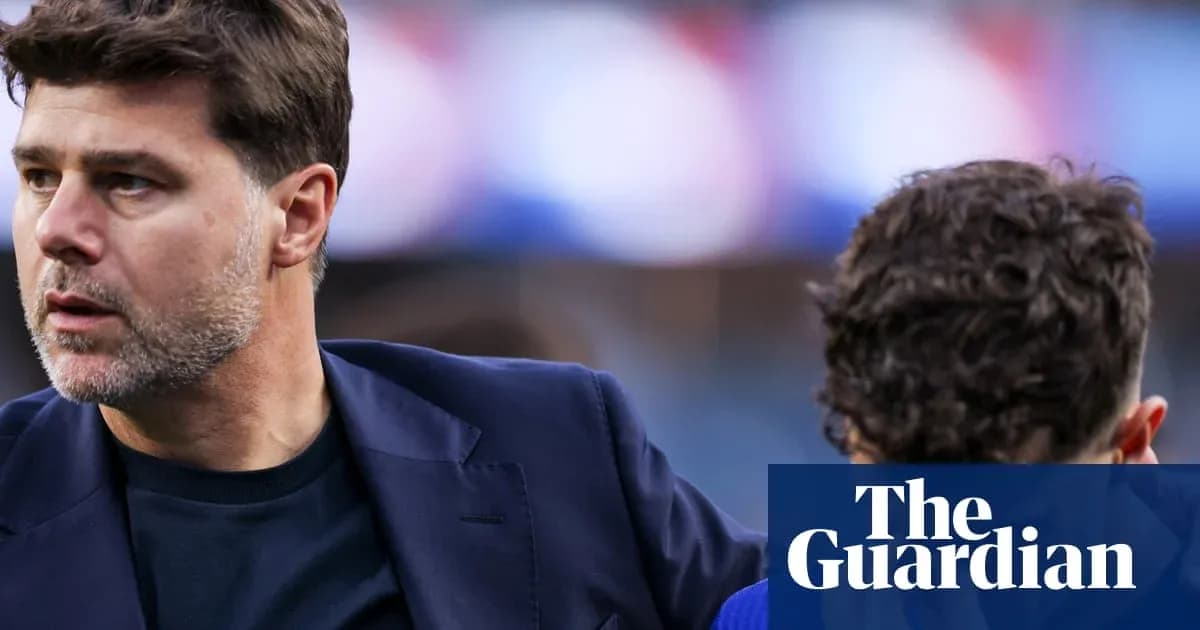
Mauricio Pochettino stood on the touchline in Houston with tears in his eyes, beaten by Mexico, drowned out by their supporters, and confronted by a brutal truth.
His team had just lost the 2025 Gold Cup final. In their own country. In one of the biggest metro areas in the United States. And yet the stadium roared for El Tri.
It felt like a derby played in enemy colors. Tottenham’s home decked out in Arsenal red. A supposed home final that sounded like an away day.
The defeat hurt. The soundtrack hurt more.
A punch before the tears
By the time that final whistle blew in Houston, Pochettino already knew the size of the job. The “big bang” moment, as he called it, had come months earlier.
In March 2025, the Concacaf Nations League looked like familiar terrain. Beat Panama in the semi-final, then face Mexico or Canada in yet another regional showpiece. The US had owned this competition, lifting the first three editions.
This time they never got close.
Panama, organized and burning with purpose, shut them down. The US barely laid a glove on them. And the backdrop was as damning as the football.
“It was empty,” Pochettino recalled. Panama and Mexico were due to play after. The people in the stands were mostly there for them.
The US once treated Panama as routine. As of mid-2021, the record read 17-4-2 in their favor. That old hierarchy has eroded. On this night, Panama took a fourth win in six meetings, adding to a 2023 Gold Cup semi-final, a 2024 Copa América group game, and now a first Nations League final. One mental lapse, one third shot, one goal. One crash.
“That was [a] good crash, no?” Pochettino said later, almost relishing the bruise. Bad results, he insisted, were part of the plan. Diagnose the problems, chase the solutions. He believed they would come.
One of those problems, in his eyes, lived inside the dressing room.
No passengers
Comfort had crept in. Status had settled. So when Christian Pulisic asked to skip the Gold Cup but still join for the warm-up friendlies against Turkey and Switzerland, Pochettino drew a hard line.
No.
He wanted one group, together from the first day of camp to the last minute of the tournament. The same principle he would apply to his World Cup squad. All-in, or watching from home.
The stance triggered friction. Pulisic pushed back. Results didn’t help Pochettino’s case either: the US took decisive losses in those pre-Gold Cup friendlies, and the outside noise swelled.
Inside, though, a new core began to surface.
- Malik Tillman finally stepped into the role of chief playmaker.
- Matt Freese seized the No 1 shirt and then outlasted Keylor Navas in a penalty shootout.
- Alex Freeman, young and fearless, played his way into the “undroppable” category.
- Sebastian Berhalter forced his way into the midfield rotation.
Pochettino changed as well. The Gold Cup gave him something national team managers rarely enjoy: a month with a fixed squad, every day on the grass. It felt more like club football, his natural habitat. Systems sharpened. Relationships deepened. The team began to look like his.
They still lost the final. Mexico still celebrated. But in the dressing room, with his voice cracking and the noise of that hostile Houston night still echoing in his head, Pochettino delivered a message that cut through the disappointment.
“Keep improving, but please don’t change.”
“Why not us?”
The question that really stuck with him came a few weeks later in Columbus, Ohio.
He sat in the stands at Ohio State v Texas, a college football game on 30 August 2025. Seventy thousand fans roared, lived and died with every snap.
His mind went straight back to Houston, to Nations League, to empty seats and rival colors.
Why not us?
“If the fans are very passionate, why not with us, with soccer?” he asked. “Because if [the support is] with us, they will be and show the same passion. It’s massive. It’s so powerful for the player.”
From that thought, a mantra was born: “Why not us?”
The words matched a tactical shift. With Pulisic and other mainstays back in September, Pochettino unveiled the shape that would become this team’s identity. Fluid lines. Constant movement off the ball. Rapid switches from flank to flank. A refusal to play safe when gaps appeared.
A US side that didn’t just compete. It entertained. Showtime.
The results started to reflect the change. A 2-0 win over Japan in September. A draw with Ecuador and a win over Australia in October. A November window capped by a victory over Paraguay and a 5-1 demolition of Uruguay, a statement to close 2025.
Momentum, at last. Then came the third lesson.
The March slap
Two games in March, two defeats. A 7-2 aggregate that stripped away the gloss.
Worse than the scoreline was the manner. The team looked unsure. The defense, so improved, suddenly wobbled. Against Belgium they even slipped back into an older, more porous structure. Pulisic, mired in the worst goal drought of his career, started at center-forward against Portugal and barely registered.
Inside camp, players insisted the belief never wavered.
“I feel like we’ve always bought in,” Chris Richards said this week. “But I really feel like the March camp that we had was really important. … I think we really gave, you know, two really good teams in Europe a really strong game.”
Pochettino defended his group but didn’t sugarcoat the talent gap.
“Belgium and Portugal have, in the top 100 players, [a] few or some players in that top 100. I think we don’t have [any],” he admitted.
Outside, the old skepticism resurfaced. This looked like the USMNT fans knew too well: capable of the odd big win, just as capable of falling flat against anyone. The question hung over the schedule.
Had they made a mistake lining up strong pre-World Cup tests against Senegal and Germany?
Pochettino didn’t blink.
“No,” he said. “That is good for us. It’s going to measure our level.”
He got his answer. A 3-2 win over Senegal that showed resilience and cutting edge. A narrow 2-1 defeat to Germany that felt more like calibration than collapse. The team were rounding into shape at exactly the right time.
From hard knocks to head table
The World Cup arrived on home soil, and the version of the US that stepped onto the field looked nothing like the one that trudged out of that empty Nations League semi-final.
They bulldozed Paraguay 4-1. They muted Australia 2-0. Six goals scored, one conceded. Two wins from two. Group D wrapped up with a game to spare, Thursday’s meeting with eliminated Turkey reduced to a curiosity.
Only four teams at this World Cup secured top spot in their groups after two matches. Argentina and Germany, giants of the men’s game. Mexico, carried by a fanbase that turns every neutral venue into a cauldron and by altitude-hardened experience in hostile environments.
And the United States, coached by Mauricio Pochettino.
The atmospheres this time? Raucous, partisan, electric. Exactly what he had imagined in Columbus. Exactly what he had begged for in that Houston locker room.
Players talk now about how the noise drives them, how it feeds the high-tempo, shape-shifting style they’ve embraced. The program, by any measure, is at its highest point under Pochettino.
Mark McKenzie, a defender who has lived every bump of this journey, framed it simply.
“It’s not going to be figured out overnight, it’s not going to be figured out in one camp, or sometimes in six months, or 12 months, maybe not as fast as everybody wanted,” he said. “I think we’re showcasing that it’s a process.”
The process has taken them from empty seats and rival colors to center stage at a home World Cup. The question that once sounded like a plea now feels like a challenge to the rest of the field.
Why not them?