Messi Leads Argentina to World Cup Final with Stunning Comeback
Lionel Messi walked off the pitch in tears, but not from relief alone. Argentina had been nine minutes from going out, trailing England 1–0, the dream of back-to-back World Cups slipping away. Then Messi grabbed the game by the throat.
In the final half hour, with Argentina chasing shadows and the clock draining away, the captain began to bend the match to his will. He dropped deep to dictate, drifted wide to drag markers out of position, then suddenly appeared between the lines where England could neither track him nor stop him. The pressure built, wave after wave.
It finally broke.
Enzo Fernández, once a teenager begging Messi not to walk away from the national team, became the man who kept this campaign alive. Latching onto one of those late Messi-inspired moves, he struck the equalizer that turned Argentine despair into raw belief and yanked the 2026 World Cup semi-final away from England.
The stadium changed in an instant. England, who had controlled long stretches, now looked stunned. Argentina smelled blood.
Messi, still orchestrating, found another opening. This time it was Lautaro Martínez who finished the job, converting a second late chance with ruthless calm to flip the scoreline and send Argentina into yet another World Cup Final. Two goals in the last 10 minutes. One old genius, two clinical finishers, and a team that simply refused to let go.
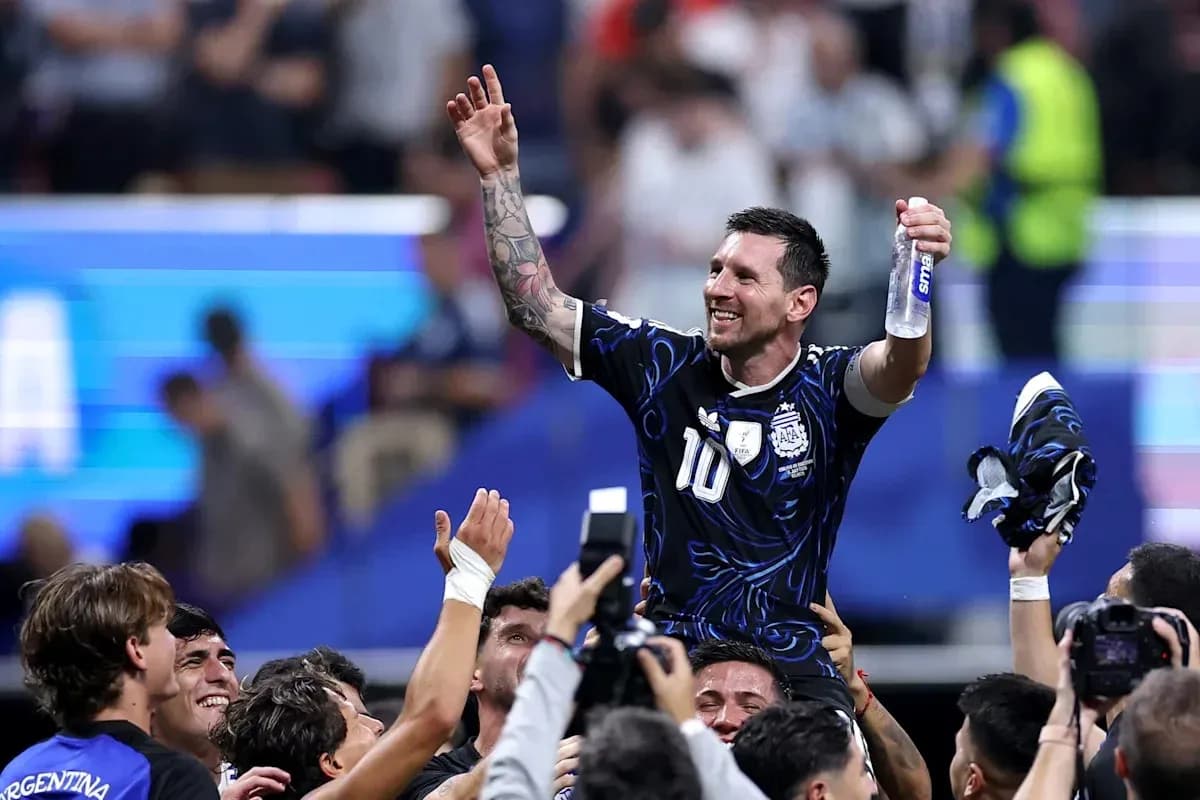
When the whistle went, the tactical diagrams and statistical debates melted away. The cameras found Messi and Rodrigo De Paul locked in a tight embrace, both overwhelmed by what they had just dragged themselves through. In the middle of the chaos, Messi’s words cut through clearly.
“I love you guys, we weren’t going to leave, man… We were going to do it.”
It was not a slogan. It was a promise delivered.
De Paul had entered in the 72nd minute, thrown into a midfield fight that Argentina were losing. He brought energy, bite, and the kind of relentless pressing that Messi’s late magic needs around it to truly matter. As Argentina surged, De Paul was everywhere: closing spaces, snapping into duels, offering himself as an outlet. When the comeback was complete, the emotion on his face said everything about what this run means to the group.
This is Messi’s dressing room, but not in the old sense of a star carrying a fractured side. His authority now is rooted in something deeper: shared scars and shared belief. These players grew up watching him suffer. They remember the frustration of 2006 and 2010, the agony of 2014, the weight of a nation that wondered if this golden era would end without a World Cup.
Enzo Fernández is the clearest symbol of that journey. In 2018, as a young fan, he wrote a public tribute pleading with Messi not to retire from international football after another painful exit, this time in the Round of 16. Eight years later, he is on the pitch beside him, scoring the equalizer that keeps Argentina’s 2026 dream alive. The roles have flipped, but the devotion has not.
Around them, a squad that once idolized Messi from afar now fights for him up close. They already climbed the mountain in 2022. They know what it took. They know what it cost. Yet here they are again, one game from something even more outrageous.
Spain await in the Final, a slick, fearless side with their own generational ambitions. Beat them, and Argentina will become the first nation in 64 years to defend the World Cup title. Not just champions, but a dynasty.
For Messi and this group, it is no longer about silencing critics or chasing validation. Nights like this one against England show something else: a team bound by love, by history, and by the stubborn refusal to let an era end quietly.
One more match. Ninety more minutes to decide whether this Argentina side merely defined a generation—or rewrote football history.