Mexico vs England: Tactical Analysis of a 3-2 Defeat
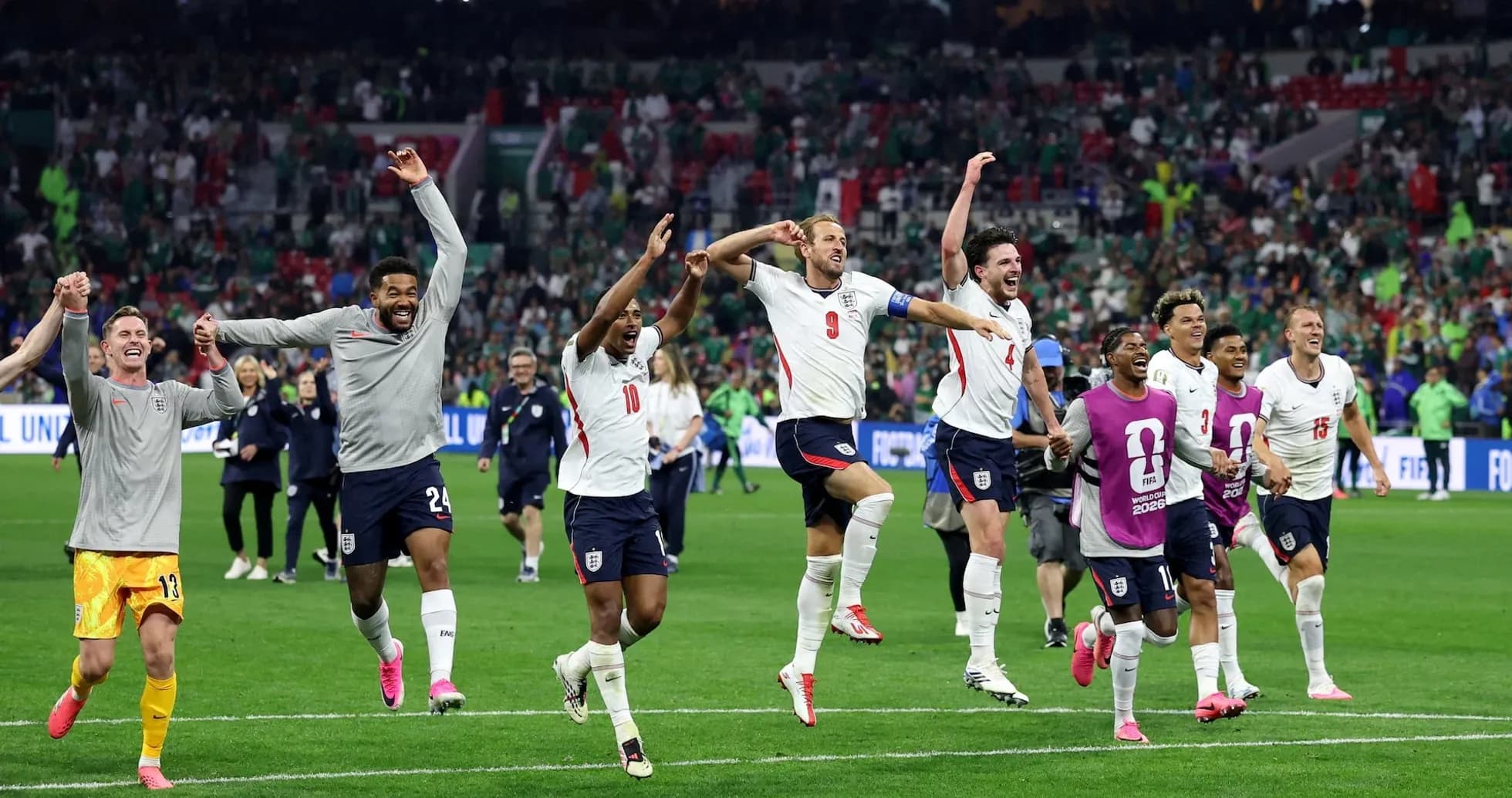
Mexico’s 3-2 defeat to England at Estadio Azteca was a tactical paradox: territorial and technical dominance from Javier Aguirre’s side against Thomas Tuchel’s ruthless efficiency and game-state management. Over 90 minutes, Mexico’s 4-3-3 imposed long spells of pressure and possession, but England’s 4-2-3-1, even after going down to 10 men, maximised transitions, protected central spaces, and turned a narrow xG edge (1.87 vs 1.55) into a decisive scoreboard advantage.
Mexico’s structure with Erik Lira as the single pivot and Luis Romo and Gilberto Mora as interiors was designed to stretch England’s double pivot of Declan Rice and Elliot Anderson. The hosts’ 67% possession and 455 passes (420 accurate, 92%) underline how effectively they circulated the ball, especially via the full-backs. Jesús Gallardo and Jorge Sánchez pushed high and wide, giving width to release Roberto Alvarado and Julián Quiñones inside the half-spaces, while Raúl Jiménez pinned the centre-backs.
However, England’s defensive plan was clear: accept long phases without the ball, compress the central corridor, and trust their back four to manage crosses. Marc Guéhi and Ezri Konsa stayed compact, with Jarell Quansah and Nico O’Reilly relatively conservative for a Tuchel side, rarely overcommitting in overlapping zones. Despite facing 20 shots, England allowed only 12 inside the box and blocked none, suggesting Mexico were often forced into rushed or sub-optimal shooting positions rather than clean, close-range looks.
On the ball, England’s 4-2-3-1 morphed into a 2-3-5 in their best attacking moments. Rice anchored in front of the defence, Anderson drifted to support the left, and the line of Bukayo Saka, Jude Bellingham, Anthony Gordon and Harry Kane attacked Mexico’s back line. The first-half pattern showed how dangerous this was: England produced just six total shots but put five on target, perfectly aligned with a plan based on quality over volume. Bellingham’s double and Kane’s later penalty reflected a side that attacked with precision rather than frequency.
Game State Changes
Game state turned sharply with Quansah’s red card at 54' (“Serious foul”). From that point, England’s shape shifted towards a 4-4-1 out of possession. The substitution of Saka for John Stones at 57' rebalanced the back line, with Stones adding aerial presence and allowing Tuchel to narrow the block even more. Kane remained the focal outlet until his 90' substitution for Morgan Rogers, but England’s priority after going 3-1 up on 60' was clearly to compress space, delay Mexico’s attacks, and manage the clock.
Mexico’s response to the red card was aggressive and structurally coherent. The 61' double change — Santiago Giménez (IN) for Gilberto Mora (OUT) and Brian Gutiérrez (IN) for Luis Romo (OUT) — pushed the team into a more attacking 4-2-4/4-2-3-1 hybrid. Lira and Gutiérrez formed a double pivot, while Giménez joined Jiménez centrally with Alvarado and Quiñones (later Guillermo Martínez) attacking from wide and half-spaces. This helped sustain pressure, reflected in the avalanche of corners (12 to England’s 2) and the sheer shot volume.
Yet the finishing pattern betrayed Mexico. Despite matching England’s five shots on goal, their xG of 1.87 from 20 attempts shows a lot of medium-quality efforts rather than repeated, clear-cut chances. England, by contrast, squeezed 1.55 xG from just six shots, a reflection of how clean their opportunities were when they did break through.
Discipline and Control
Discipline and emotional control were another dividing line. England collected four yellow cards and one red, Mexico two yellows. Rice’s 1' “Roughing” card set an early tone of physical engagement from England’s midfield. Later cautions for Guéhi and O’Reilly (“Unsportsmanlike conduct”) and Jordan Henderson in stoppage time underlined how much defensive strain the visitors were under, but they largely channelled that aggression into delaying and disrupting Mexico’s rhythm rather than collapsing structurally. Mexico’s bookings for Sánchez and Johan Vásquez, both also for “Unsportsmanlike conduct”, reflected their own frustration as time ebbed away with the score still against them.
In goal, Raúl Rangel (Mexico) made 2 saves, while Jordan Pickford (England) produced 3. The saves count, combined with the xG and shot numbers, illustrates a key tactical truth of the night: Mexico’s possession and territorial dominance did not translate into repeatedly forcing Pickford into high-difficulty interventions. England’s defensive block, even a man down, funnelled shots into manageable zones. Conversely, when England attacked, they tended to arrive in more advantageous positions, asking more testing questions of Rangel despite shooting far less often.
Passing data further underlines the stylistic contrast. Mexico’s 455 passes at 92% accuracy speak to a patient, technically secure build-up, but also hint at circulation that sometimes lacked vertical incision against a deep, compact block. England’s 244 passes at 80% accuracy fit a more direct, transitional approach: fewer passes, more risk, but with Bellingham, Saka, Gordon and Kane, the vertical quality was high enough to punish any Mexican structural lapses.
Set-pieces were another underexploited Mexican weapon. With 12 corners to 2, Aguirre’s side repeatedly forced England into last-ditch defending, but Tuchel’s organisation in dead-ball scenarios held firm. Guéhi and Konsa dominated aerially, and Rice’s positioning in the second line of defence limited Mexico’s chances on second balls around the box.
In summary, this Round of 16 tie was decided less by who controlled the ball and more by who controlled the spaces that mattered. Mexico’s 67% possession, superior passing metrics, and higher shot volume did not overcome England’s compact defensive organisation, clinical finishing, and intelligent in-game tactical adjustments after the red card. England bent under pressure but rarely broke, while Mexico, for all their dominance at Estadio Azteca, could not convert structural superiority into a place in the next round.