Michael Carrick's Tough Choices at Manchester United
By the time Bournemouth walk out at Old Trafford on Sunday, the biggest decision of Michael Carrick’s second spell may already have been made in a quiet office down the corridor.
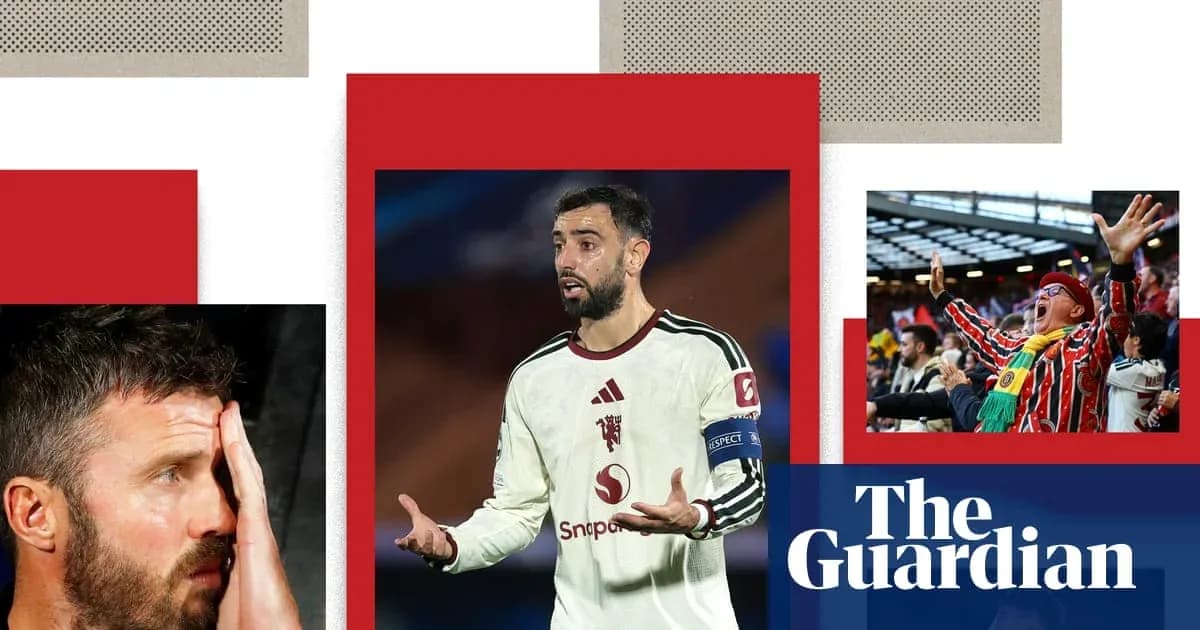
Does he take the armband off Bruno Fernandes? Does he drop him altogether?
On Friday, Carrick refused to close the door on either option. He did not protect his captain with the usual platitudes. That alone tells its own story. The mood around United is no longer one of gentle course correction; it is of rupture, of a manager deciding whether to confront his most powerful players head-on.
Fernandes’s comments in Como still hang over the club like a storm cloud. After a 4-1 humiliation in relentless rain, he publicly questioned the tactical approach: “It’s a decision from the staff to not press man-to-man and sometimes leave space behind and try to get the ball, wait for them, but sometimes when you give space to these teams they get confidence.”
That is not a throwaway line. It is a direct challenge to the manager’s authority.
Lisandro Martínez, another senior figure and another of those seen as part of the internal revolt, is in the same contractual position. Both he and Fernandes are out of contract in the summer, with the club holding an extra year’s option in each case. The feeling around the training ground is that both intend to move on.
So United face a brutal calculation. Cash in now, or cling to the old guard and delay the rebuild yet again.
Around £40m for Fernandes and £25m for Martínez in January would give Carrick – or his successor – the means to start again. Strip the captaincy, sanction a sale, and you are not just making a tactical call. You are drawing a line between the past and whatever United intend to become next.
If Carrick acts, he proves he is not a caretaker of decline. Even if the hierarchy eventually remove him, he will have done the next man a favour by confronting the dressing room power base that has outlasted too many managers.
A Fractured Bond in the Rain
Seven hundred United fans went to Lombardy and watched their team collapse in the downpour. They stayed, they sang, they suffered. Como, led by Cesc Fàbregas, cut through United with an ease that bordered on the embarrassing.
The players trudged off. The fans went back to airports and motorways with the familiar taste of betrayal.
On Sunday, those supporters will be there again, filling Old Trafford, still desperate to believe in something. Carrick talks often about them being the lifeblood of the club. He says it with conviction. The question is whether all of his players feel it with the same force.
Performances like the one in Como suggest they do not. That is where the manager’s job now stretches beyond tactics and selection. He has to impose a basic creed: that playing for United is not a chore, not a burden, but a responsibility to people who travel across Europe in the rain to watch you fold.
Reconnect that bond and the mood shifts. Ignore it and the toxicity deepens.
Where Has the Joy Gone?
United used to terrify teams. Sir Alex Ferguson’s flying wingers. Sir Matt Busby’s holy trinity of Best, Law and Charlton. The roar of “attack, attack, attack” rolling down from the Stretford End and being answered on the pitch.
Right now, none of that lives in this team. Carrick admitted on Friday that something essential has been “lost”. He is right. Old Trafford no longer feels like a theatre of anything other than anxiety.
Yet the memory of what this side can be is not distant. On 17 January 2026, in the first game of his second tenure, Carrick sent out a team that went after Manchester City from the first whistle. They suffocated Pep Guardiola’s players, allowed them no time to breathe, and ran out 2-0 winners. That night, United played with a bounce that felt like a statement. This was the team that rode that energy all the way to third place last season.
That version of United has vanished. In its place is a cautious, ponderous outfit weighed down by its own fear. The smile has gone. A sense of doom has crept back in – the same heavy air that hung over the final days of Ruben Amorim.
Carrick tried to drag United towards a more possession-based model this season. On paper, it made sense. On the pitch, it has exposed the squad’s flaws. Youri Tielemans, recruited to help control games, does not have the legs for a central role, so he has been shunted into the No 10 position. Kobbie Mainoo, the one midfielder who looks capable of running an engine room at this level, is injured.
And then there is Fernandes. His relentless roaming, once seen as industry and invention, now leaves yawning gaps where a passing option should be. The structure Carrick wants cannot hold when his nominal playmaker is constantly out of zone.
If United are to rediscover their old cavalier edge, they may have to sacrifice the very players who once embodied it.
Time for the Kids?
Behind the first-team names, there is a different energy waiting. Younger, rawer, unscarred.
Right now, the spine of United’s dressing room is built around long-serving senior players: Fernandes, Luke Shaw, Harry Maguire, Diogo Dalot, Marcus Rashford, Amad Diallo and Martínez. They have all contributed heavily in previous seasons. At the moment, they are not performing.
The atmosphere feels stale. The patterns are familiar. The mistakes, too.
There is an old saying at this club: when in doubt, play the kids. It can sound like a cliché, but it has always carried a truth. Youth has nothing to lose. Youth runs without fear. Youth can light up the darkest weeks.
- Shea Lacey, a sharp, direct wide player.
- Harry Amass, a left-back with promise.
- Jack and Tyler Fletcher, the twins who bring craft at No 10 and bite in defensive midfield.
Between them, they have just 22 senior appearances. On form, none of them could do much worse than the established names ahead of them.
Regular minutes for that group would jolt the squad’s hierarchy. It would also send a message: reputations no longer guarantee a place.
Goals, or Trouble
The numbers are damning. In seven of their 11 games this season, United have scored one goal or none. That is not a blip. That is a pattern of attacking dysfunction.
Ten goals in seven league matches. Five in three Champions League outings, four of those against Sabah, a side they should be swatting aside without breaking stride. Strip away that one lopsided fixture and the attacking return looks even more anaemic.
At Como, the problems were laid bare again. No clear pattern of play. No control. Very few chances of any real quality. For a club of United’s stature, that is not just disappointing. It is dangerous.
Carry on like this and the conversation will not be about European places. It will be about survival.
This squad is not short of attacking talent. Matheus Cunha, Bryan Mbeumo and others thrive in fast, instinctive football. A more off-the-cuff, front-foot style – closer to what United produced in those wins over City, Arsenal, Chelsea and Liverpool last season – would suit them far better than the sterile possession that currently goes nowhere.
Carrick stands at a crossroads. He can double down on a failing structure, or he can rip it up, trust youth, confront his biggest personalities and unleash a more daring version of his team.
On Sunday, against Bournemouth, we will start to see which way he turns. And once he chooses, there may be no way back for some of the biggest names in this squad.