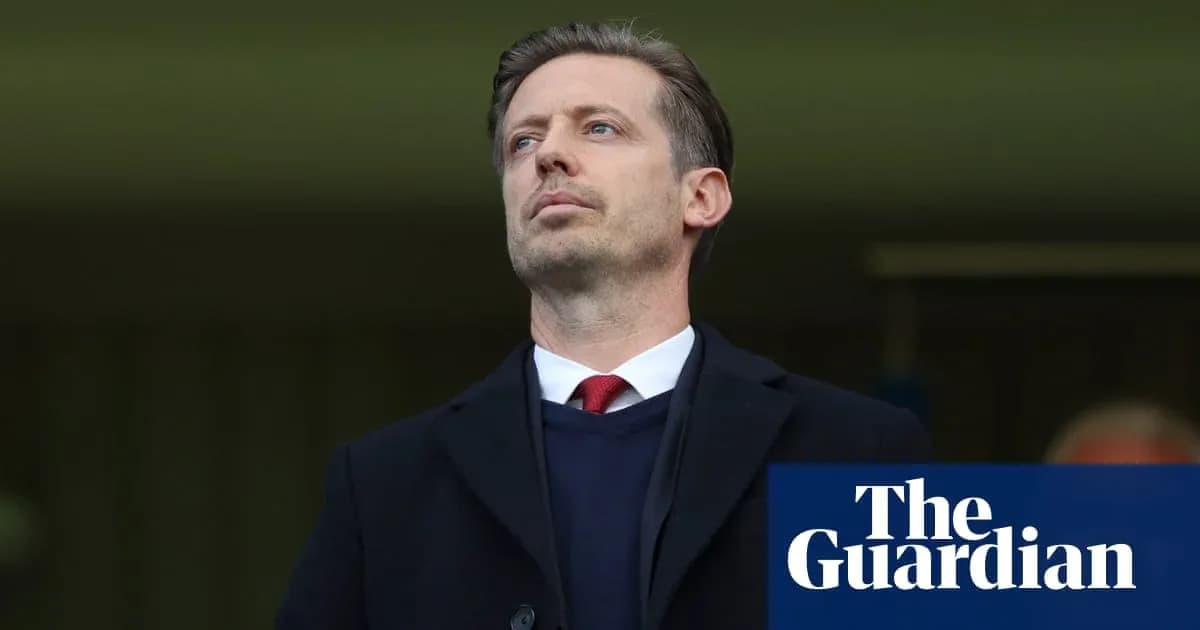
Michael Edwards Resigns from Fenway Sports Group: Impact on Liverpool
Michael Edwards has stepped away from Fenway Sports Group for a second – and very likely final – time, leaving a sizeable void at the top of Liverpool’s modern football machine.
FSG confirmed on Friday that their chief executive of football has resigned, a move they had tried to prevent but ultimately had to accept. Edwards had informed them as far back as autumn 2025 that he would go once he felt Liverpool’s long-term plans were secure. He departs with a year left on his contract and, crucially, on his own terms.
Vision without a second club
This is not a routine boardroom reshuffle. Edwards did not return in March 2024 simply to reprise his old Liverpool role. He came back with a grander brief: to oversee the transition from the Jürgen Klopp era and to build a wider football empire for FSG.
His title told the story. Not Liverpool sporting director, as he was between 2016 and 2022, but FSG’s chief executive of football. The job was designed around him. Multi-club ownership, strategic partnerships, a broader portfolio to mirror the models taking root across Europe – that was the pitch that lured him back.
The work began. FSG explored potential acquisitions, including Getafe and Bordeaux, searching for a club that fit their financial and sporting criteria. The right option never arrived. By last year, the project stalled. The multi-club vision was quietly shelved.
At that point, the logic of Edwards’ role began to fray. With the wider project on ice, his position no longer matched the job he had been sold. The decision followed: he would walk away, and he would do so without a payoff, because this was his choice, not FSG’s.
Edwards walks, Liverpool stays steady
Edwards insists he leaves a club in good health. In his parting words, he framed his return as a privilege and his exit as a handover, not an escape.
“It has been a privilege to return to Fenway Sports Group and Liverpool Football Club at such an important moment,” he said. “I leave believing Liverpool is in a strong position, with outstanding people, a clear direction and the foundations in place for continued success.
“When I returned, I was excited not only by the opportunity to help guide Liverpool through an important period of transition, but also by the chance to help shape FSG’s wider football ambitions. While that broader project ultimately evolved differently to how we had originally envisaged, I am proud of the work our team undertook in presenting ownership with a broad range of thoughtful and well-developed options for the future.”
The immediate football question is obvious: what does this mean for Liverpool’s summer?
For now, not much. The transfer operation sits with Richard Hughes, the sporting director appointed under Edwards’ watch. Plans for this window are described as well advanced, and the recruitment structure put in place over the past decade is designed to withstand individual departures.
But the mood music around the hierarchy is changing.
Uncertainty around Hughes
Edwards’ exit lands at a time when Hughes himself is being heavily linked with a lucrative move to Al-Hilal in the Saudi Pro League. His contract at Liverpool runs until 2027, yet his name continues to circle around Saudi interest.
Hughes has already made one seismic call in his short time at Anfield, sacking Arne Slot and appointing Andoni Iraola as head coach – a decision taken in tandem with Edwards. If he follows Edwards out of the door after the summer window, Liverpool would lose the two men who have shaped the post-Klopp structure more than anyone else.
That prospect sharpens the sense of flux. The club’s recruitment may be stable on paper, but its architects are suddenly less secure.
Gordon steps back into the spotlight
In Edwards’ absence, one familiar figure is expected to move closer to the controls again. FSG president Mike Gordon, long a key but largely understated powerbroker in Liverpool’s resurgence, is set to take a more hands-on role.
Gordon knows exactly what Edwards has meant to the organisation. The pair first worked together after Edwards joined Liverpool in 2011, and during his second spell he helped build a new leadership structure that underpinned the club’s historic 20th English league title.
“Throughout both periods he has consistently demonstrated exceptional judgment, integrity and an unwavering commitment to building a strong football organisation for the long term,” Gordon said. “His return to the organisation saw Liverpool successfully navigate a significant period of transition before securing the club’s historic 20th English league title, an achievement to which Michael made an important contribution. While we are naturally disappointed to see him leave, we will always be grateful for everything he has given.”
The praise is genuine, but it also underlines the scale of the gap. Edwards was not a replaceable cog; he was the bespoke part. FSG may not even try to replicate his role like-for-like, a tacit admission that the position was crafted specifically around his skillset and the multi-club dream that never quite materialised.
So Liverpool move on again, as they have had to do so often in recent years – from Klopp, from key players, now from the architect behind much of the club’s modern decision-making. The team on the pitch may feel little disruption this summer. The real question lies beyond that: who will be steering the project when the next major decision lands?