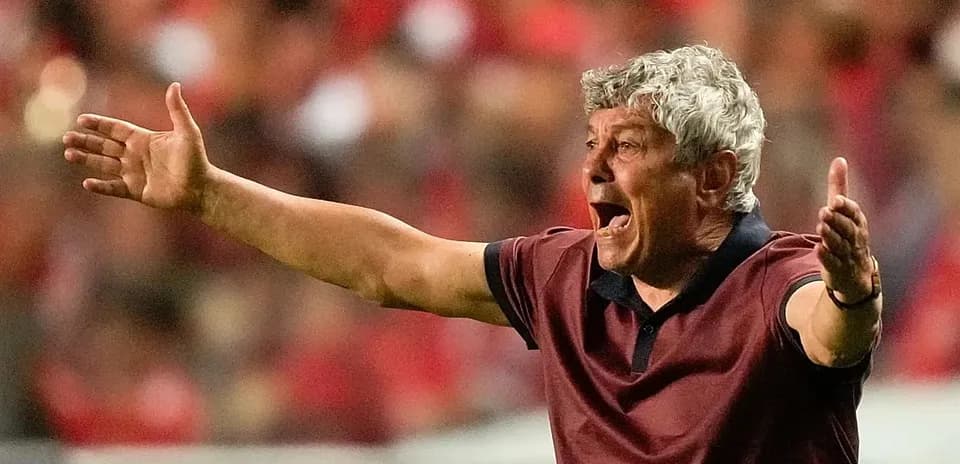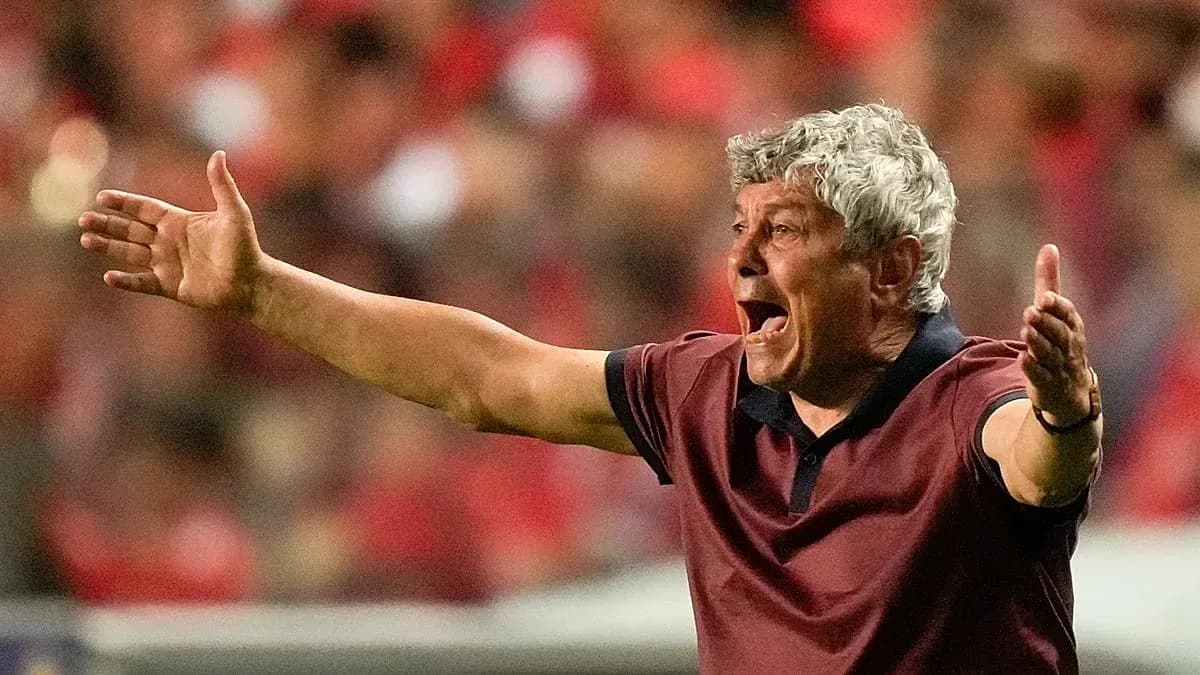
Mircea Lucescu, one of the towering figures of Romanian football and a relentless collector of trophies as both player and coach, has died at the age of 80.
His death was confirmed on Tuesday by the Bucharest University Emergency Hospital, where he had been admitted after reportedly suffering a heart attack on Friday morning. The hospital’s statement underlined what he represented far beyond the touchline.
“Mr. Mircea Lucescu was one of the most successful Romanian football coaches and players, the first to qualify the Romanian national team for a European Championship, in 1984,” it read. “Entire generations of Romanians grew up with his image in their hearts, as a national symbol.”
For Romania, Lucescu was never just another coach passing through. He was the man who first dragged the national team onto the European stage, and the captain who had already led his country at the 1970 World Cup. He embodied Romanian football in both eras: the hard-running, intelligent winger on the pitch and the meticulous strategist on the bench.
His coaching career stretched across decades and borders. From the national team to clubs around Europe, Lucescu built a reputation as a serial winner, lifting multiple titles and reshaping teams with the same sharp eye for detail that defined his playing days. He was, in every sense, a football lifer.
That is what made his final chapter so striking. After 38 years away from the role, he returned for a second spell in charge of Romania, drawn back by the challenge of taking his country to another World Cup. It was a mission rooted in both pride and unfinished business.
The end came abruptly. Three days after Romania fell to Turkey in a World Cup playoff, missing out on qualification, Lucescu stepped down last Thursday, having fallen ill during training. Less than a week later, the man who had devoted his life to the national cause was gone.
He leaves behind a record that can be measured in appearances, tournaments, and trophies. Yet his true legacy lies in something less tangible: the generations who saw in him a standard for what Romanian football could be, and the enduring image of a coach and captain who spent a lifetime chasing the biggest stages for his country.