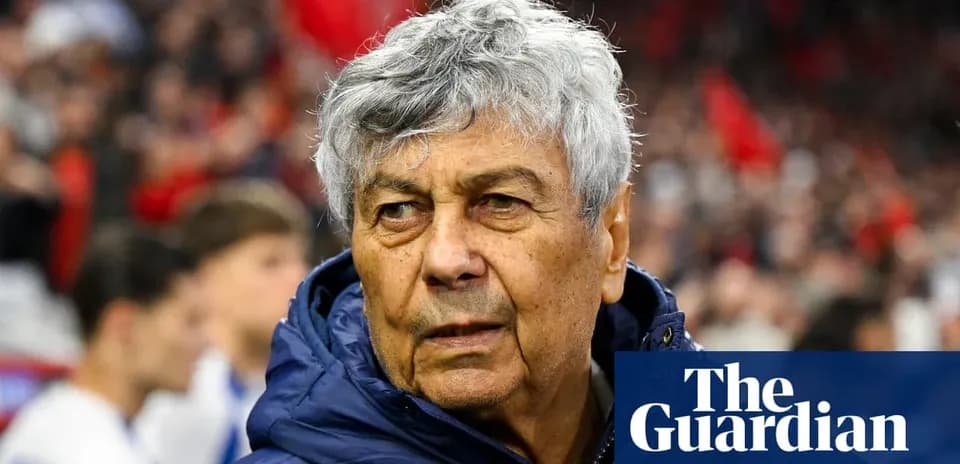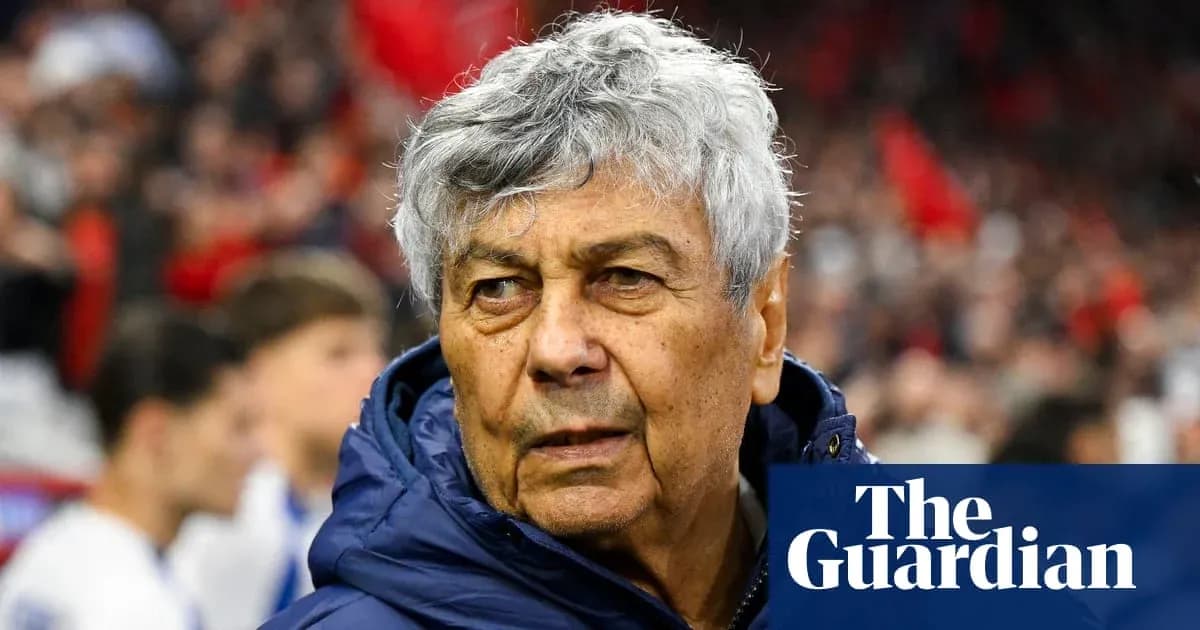
Mircea Lucescu, the relentless architect of teams and trophies, has died at the age of 80, closing the chapter on one of European football’s most enduring careers.
The Bucharest university emergency hospital confirmed his death on Tuesday. Lucescu had been admitted after reportedly suffering a heart attack on Friday morning. Romania lost far more than a coach; it lost a figure who helped define its footballing identity.
“Mr Mircea Lucescu was one of the most successful Romanian football coaches and players, the first to qualify the national team for a European Championship, in 1984,” the hospital said in a statement. “Entire generations of Romanians grew up with his image in their hearts, as a national symbol.”
A life on the touchline
Lucescu was still working until almost the very end. In his second spell in charge of Romania, he stepped down only last Thursday, having fallen ill during training. Just three days earlier, Romania’s bid to reach the 2026 World Cup had ended with a 1-0 playoff defeat to Turkey. Even that setback could not dim the scale of his legacy.
As a player, he had already written himself into the country’s history books. Lucescu won 64 caps for Romania and captained his nation at the 1970 World Cup, a period when Romanian football was still fighting for recognition on the global stage. He read the game then as he would later from the dugout: with clarity, with authority, with a sense of responsibility.
That sense of duty carried him into his first stint as national team manager in 1981. Three years later, he delivered a breakthrough. Romania reached Euro 1984 after topping a qualifying group that included Italy, Sweden and Czechoslovakia. For a generation of Romanian supporters, that qualification campaign became a reference point, proof that their football could stand alongside Europe’s elite.
Master builder across Europe
Lucescu’s club career turned him from a national hero into a continental figure. He moved restlessly, but not aimlessly, leaving fingerprints and silverware wherever he went.
In Turkey, he became a benchmark. With Galatasaray he lifted the Uefa Super Cup in 2000, then drove the club to the league title in 2001-02. He crossed the Istanbul divide to Besiktas and promptly won the league there as well the following season. Few coaches dare to walk that line; fewer still win on both sides of it.
His greatest empire, though, rose in Ukraine. In May 2004, Lucescu took over at Shakhtar Donetsk and stayed for 12 years, an eternity in modern football. Shakhtar under Lucescu were aggressive, technical, fearless. He won eight league titles and, in 2009, the Uefa Cup, a triumph that announced Shakhtar as a force beyond their borders and confirmed him as one of Europe’s most astute team-builders.
Shakhtar’s tribute on X captured the depth of feeling: “Thank you for everything, Mister. Your name is forever written into the history of world football.”
Galatasaray’s message carried a similar weight. “We extend our deepest condolences to Mircea Lucescu’s family, loved ones, and the football community. We will never forget you.”
Italian chapters and the “Brescia Romeno”
Italy offered a different kind of canvas and Lucescu again left his mark. He coached Pisa, Brescia, Reggiana and Inter, moving through Serie A and Serie B with the same stubborn belief in his ideas.
At Brescia he claimed the Serie B title in 1991-92, but the memories go beyond a medal. Supporters still talk about his “Brescia Romeno” side, built around four Romanian players, including Gheorghe Hagi. It was a team that fused cultures, style and steel, and it deepened his reputation as a coach who could shape a club’s identity, not just its results.
A duty that never left him
The list of posts is long: Zenit Saint Petersburg, Dynamo Kyiv, the Turkish national team. Yet, for all the travels and titles, Romania kept calling him back.
After a 38-year gap, he returned to the national team to chase one last World Cup. In March this year, speaking as he prepared for the playoff semi-final against Turkey while wrestling with his own health concerns, Lucescu laid bare his motivation.
“I’m not in my best shape so I would have stepped away if there was another option available,” he said. “But I insist: I can’t leave like a coward. We must believe in our chance to qualify.”
“I felt it was my duty to take charge of the team,” he added. “It was my duty for everything that Romanian football has ever given to me. I was indebted. It was never about money, never about another medal. I have enough trophies.”
Those words now read like a final statement of intent. A man who had nothing left to prove still chose to stand in the technical area, chasing one more tournament for his country, driven not by ego but by obligation.
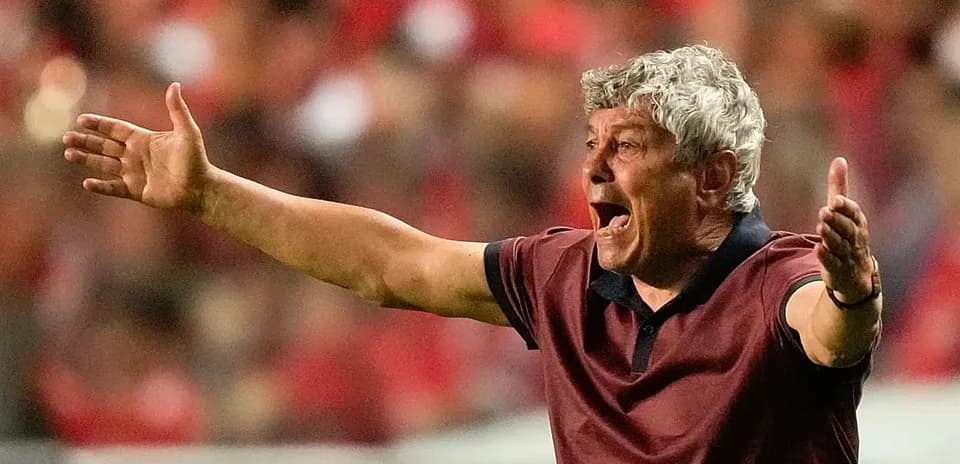
The medals, cups and titles stretch across decades and borders. The image that will endure, though, is simpler: Mircea Lucescu on the touchline, arms folded or outstretched, still demanding, still believing, still convinced that Romanian football – his football – had another big night left in it.