Mirra Andreeva Becomes Youngest WTA Finals Champion
Mirra Andreeva arrived in the desert on the verge of tears. She left it with the sport in the palm of her hand.
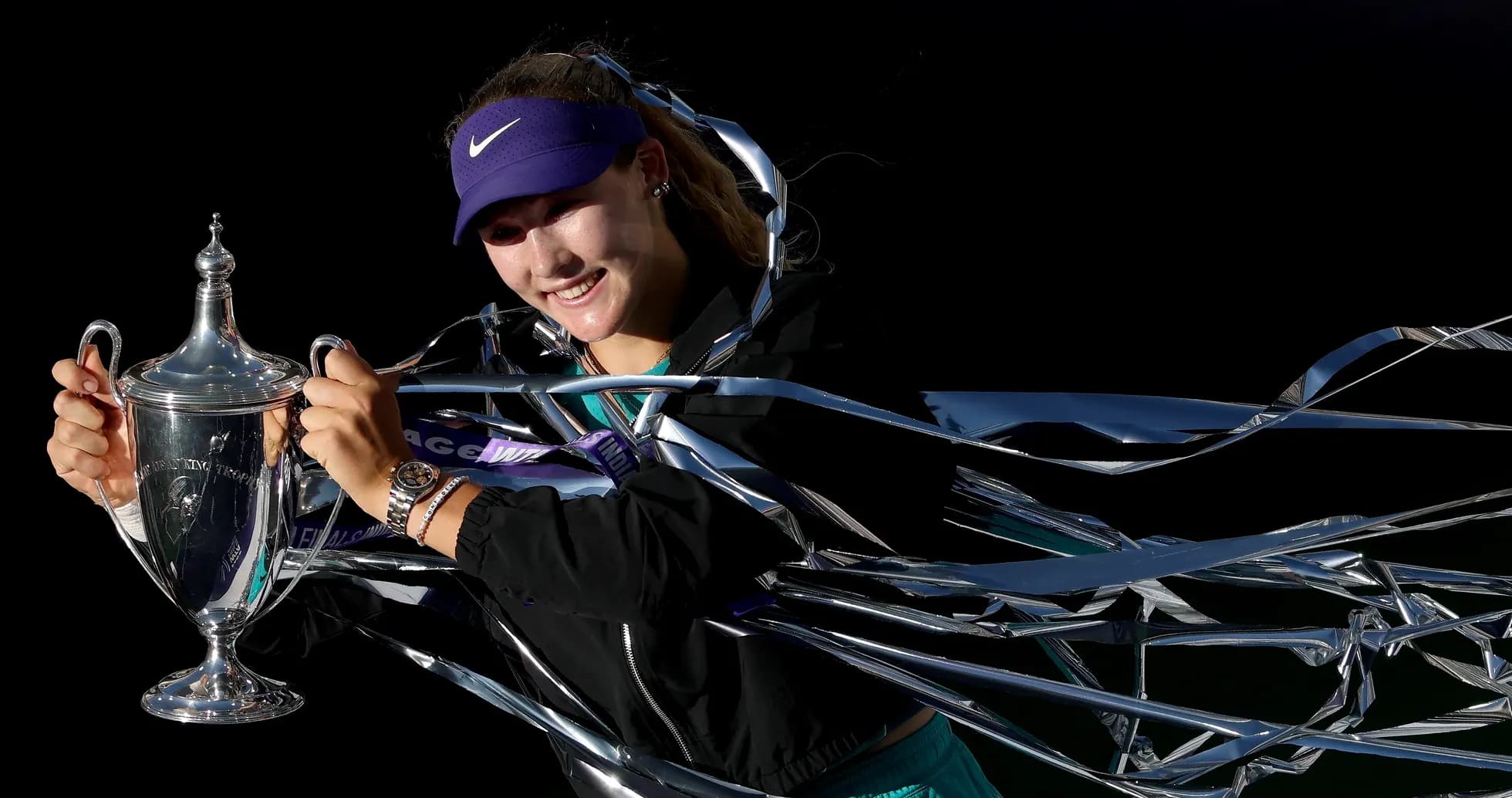
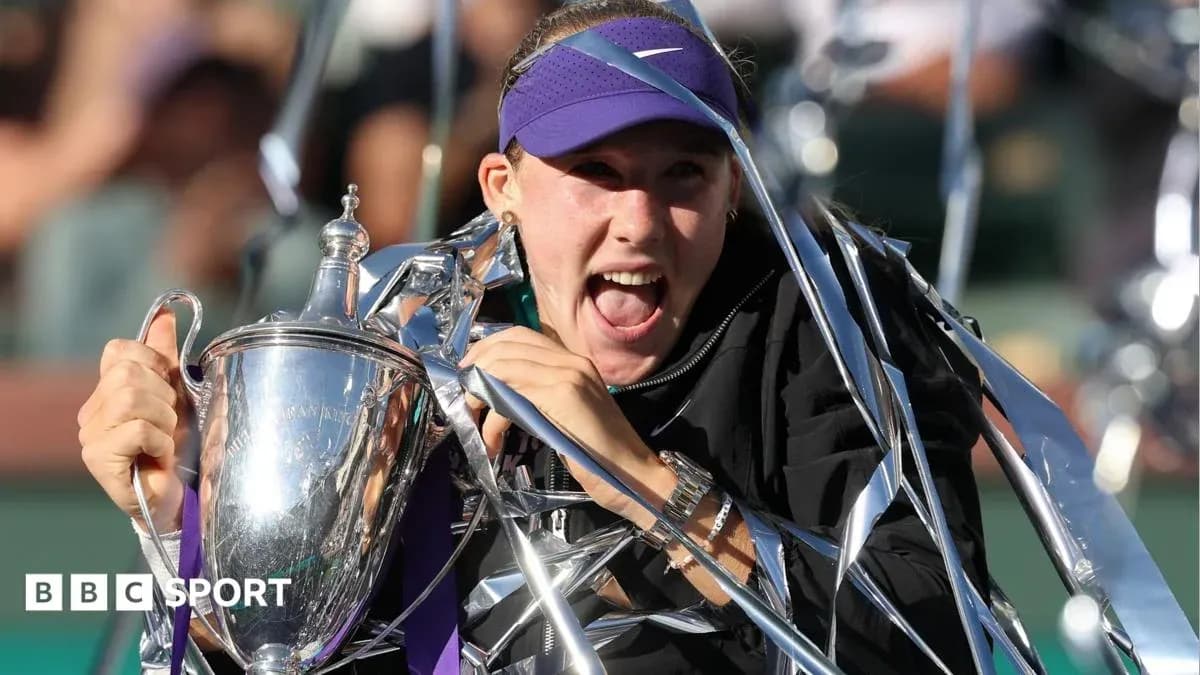
The 19-year-old walked into her first WTA Finals singles campaign so tense she admitted to a “little breakdown” on the practice court. The stage, the names, the expectation – it all pressed in. By Sunday night in Indian Wells, she was the one applying the pressure, closing out a hard-edged 7-5 6-3 win over Elina Svitolina to become the youngest champion of the season-ending showpiece in 22 years.
A nervous debut? On paper, maybe. On court, she owned the week.
A champion carved out of chaos
Andreeva’s numbers in California were ruthless. Five matches, five straight-set wins. Just 26 games conceded across the entire tournament. No opponent managed to drag her into a deciding set, no wobble lasted long enough to turn into a crisis.
The French Open champion rose to world No. 2 with the title and will start 2027 only 293 points behind Elena Rybakina. That is not a distant chase; it is a live threat to the top ranking.
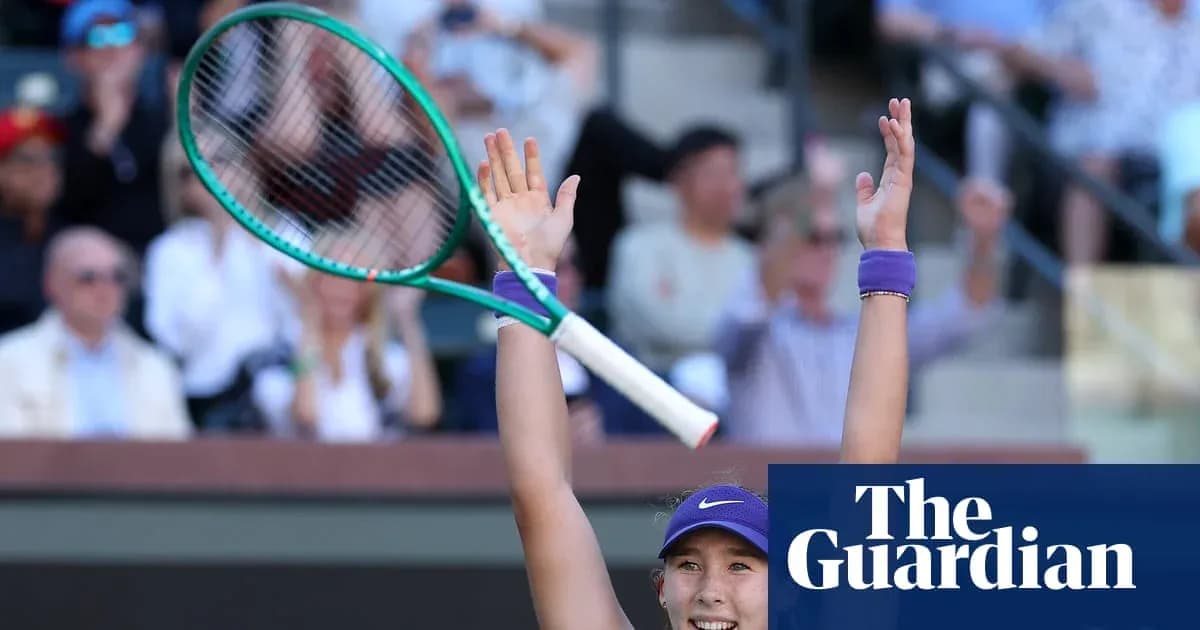
When match point landed against Svitolina, Andreeva’s reaction was pure release. Arms flung skywards, a brief roar, then a sprint to the players’ box where Conchita Martinez – the 1994 Wimbledon champion turned mentor – waited with the rest of her team. This wasn’t a teenager accidentally stumbling into greatness. It looked like a player who had been preparing for this moment for a long time.
“I am super thankful to my team for pushing me to my limits, for forcing me to do stuff when I don't want to do anything,” she said on court, grinning through the glare of the trophy lights. “Thanks for fighting with me, thanks for forcing me to do everything that I have to do and not asking any questions!”
The gratitude sounded genuine. The edge underneath it felt even more important.
From meltdown to maturity
Back in March, the same venue told a very different story. After an early defeat at the regular WTA Tour event in Indian Wells, Andreeva snapped at the crowd, swore in frustration and walked off with her temper as much a talking point as her tennis. Emotional volatility had become part of her profile – thrilling when channeled, combustible when not.
That version of Andreeva never really appeared this week.
Against Svitolina, one of the tour’s toughest competitors, she faced exactly the kind of match that would once have pulled her apart. She lost a break lead three times across the two sets. Each time, she took a breath, reset and came again, leaning into a more aggressive backhand to reclaim control.
The key passage came early in the second set. Andreeva dropped serve at the end of a brutal nine-minute game, frustration obvious as she trudged back to her chair. In the past, that might have spiralled. Instead, she marched out for the next return game and ripped the momentum straight back, breaking Svitolina from 40-0 down. The scoreboard said one game; the feel of the match said something much bigger.
Her serve misfired at times, but her resolve did not. She faced 12 break points and snuffed out nine of them, finishing with 19 winners to Svitolina’s 10. Under pressure, she didn’t retreat. She swung harder.
“This fighting mindset helped me to get more brave and aggressive in the important moments,” she told Sky Sports. “This is just a dream. I had a little breakdown in my practice just before Indian Wells because I was so stressed. I didn't want to lose a match in the group. It's amazing.”
Taking down the elite
Coming into the Finals, Andreeva had won only one of her six matches against top-10 opponents in 2026. The elite had been a barrier, not a playground.
She tore that script up in a week.
Three top-10 wins carried her to the title, including a demolition of four-time major champion Aryna Sabalenka on Wednesday that felt like a statement of intent as much as a semi-final performance. The fear of the group stage she spoke about quickly looked misplaced; she never allowed the round-robin format to turn into a minefield.
Even off the court, she refused to be rattled. Before the tournament, private comments from Jessica Pegula to her coach – including calling Andreeva a “diva” – were accidentally live-streamed. The clip ricocheted around social media. It could have turned into a sideshow. She brushed it off and played the best tennis of her season.
The prize for all of it was heavy and loud: £2.55m in prize money and a custom purple Mercedes. She laughed that she would stay a “passenger princess” until she finally passes her driving test, a teenager’s joke wrapped around a champion’s haul.
Thanking the one constant
The last word, as it so often is with Andreeva now, belonged to her. Just as she did after lifting the Coupe Suzanne-Lenglen in Paris, she closed her speech with a line borrowed from Snoop Dogg and repurposed as her own mission statement.
“I want to thank myself for always doing the hard work and for never quitting,” she said. “For not taking the days off, for working every day and committing to what I have to do – just thanks to myself.”
It sounded playful. It also sounded like the clearest explanation yet of how a stressed 19-year-old who once melted down in this same arena just walked out of Indian Wells as the WTA Finals champion and the most serious challenger to the No. 1 ranking.
The breakdown is already part of the story. The question now is how many trophies will be too.