Mohamed Salah Leads Egypt to Historic World Cup Knockout Victory
ARLINGTON, Texas — Mohamed Salah walked slowly toward midfield, captain’s armband tight on his sleeve, hamstring strapped, history on his shoulders.
By the end of the night, he had it. Egypt had it. A first-ever World Cup knockout win, dragged out of a tense, nervy, unforgettable night in Texas.
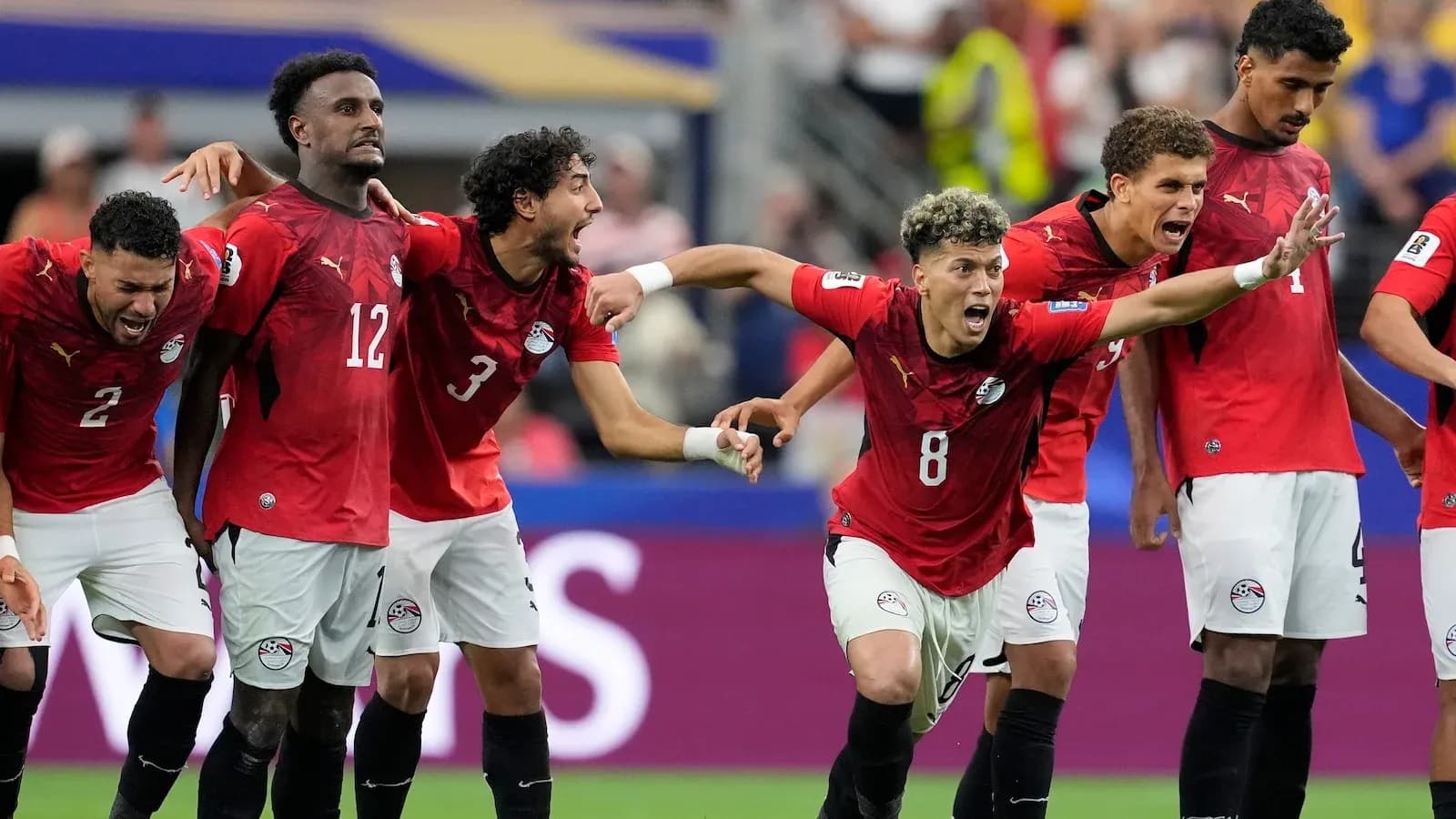
Hossam Abdelmaguid, a defender without a single international goal to his name, struck the decisive penalty as Egypt beat Australia 4-2 in a shootout after a 1-1 draw, sending a vast red tide of Egyptian fans inside the Dallas Cowboys’ home into delirium.
Seventy thousand voices, one long release.
Salah’s night, Egypt’s moment
This World Cup has carried an extra layer of intrigue for Salah. At 34, with his future on the international stage an open question, every match feels loaded. If this is to be his last World Cup, he has now captained Egypt to something the country had never tasted before: a win in the knockout rounds.
“Me feeling today is that it's incredible,” he said afterward, still processing what it meant. One goal behind head coach Hossam Hassan’s national scoring record of 69, Salah played every second of regulation and extra time despite the hamstring injury he picked up in the group finale. No management, no easing off. Just stubborn, relentless presence.
His penalty in the shootout was struck with the certainty of a man who knows his legacy is being written in real time.
A shootout swings to Cairo
Australia blinked first.
Harry Souttar strode up to take the opening kick of the shootout and lashed it high. A statement kick, but the wrong kind. The ball sailed over, and the tone was set.
Egypt were ruthless from there. Mahmoud Saber. Ramy Rabia. Salah. Each found the net.
For Australia, Jackson Irvine scored to keep the Socceroos in touch, and Awer Mabil converted as well, but the cracks were widening. When 18-year-old Lucas Herrington stepped up for Australia’s fourth penalty, the pressure finally crushed him. His effort crashed against the crossbar and flew out, the sound swallowed by a roar from the stands.
That left Abdelmaguid, 25 years old, 15 caps, no goals, standing over the ball with a nation’s breakthrough within reach.
He didn’t flinch. He went low to his left, Mathew Ryan dived the wrong way, and the defender’s shot rippled the net. Abdelmaguid turned away as the noise hit him, swallowed by teammates and by a wall of red in the stands. Egypt, in their fourth World Cup and the first with a 48-team field, had finally won in the knockouts.
Ryan, making his 105th appearance for Australia after coming on late for Patrick Beach, never got close to any of Egypt’s four penalties.
Hany’s agony, Egypt’s resilience
The drama of the shootout sat on top of a strange, punishing night for Mohamed Hany.
Egypt had started superbly. In the 13th minute, Emam Ashour met a cross with a sharp header, beating Beach just inside the near post to give the Pharaohs a deserved 1-0 lead. The stadium shook, and Egypt looked in control.
Then came the twist.
Early in the second half, Hany clashed with Connor Metcalfe as the Australian midfielder went for a header. Hany stayed down near the edge of the box, medical staff rushing on with a stretcher at the ready. He eventually rose, passed what appeared to be a concussion check, and chose to continue.
Minutes later, he found his name etched into World Cup history for all the wrong reasons.
From a free kick left of the area, Aiden O’Neill whipped in a dangerous ball. Hany, tracking back, got his head to it — and steered it past his own goalkeeper, Mostafa Shoubir. One moment of misjudgment, one brutal statistic: Hany became the first player ever to score two own-goals in the same World Cup, after his mishap in the 1-1 group-stage draw with Belgium.
Australia, who had barely laid a glove on Egypt up to that point, were level. Their only goals in World Cup knockout history now stood at two own-goals: one against Italy in 2006, one against Argentina in 2022, and now this one to drag them back into the contest.
It was a cruel symmetry.
Missed chances and a late gamble
The match could have been buried long before penalties.
Seconds into the second half, Omar Marmoush broke free and had a golden chance to put Egypt 2-0 up. He dragged his shot wide, and the chance evaporated. The miss hung in the air as Australia slowly grew into the game.
Shoubir, in Egypt’s goal, stayed largely untroubled in open play, while at the other end Beach, just 22 and making only his sixth appearance for the Socceroos, produced several important stops. His best came late in regulation, when Rabia powered a header toward the corner and Beach flung himself across to claw it away. Moments later, he gathered a more routine effort from Salah.
Egypt pushed for a winner before extra time. Haissem Hassan found space and looked certain to score, only for Souttar to throw out a knee and deflect the shot, a defender’s instinct saving Australia again.
Then came the call that will be debated in Australian football circles for a long time.
Late in extra time, coach Tony Popovic replaced Beach with Ryan. Experience over youth. A veteran of 105 caps over a rookie with six. Beach had been strong, confident, sharp. Ryan, though, carried the weight of tournaments past.
This time, experience offered no protection. He didn’t get near a single Egyptian penalty.
“It hurts when you get that close,” Popovic admitted. “Unfortunately, we bow out in a penalty shootout, so it’s difficult to take right now.”
Australia’s World Cup knockout record now reads three defeats from three: Italy in 2006, Argentina in 2022, Egypt in 2026. Each one stings in its own way. This one will linger.
Hassan’s prayer, a nation’s release
On the touchline, Hossam Hassan lived every second.
“I was only thinking about the Egyptian fans,” the coach said through a translator. “During the entire time and during the penalty shootout, I was just praying, ‘God, please make the Egyptian people happy.’ Even before the penalty shootout, to be honest.”
He tried to strip the fear from his players as they walked to the spot.
“Do not look at the pressure,” he told them. “Just let everything out, don’t think about anything. Think about your penalty kick. Don’t even think about the goalkeeper. Just think about your kick.”
They listened. They delivered. And when Abdelmaguid’s penalty hit the net, Hassan’s prayer was answered in a storm of noise and color.
For Egypt, a nation that arrived at this World Cup without a single finals win in its history and then broke that barrier against New Zealand in the group stage, this was another wall smashed down. Another step into a new reality.
Next up is a round-of-16 tie in Atlanta against either defending champions Argentina or rising force Cape Verde.
Salah, still chasing Hassan’s scoring record, still carrying his country, will be there. The question now is not whether this is his last World Cup.
It’s how far he can drag Egypt before the story finally runs out of pages.