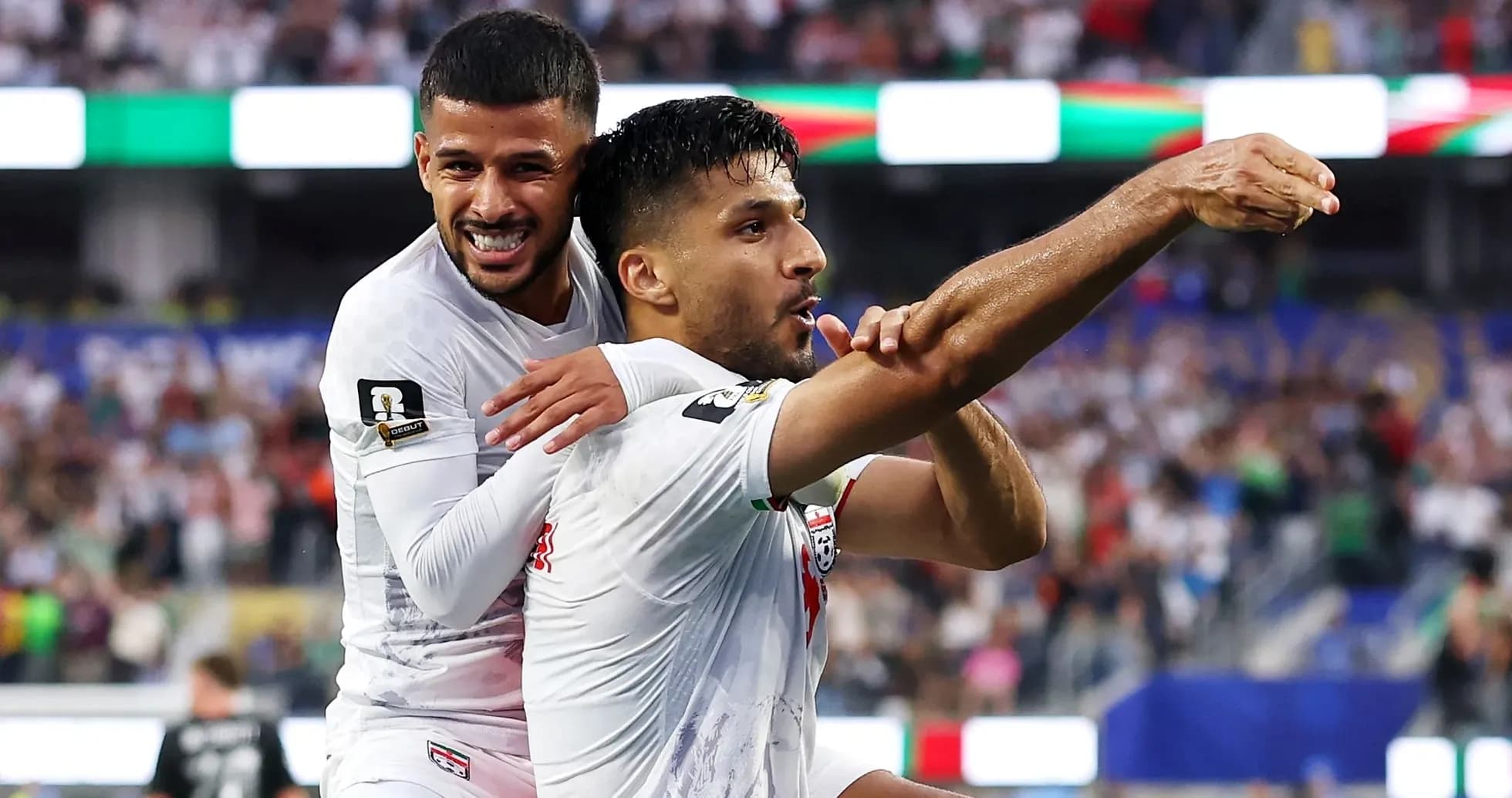
Mohebi's Gesture Sparks Political Storm at World Cup
In a World Cup already heavy with politics for Iran, it took just one swing of Mehdi Mohebi’s right arm to ignite a fresh storm.
The 27-year-old midfielder had just dragged Team Melli level, striking a 64th‑minute equaliser in their Group G opener against New Zealand to seal a 2-2 draw. It should have been a moment purely about football: a vital goal, a lifeline in the group, a roar from the stands in Los Angeles.
Instead, all eyes locked on what came next.
Mohebi pointed two fingers to his arm, then extended two fingers on his right hand and sliced them through the air. To many watching, it looked like a “gun” gesture. Clips of the celebration ricocheted around social media within minutes, slowed down, replayed, dissected frame by frame.
In a tournament where Iran’s every move already carries political weight, the reaction was instant and fierce. Supporters, pundits and campaigners began calling for FIFA to step in, some demanding a formal review of the incident and potential sanctions. The debate moved quickly from tactics and team selection to symbolism and intent.
Mohebi, though, pushed back on the narrative.
Speaking after the match, he insisted the gesture had been misunderstood. For him, he said, it was nothing more than a tribute to Iranians in the city.
“I wanted to say thank you to all Iranians who live in Los Angeles, they make a great atmosphere,” he explained. “The celebration came to mind, and I do this [gestures] for all of the fans, just a celebration, you know.”
His words did little to cool the discussion. If anything, the spotlight intensified when teammate Ramin Rezaeian walked through the mixed zone.
Rezaeian had scored Iran’s other goal and celebrated in his own striking way, pulling his shirt over his face as he sprinted toward the supporters. The image, stark and loaded, circulated almost as widely as Mohebi’s “gun” motion.
Asked directly about his celebration, Rezaeian did not pretend it was neutral.
“It's something political (his goal celebration), I don't want to talk about that,” he said, drawing a clear line but refusing to cross it. He then tried to drag the conversation back to the pitch: “We are here to answer football questions. If there is a problem between us (the Iranian people), it is between us.”
That single admission — “something political” — only deepened the sense that Iran’s World Cup campaign is being played on two fronts: one on the grass, one far beyond it.
FIFA has been approached for comment on Mohebi’s gesture, and the governing body now faces a decision. Does it treat the celebration as an innocent, if ill-judged, expression of joy, or does it open a formal investigation into conduct that many have already branded provocative? The answer will shape not only Iran’s immediate future at this World Cup, but also the wider debate over where football ends and politics begins.
On the ground, Carlos Queiroz’s side cannot afford to be distracted. The draw with New Zealand leaves Group G finely balanced, and Iran now turn to a crucial second match against Belgium in Los Angeles on June 21. The stakes are clear: points, progression, and perhaps a chance to shift the conversation back to pressing, passing and finishing.
Whether that is even possible for this team, in this moment, is another question entirely.