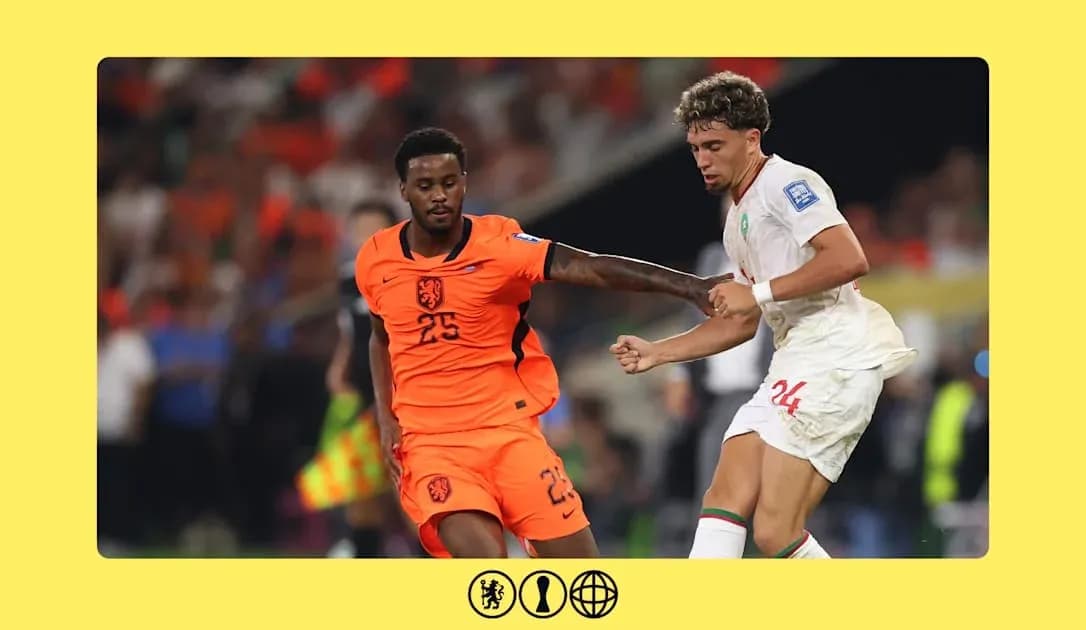
Morocco Upsets Netherlands in World Cup Shootout
For 86 minutes the Netherlands had one hand on their World Cup dream. Four minutes from the end of normal time, Jorrel Hato stepped off the bench to help see it over the line, replacing Micky van de Ven on the left. The job looked simple: protect a narrow lead, see out the storm.
The storm had other ideas.
Cody Gakpo’s 72nd-minute strike had tilted a tense, technical contest in the Dutch favour. It felt like the kind of goal that settles cagey knockout ties: sharp movement, clinical finish, a moment of composure when legs and minds begin to fray. From there, the Oranje tried to control the tempo, slow the game, suffocate Moroccan belief.
They never quite managed it. Morocco kept coming, wave after wave, driven by a sense that the game still owed them something. Bart Verbruggen, so often a spectator at club level, became the only thing between the African side and parity. He plunged low, sprang high, read the flight of crosses and cutbacks with the calm of a veteran. Achraf Hakimi rattled the bar. Dutch nerves rattled with it.
The pressure finally told in stoppage time. In the first added minute, Fulham defender Issa Diop rose with conviction and detonated a header past Verbruggen. It was a brutal, thumping finish, the kind that leaves defenders staring at each other, asking silent questions. No one in Moroccan colours cared about the inquest. They had their equaliser, and on the balance of chances, they had earned it.
Extra Time
Extra-time belonged to courage and conditioning. Legs tightened, spaces opened, and still Morocco refused to fade. Verbruggen, already busy, produced what will live long as one of the saves of the tournament, flinging himself to deny substitute Soufiane Rahimi when the stadium seemed ready to erupt. That stop kept the Dutch alive, but only just. By the end of 120 minutes, 1-1 felt less like a scoreline and more like a ceasefire.
So it came to penalties again, just as it had in Germany’s shock exit to Paraguay in the previous Round of 32 tie. Two more of the tournament’s dark horses dragged into the most unforgiving lottery football offers.
The shootout descended into chaos early. Technique deserted both teams. Nerves shredded the basics. Between them, the sides contrived to miss two of their first four attempts, not merely failing to score but failing even to hit the target. It was raw, ugly tension, stripped of glamour.
Then came the turning point. Crysencio Summerville stepped up with the weight of Dutch expectation on his shoulders. Yassine Bounou stared him down. The Morocco goalkeeper edged right before the kick, read the strike, and threw out a strong hand to beat the ball away. It was a save of authority, the kind that shifts an entire narrative in a heartbeat.
That intervention opened the door. Ismail Saibari walked through it. His run-up was brisk, his finish emphatic, the ball lashed home to seal a famous Moroccan win and slam shut the Netherlands’ bid for a first World Cup crown.
The Oranje leave with regrets and a familiar ache. Morocco march on, no longer lurking in the shadows as dark horses, but striding into the latter stages with the conviction of a side that has stared down the brink and refused to blink.