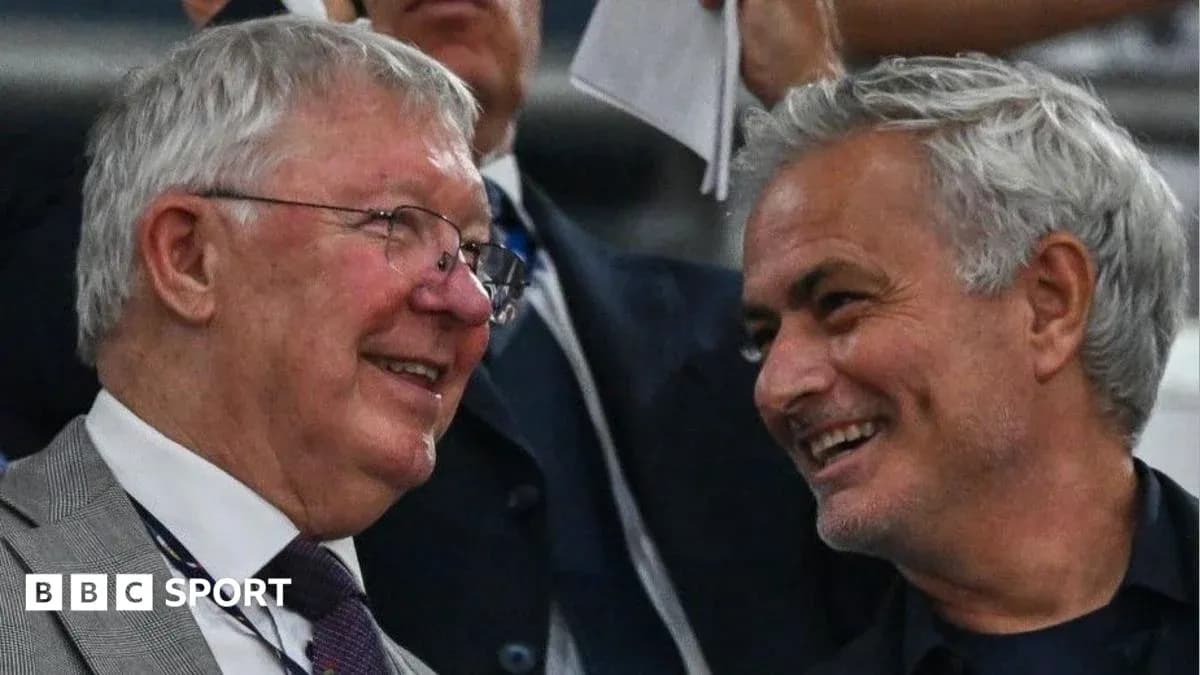
The Night Mourinho Said No: A Missed Opportunity for Manchester United
There is a moment, buried in Manchester United’s recent history, that still makes people inside the club wince.
It lasts the length of a phone call.
The night Mourinho said no
In 2013, as Sir Alex Ferguson prepared to step away from the Old Trafford dugout, United thought they had their next great manager lined up. Not just lined up – agreed.
Jose Mourinho, then at Real Madrid, had been sounded out over weeks. Senior United figures flew to Madrid and London. Meetings were held. Plans were laid. Ferguson, who admired Mourinho’s edge and his trophies, stunned him by revealing he would retire at the end of the 2012-13 season.
Negotiations accelerated. Terms were discussed. A deal, sources insist, was effectively done.
Then, in a matter of days, it wasn’t.
Ferguson recalls the turning point in the new Netflix documentary charting Mourinho’s career. One night, the Scot’s phone rang. On the other end was Mourinho, in tears.
"Alex, I can't take it. I've given my word to Chelsea and I'm not going to break my word."
That was it. The sliding door slammed shut.
A promise to Chelsea, doubts at United
Mourinho pointed to his family. His home was in London. When Chelsea sacked him in 2007, he had promised to return. His relationship with Roman Abramovich remained strong. Stamford Bridge, not Old Trafford, would be his next stop.
Some inside United still question whether family reasons told the full story. What is not in doubt is the impact of that decision.
For a short period, United believed they had secured the one manager with the personality, the trophies and the steel to walk into Ferguson’s office and own it. They were losing not just a manager, but an institution. Ferguson was the architect, the foreman and the on-site manager of everything on the football side.
The summer of 2013 was brutal for continuity. Ferguson was going. So was chief executive David Gill, a respected operator in the boardroom and transfer market. United knew they needed more than a simple succession plan. They needed a new structure.
Mourinho, with his broad shoulders and combative certainty, looked like the man to carry the weight.
From "The Chosen One" to the wrong one
Once Mourinho stepped away and with Pep Guardiola committed to Bayern Munich, United pivoted. Fast.
They chose David Moyes.
On paper, Moyes shared some of Ferguson’s traits: demanding standards, long-term building, a reputation for overachieving with Everton. But he had never operated at the level United required. No Champions League runs, no league titles, no experience of managing the game’s biggest egos.
United rolled out the banner: "The Chosen One."
He just wasn’t.
The drop-off from Ferguson’s final title-winning season to seventh place the following year was as dramatic as it was bewildering. Players from that squad still struggle to put their finger on why it unravelled so quickly. They had overperformed for Ferguson. Without him, they sagged.
Inside the club, a belief lingers: Mourinho would have squeezed more from that dressing room. He would have challenged them, pushed them, maybe bullied them. But he would not have watched them drift.
The transfer market that never was
The contrast in the transfer market remains a sore point.
Under Moyes, United hesitated. Deals dragged. Targets slipped away. Thiago Alcantara, then at Barcelona, had an agreement to join, sources maintain, only for United to let it slide. They stumbled into deadline day, overpaying for Marouane Fellaini at £27.5m after failing to trigger a cheaper release clause earlier in the window.
Those close to the 2013 talks are adamant: with Mourinho in charge, that chaos does not happen.
Thiago would have signed. Fellaini, they say bluntly, would not have been bought. Mourinho had already offered his opinions on a range of players, including Daniele de Rossi, as United sketched out what a post-Ferguson squad might look like under him.
The feeling is clear. Mourinho would not have tiptoed through a crucial summer. He would have acted.
The Mourinho United actually got
United did eventually get Mourinho. Just three years too late.
In 2016, he walked into Old Trafford to replace Louis van Gaal, who had been sacked 48 hours after lifting the FA Cup. The club he inherited looked very different from the one he might have taken over in 2013.
Of the 18 players who started 10 or more Premier League games in Ferguson’s final title-winning season, only six – David de Gea, Phil Jones, Wayne Rooney, Chris Smalling, Michael Carrick and Antonio Valencia – did so in Mourinho’s first campaign.
The dressing room had turned over. The aura had faded. The club had stumbled through Moyes and Van Gaal, searching for identity.
Mourinho had changed as well. He had returned to Chelsea and won another Premier League title, only to leave in December 2015 with the champions languishing in 16th place, a point above the relegation zone and the atmosphere toxic.
At United, his reign split opinion.
He delivered silverware immediately: the Europa League and the EFL Cup in his first season, plus Champions League qualification. He took United to second place in the league in 2017-18, 19 points behind Manchester City, and called that finish one of the "best achievements" of his career. The numbers back up at least part of that claim. United’s 81 points that year remain their highest total in the Premier League since Ferguson retired.
Yet the cost was high. Mourinho clashed with players, most notably record signing Paul Pogba. He publicly questioned the club’s ambition, complained about a lack of backing, and argued he should have been allowed to sell Anthony Martial.
By the time he left, the sense of chaos was hard to ignore.
The turning point that still hurts
Inside Old Trafford, a conviction has grown over time: the Mourinho United needed was the 2013 version, not the 2016 one.
The earlier Mourinho would have walked into Ferguson’s old office believing he could do better than the great man. He would have relished the fight. He would have imposed himself on a squad that, while limited, still contained champions who understood what winning looked like.
Nobody could have extracted more from that group than Ferguson did in 2012-13. Everyone accepts that now. The title they won that season remains a testament to his ability to stretch a squad beyond its natural ceiling. But the collapse to seventh felt avoidable. That is where the "what if" bites.
Those close to events still argue Mourinho’s presence would have sharpened minds, stiffened resolve and stopped the freefall.
Ferguson, in the documentary, recalls Mourinho’s tears with clarity. The emotion, the apology, the promise already given to Chelsea. One phone call that changed United’s path.
For Manchester United, it was more than a missed appointment. It was a fork in the road. And more than a decade on, with the club still searching for a stable identity in the post-Ferguson era, the question lingers uncomfortably:
Did they ever truly recover from the night Jose Mourinho said no?