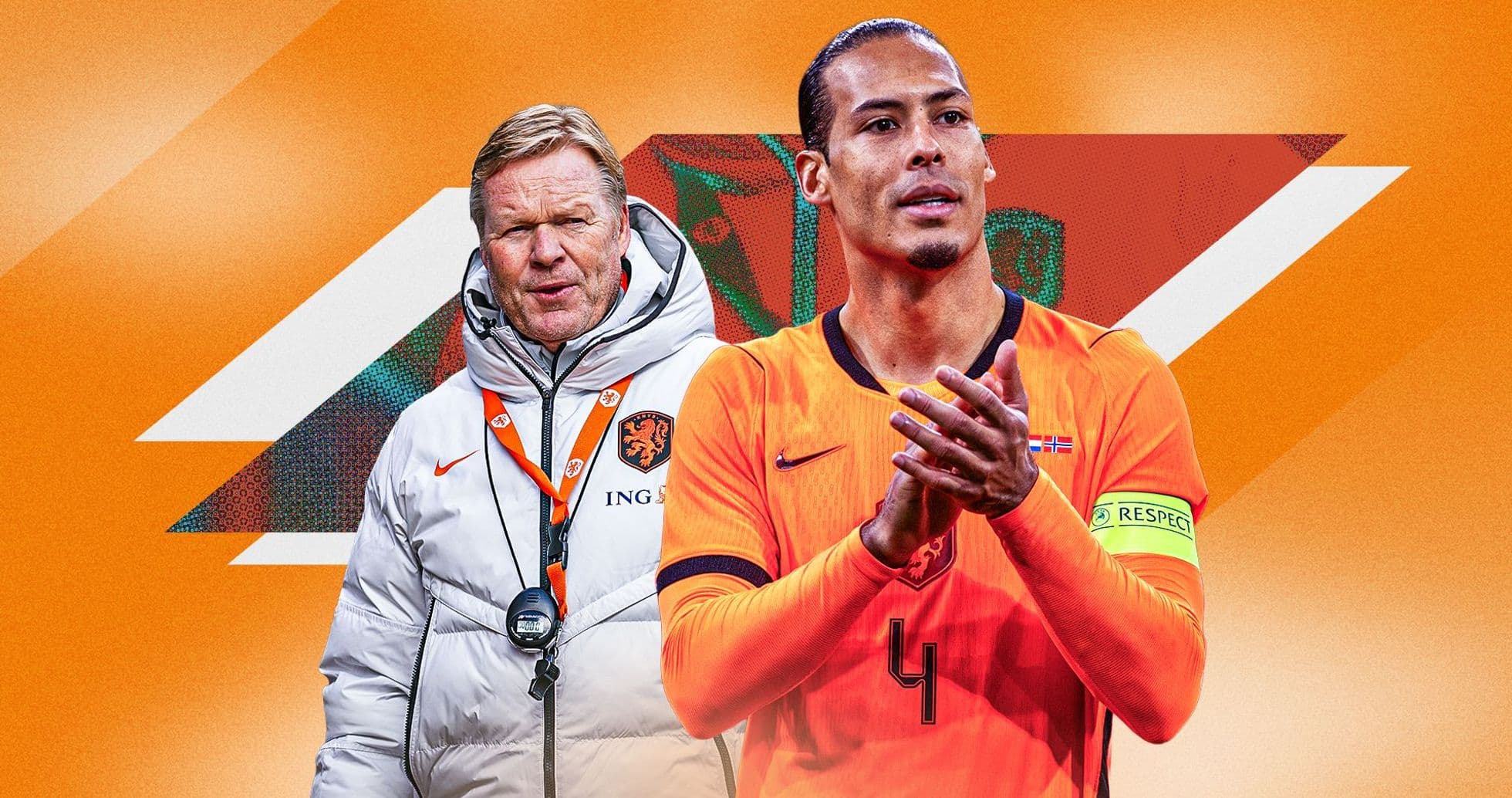
The Netherlands: Dark Horse in Major Tournament Challenge
The Netherlands arrive as they often do: talked about, respected, but parked a step behind the headline favourites. Not quite among the elite contenders, yet far too dangerous to be dismissed. A dark horse with a familiar orange glow.
They have been dropped into a demanding group with Japan, Sweden and Tunisia. On paper, it is awkward. On grass, the Dutch still look like the team to beat. Virgil van Dijk anchors a defence that rarely panics, Frenkie de Jong knits everything together in midfield, and the attack leans on Memphis Depay and Cody Gakpo – two players who can turn tight games with a single touch.
The optimism, though, comes with caveats. Important pieces are missing. Xavi Simons, Jurrien Timber and Matthijs de Ligt have all been ruled out through injury, stripping Koeman of creativity, versatility and experience in one hit. Jeremie Frimpong’s absence from the final squad raised eyebrows, as did the omission of gifted midfielder Kees Smit. Those calls will follow Ronald Koeman into every press conference if results falter.
The warning signs have already flashed. A shock defeat to Algeria in the first pre-tournament friendly rattled confidence and exposed some of the cracks in Koeman’s structure. The narrow win over Uzbekistan that followed did little to calm the debate. The Oranje got the result, but not the reassurance.
Koeman’s Journey
Koeman’s own story with this team is layered. He first stepped into the role in 2018, taking over from Dick Advocaat with a four-year contract and a mandate to restore Dutch pride. He quickly delivered: a place in the 2019 UEFA Nations League final and qualification for Euro 2020 put the Netherlands back on the major-tournament map. Then Barcelona called, and he walked away.
Two-and-a-half years later, he returned. Back on the Oranje bench in 2023, replacing Louis van Gaal, Koeman has since taken the team to two more semi-finals – in the 2023 Nations League and at Euro 2024. On paper, that is a strong record. In Dutch living rooms and studios, the conversation is more complicated.
Koeman has opened the door to a new generation, introducing several promising youngsters and reshaping the squad’s core. Yet his style has split opinion. The Netherlands grew up on the attacking ideals of Rinus Michels and Johan Cruyff, on the romance of total football. Koeman’s version is more pragmatic, sometimes cautious, and not always in step with the nation’s self-image. Results have bought him time, not universal love.
Memphis Depay
At the heart of it all, one figure still dominates the Dutch narrative: Memphis Depay. He no longer plays his club football in Europe and is likely heading into his final major tournament with the national team, but he remains the team’s reference point, their attacking compass.
Depay is now the all-time leading scorer in Dutch national team history, outstripping icons such as Robin van Persie, Dennis Bergkamp, Arjen Robben and Ruud van Nistelrooy with his 55 international goals. That list alone underlines the scale of his achievement. When the Netherlands need a goal, the first instinct is still to look for the number on his back.
In an era where the Dutch lack a classic, world-class centre-forward, Koeman’s dependence on Depay only grows. The Corinthians forward drove the team through qualification and averages close to a goal every two matches for his country. The one asterisk on his record is a telling one: only six of those goals have come at major tournaments. This summer is his chance to change the story.
Brian Brobbey
Behind Depay, a different kind of striker is pushing his way into the frame. Brian Brobbey, once the next big thing out of Ajax’s famed academy, took a hit to his reputation in Germany. His time at RB Leipzig never caught fire; the “flop” label arrived early and stuck too easily.
He has answered that in England. Now 24, Brobbey has rebuilt his career with Sunderland, where he has become both symbol and spearhead of their resurgence. Nicknamed “Brobbeast”, he scored seven goals in 31 Premier League appearances and played a central role in the Black Cats’ remarkable charge into next season’s Europa League. Those numbers do not scream superstardom, but the performances behind them have changed perceptions.
Brobbey is no mere battering ram. He combines power with real acceleration, can play with his back to goal or spin in behind, and has rediscovered the cold edge in front of goal that made him such a coveted prospect at Ajax. A few years ago, people were lazily calling him “the new Romelu Lukaku”. That comparison feels outdated now. He has carved out his own identity, and young forwards are watching him, not his supposed template.
For Koeman, Brobbey offers something the squad has lacked: a genuine line-leading presence who can bully centre-backs and create space for Depay and Gakpo to operate around him. In a tight knockout tie, that profile can tilt a game.
So the Netherlands step into this tournament with contradictions everywhere. A coach with semi-finals on his CV but a fanbase still unconvinced. A legendary scorer chasing a defining major-tournament run. A rejuvenated striker ready to prove that the “Brobbeast” tag is more than a social-media slogan.
They may not be listed among the heavy favourites. They rarely need to be. The question, as ever with the Oranje, is simple: can this blend of old stardust and new muscle finally carry them beyond promise and into something lasting?