Newcastle United vs Liverpool: A Night of Drama and Belief
The board for stoppage time went up: five minutes.
On the touchline at St James’ Park, Matthias Jaissle reacted as if someone had lit a fuse. Arms pumping, coat flapping, he demanded one last roar. The message was clear. Newcastle United were 2-1 up against Liverpool. Hold. On.
The crowd didn’t need a second invitation.
“Sing your hearts out for the lads,” came the response, a wall of noise that felt like it might carry Newcastle over the line. But this is Newcastle v Liverpool. This fixture lives in the late minutes, in the chaos, in the sting in the tail.
Everyone inside the ground knew the history. Stan Collymore in 1996. Kevin Keegan folded over the advertising hoardings at Anfield, beaten 4-3 in a match that has never really ended in the minds of either club’s supporters. That ghost still walks into nights like this.
On this occasion, it felt even closer. Keegan’s family were in the directors’ box, alongside former players such as Alan Shearer, Rob Lee and Tino Asprilla, watching another wild chapter unfold. Before kick-off, Wor Flags had draped the stadium in black and white, every seat covered, a club wrapped in its own story.
A banner in the Gallowgate End carried Keegan’s words like a challenge: “I want people to dream about their football club. They should. We should all be dreamers at heart.
“Some people are the opposite and say, ‘We can’t do that’. But when you ask them why, they can’t give a reason. Well, I say, ‘Why not?’”
Those lines hung over the evening as much as the flags did. This was a night about belief as much as it was about points.
Newcastle have had a year that could easily have drained that belief. Alexander Isak gone. Anthony Gordon gone. Sandro Tonali gone. Bruno Guimaraes gone. Eddie Howe, the man who guided them back into the Champions League, also gone.
The recruitment drive has been bold but risky. Every signing this summer has been 24 or under. None had kicked a ball in the Premier League before. Their new head coach had never managed in it either.
It was enough for plenty of pundits to quietly shuffle Newcastle down their pre-season predictions. This might be the year the project stalls, they said. This might be where the bubble bursts.
Jaissle heard that noise. So did injured captain Dan Burn, who has always leaned into the idea of Newcastle as the club nobody outside wants to succeed. “Us against the world” is not just a slogan on Tyneside; it’s an energy source.
On Sunday, they tapped it again. The return of Isak to the squad only cranked the volume up further. St James’ Park felt like it had been waiting all summer for this.
“If you have this synergy between the fans and then the players delivering on the pitch, something special can be created,” Jaissle said later. On this evidence, he’s not just pandering to the crowd.
There were flashes, early and often, of what his Newcastle might become: the ferocity of the press, the relentless runs in behind, the refusal to wilt when Liverpool tried to wrest control. Grit. Spirit. Work rate. None of it revolutionary, but all of it unmistakable.
Few players embodied that quite like Amar Dedic. The full-back had only completed his £30m move from Benfica on Tuesday. By Sunday, he was throwing himself into duels as if he’d grown up on Barrack Road. It looked like he’d been here for years.
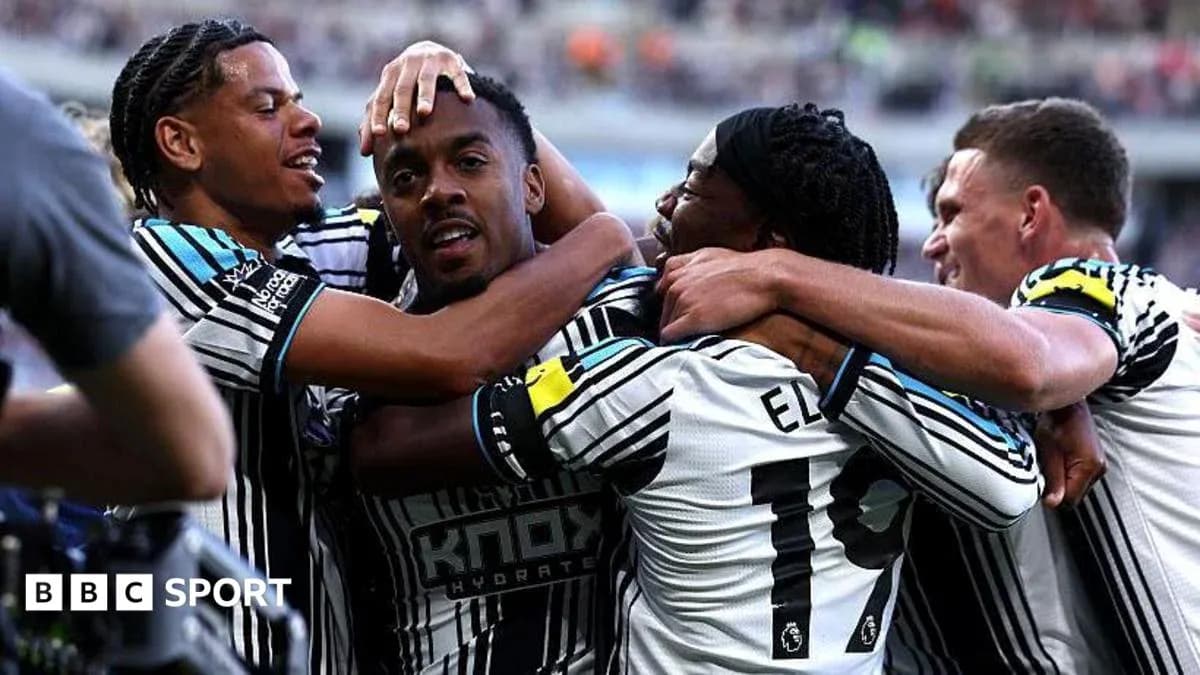
Yet what really caught the eye were some of last summer’s nearly-men suddenly coming to life. Anthony Elanga, after a difficult first season on Tyneside, struck the opening goal with a sharp, composed finish into the bottom corner. Yoane Wissa, another who had drifted on the margins, played the pass for substitute Joe Willock’s second and spent the rest of the evening playing as if he’d been handed the keys to the attack.
The numbers told their own story. Wissa, a forward, won more duels – 11 – than any other Newcastle player.
“The manager expects me to be a leader and lead the group,” the 29-year-old told Sky Sports. “He wants me to be winning balls, making sure everyone is going forward, going for the kill, and sometimes just be calm.”
Jaissle loved that performance. He made a point of praising Wissa’s aggression and responsibility, though he couldn’t resist mentioning the missed chance to “kill the game” at 2-1 and stretch it to 3-1. That, of course, is where the scars of last season start to itch.
Newcastle’s Achilles heel in 2025-26 was brutal and obvious. No team dropped more points from winning positions – 27 in total. Howe admitted in May that such a habit can seep into a dressing room, that players can feel the late collapse before it happens.
So when the fourth official’s board flashed up and Liverpool poured forward one last time, you could taste the tension. The whistles from the home end were ferocious, almost pleading. Get it clear. Get it done.
Instead, Victor Munoz drove into the box and a weary Lewis Hall, legs heavy, mistimed his challenge. Down went the substitute. Stuart Attwell pointed to the spot.
On the touchline, Jaissle ripped off his blazer in fury, convinced it was a “soft” call. Inside the ground, the air turned cold. Dominik Szoboszlai stepped up, unruffled, and buried the penalty. Another late Liverpool punch. Another Newcastle lead gone. A 2-2 that felt, in the moment, like a defeat.
By the time Jaissle faced the cameras, he was choosing his words carefully.
“I cannot repeat everything because I could get in trouble and may need to pay some fines,” he said, pausing long enough to let everyone imagine what he really thought. But he refused to let the penalty decision define his night.
“Overall, I told them that I’m really proud of what I saw over the 90 minutes. This is a really top starting point.”
The reaction in the stands backed him up. Many stayed behind to applaud, not out of blind loyalty, but because they had seen a team that looked like a unit again.
“We were there for each other if something went wrong,” Jaissle said. “We acted like a unit. In such a short amount of time, this is a top starting point and the frustration was there as well, but these are the challenges we have now.
“With the pre-season, with the transition phase, it’s normal. Today someone threw stones in the way and we need to take that out to be successful again.”
The late equaliser hurt. It should. Newcastle have lived this film too many times.
But on a night when Keegan’s words about dreaming wrapped themselves around the stadium, and a new manager’s ideas crackled through a patched-together, evolving squad, the draw felt like more than just two points dropped.
The old drama is still here. The question now is whether this Newcastle can finally learn how to finish their own story.