Neymar's Brazil Future in Doubt Amid Concerns Over Physical Decline
The debate around Neymar’s place in Brazil’s World Cup plans has moved into uncomfortable territory. It is no longer about tactics, ego, or dressing-room dynamics. It is about whether his body can still live at the speed the modern international game demands.
And one of Brazil’s 1994 world champions has publicly cast doubt on that.
Rai’s Stark Assessment
Speaking on French programme Rothen S'enflamme, Rai – the elegant former Brazil and PSG midfielder – did not circle the issue. He went straight through it.
"If he comes, he'll have an impact on the team," Rai said, before quickly shifting to the core concern: Neymar’s condition. He pointed to a player who, at 34, is no longer able to consistently reach the physical heights that once made him unplayable.
Rai underlined that Carlo Ancelotti, now in charge of the Selecao, is carefully sounding out his squad. The Italian, he said, is “shrewd” enough to judge whether Neymar remains a positive influence. But Rai did not sugar-coat the present reality: Neymar is “not at his best,” has “had a lot of physical problems,” and “can’t get back to his top form.” The loss of speed, Rai argued, is evident, even if the vision and passing remain of a star.
In his view, Neymar “right now is not at the level he needs to be.”
From Global Icon to Fitness Gamble
The numbers and the timeline back up the concern. Neymar’s last appearance for Brazil came in October 2023, in a World Cup qualifier against Uruguay. That night ended with a devastating knee injury, another chapter in a career increasingly defined by medical bulletins rather than match-winning performances.
His big-money move to Al-Hilal in 2023 was meant to be a fresh start in the Saudi Pro League. Instead, it turned into another lost year. The knee injury cut short his Middle East adventure and left him facing a long rehabilitation.
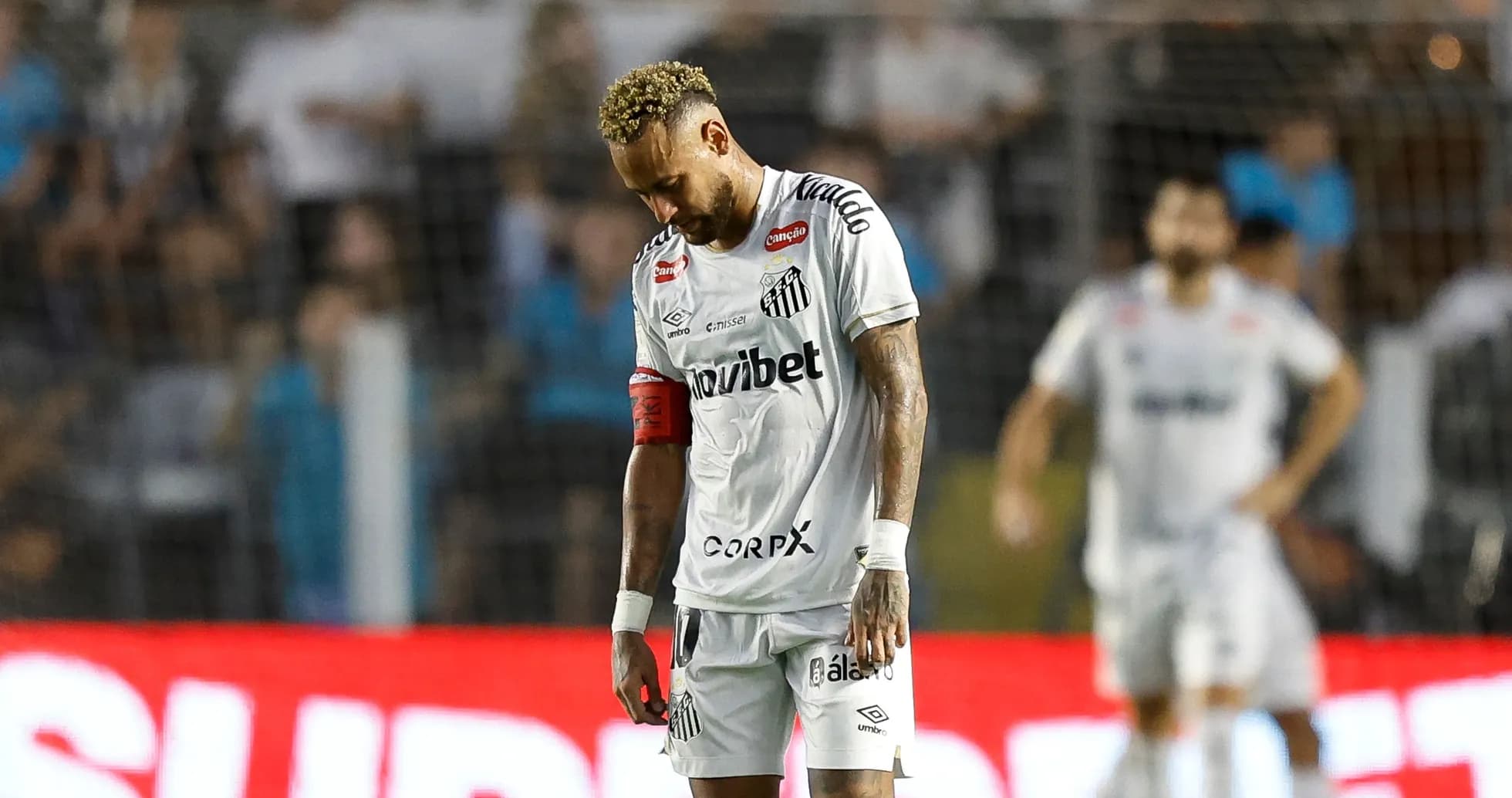
A romantic return to Santos in January 2025 offered the promise of a reset: back to where it all began, back to a fanbase ready to embrace him regardless of the scars. On paper, his output has been respectable. In nine games for Santos across league and continental competition, he has produced four goals and four assists. The talent is still there. The touch is still there. The ability to decide games with a single pass or moment of deception has not vanished.
The problem is everything around those flashes.
Managed Minutes, Managed Expectations
Santos have treated Neymar less like a guaranteed starter and more like a delicate asset. He has already missed several domestic fixtures as a precaution. The club and his camp are acutely aware that one overload, one mistimed sprint, could undo months of work.
Recently, he underwent a regenerative surgical procedure using platelet-rich plasma, designed to strengthen his joints and speed up his recovery towards something resembling peak condition. It is cutting-edge medicine, but also a clear sign: this is a player fighting his own body as much as any opponent.
Head coach Cuca has confirmed that Neymar will sit out Santos’ next Serie A match against Bahia. The decision is strategic. The club wants him available for a crucial Copa Sudamericana clash away to San Lorenzo in Argentina. Every appearance now comes with a calculation: how much can he play, how hard can he push, and what might it cost him in the weeks that follow?
That kind of delicate load management may work at club level. It is far harder to justify in a World Cup squad.
Ancelotti’s Hard Line
Carlo Ancelotti has been clear since taking charge of Brazil: the 2026 World Cup in North America will be built on players in peak physical condition. Reputation will not be enough. Past glories will not earn a seat on the plane.
That stance throws Neymar’s situation into sharp relief. On one side, Brazil’s all-time leading goalscorer, the No.10 who has carried the shirt through an entire generation, still capable of unlocking defences with a pass that nobody else on the pitch can see. On the other, a forward whose explosive acceleration – once his deadliest weapon – has dulled after years of injuries and relentless treatment.
For a national team trying to impose a high-intensity, modern game, a diminished star can quickly become a tactical problem.
Ancelotti is due to name his final World Cup roster on May 18. Between now and then, every minute Neymar plays for Santos will be monitored, weighed, and judged by the Brazil staff. It is not just about form. It is about whether his body can withstand the tempo and volume of tournament football: group stages, travel, knockouts, all in a compressed window.
One Last Dance – or a Harsh Break?
The dilemma for Brazil is stark. Can they afford to take a player of Neymar’s stature if he cannot press, sprint, and repeat at the highest level? Or can they afford not to, knowing that even in decline he can still produce moments that decide tournaments?
Rai’s comments cut to the heart of it. Neymar’s brain remains elite. His passing range, his creativity between the lines, his ability to knit attacks together – all still world-class. But in an era where every top international side demands relentless running from its forwards, the loss of that devastating first step could turn him from asset to liability.
For now, Neymar’s world has shrunk to the here and now with Santos: manage the workload, protect the knee, build rhythm, chase consistency. Each game feels like an audition, each rest a reminder of the fragility of this stage of his career.
On May 18, Ancelotti will make his call. Either Brazil’s greatest goalscorer gets one last shot on the biggest stage, or the Selecao will head to 2026 having drawn a brutal line under an era that once promised to belong to Neymar.