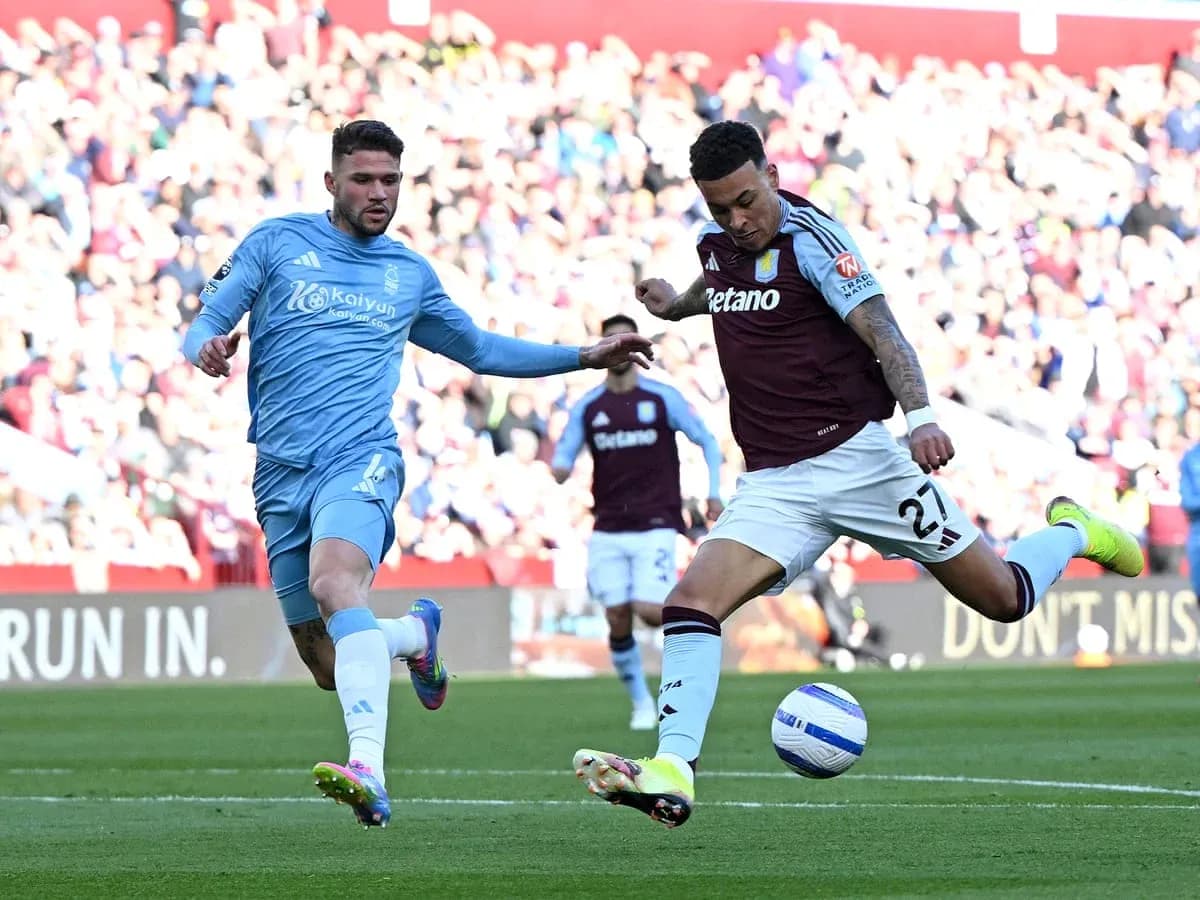
Nottingham Forest vs Aston Villa: Survival and Champions League Pressure
Nottingham Forest host Aston Villa at the City Ground in a preview that could heavily shape both clubs’ trajectories in the 2025 Premier League edition. In the league phase, Forest sit 16th on 32 points after 31 matches, just above the relegation battle, while Villa are 4th on 54 points, occupying a Champions League league phase spot. With seven games left, a swing of three points here meaningfully shifts the probabilities at both ends of the table.
The first leg and H2H
Aston Villa’s 3-1 victory in the first leg puts Nottingham Forest in a reactive position. At Villa Park in the league phase, Villa led 1-0 at the break and closed out a 3-1 win, underlining their ability to manage game states once ahead. That result was part of a broader pattern: in the last five head-to-head league meetings (the atomic five), Villa have three wins (4-2, 2-1, 3-1) and Forest have two home victories (2-0, 2-1).
The sides were level at 0-0 at HT in Forest’s 2-1 home win in 2024, and Forest also led 1-0 at HT in the 2-0 home victory in 2023. That recent City Ground record (two straight home league wins over Villa) is one of Forest’s few psychological levers; it suggests that if they can keep the game tight to half-time, they can tilt it in their favour. For Villa, three wins from the atomic five underline that they generally find ways to exploit Forest’s defensive frailty over 90 minutes.
The global picture: survival metrics versus top-four control
In the league phase, Forest’s numbers are those of a team living on the edge. They have 8 wins, 8 draws and 15 defeats from 31 games, with a -12 goal difference (31 scored, 43 conceded). At home in the league phase, they have only 3 wins from 15, scoring 13 and conceding 19. That is 0.9 goals scored and 1.3 conceded per home match.
Across all phases of the competition, those figures are identical because Forest’s data set is league-only, but the extended form string (WDLLDLLLLDWWLWLWLLLLWDWDLDLLDDW) shows how volatile they are: a biggest losing streak of 4 and a biggest winning streak of just 2. They have kept 8 clean sheets across all phases of the competition but have failed to score 14 times, including 9 blanks at home. For a side trying to stay up, that attacking inconsistency is the core strategic issue.
Villa, in contrast, arrive with top-four credentials but also visible wobble. In the league phase, they have 16 wins, 6 draws and 9 defeats, scoring 42 and conceding 37 for a +5 goal difference. Away from home they have 6 wins, 4 draws and 5 losses from 15, with 19 scored and 22 conceded (1.3 for, 1.5 against per away game). Across all phases of the competition, their form line (DLLDDWWWWLWWWWWWWWLWDLWLDWDLLLW) reveals both an 8-match winning streak and a more recent run of WLLLD in the league phase, hinting at fatigue or regression.
Villa’s 9 clean sheets across all phases of the competition, compared with Forest’s 31 league-phase goals from 31 matches, underline a key tactical tension: if Villa defend at their better level, Forest’s already low scoring rate could dip further. On the flip side, Villa concede 1.5 goals per away match in the league phase, which keeps opponents alive and leaves points on the table.
Seasonal impact scenarios
If Forest win, they move to 35 points from 32 matches and, crucially, add a first home league win over a top-four side in this edition. That would likely open a multi-point cushion to the bottom three and materially increase their survival probability. With remaining fixtures limited, turning home draws (5 so far) into wins is the only path to safety; a victory here would also validate their City Ground H2H edge over Villa and reinforce the idea that controlled, lower-scoring home games (Forest average 0.9 scored, 1.3 conceded at home) can be enough.
A draw takes Forest to 33 points. That would extend their “same” status in 16th but leave them highly vulnerable to a late surge from teams below. Given they already have 8 league-phase draws, another stalemate would fit their profile but effectively turns the remaining six fixtures into must-win occasions against more direct rivals.
Defeat would be deeply damaging. Staying on 32 points after 32 matches, with a worsening goal difference against a side they are not expected to beat, would compress the bottom pack and increase pressure on their remaining home fixtures. Psychologically, it would also break the recent City Ground H2H advantage against Villa, stripping away one of the few comfort narratives around this matchup.
For Villa, a win would push them to 57 points from 32 matches, strengthening their grip on a Champions League league phase place and keeping pressure on the teams above. Given their away record (6 wins from 15), turning this into a seventh away victory would show they can still impose themselves on lower-ranked sides despite the recent WLLLD league-phase form.
A draw (55 points) keeps them in the top-four picture but erodes their margin for error, especially with rivals typically averaging above 1.8 points per game in this zone. Dropping two more points to a bottom-half side would make upcoming direct clashes with European contenders almost non-negotiable wins.
A loss, leaving them on 54 points, would be a serious blow. It would deepen the WLLLD pattern into a more pronounced slump and invite challengers to overtake them. Conceding three points to a team ranked 16th in the league phase would also underline the fragility of their away defending (22 conceded away already) and could force a more conservative tactical approach in remaining away fixtures.
Verdict
This match functions as a leverage game: for Forest, it is a rare chance to convert a difficult fixture into a survival accelerator; for Villa, it is the type of away game a genuine Champions League qualifier must control. The statistical profiles suggest that whichever side manages volatility better – Forest’s streakiness versus Villa’s away defensive leaks – will not just win three points, but materially reshape their season’s ceiling.