Omar Artan's UEFA Super Cup Debut: A Journey from Rejection to Redemption
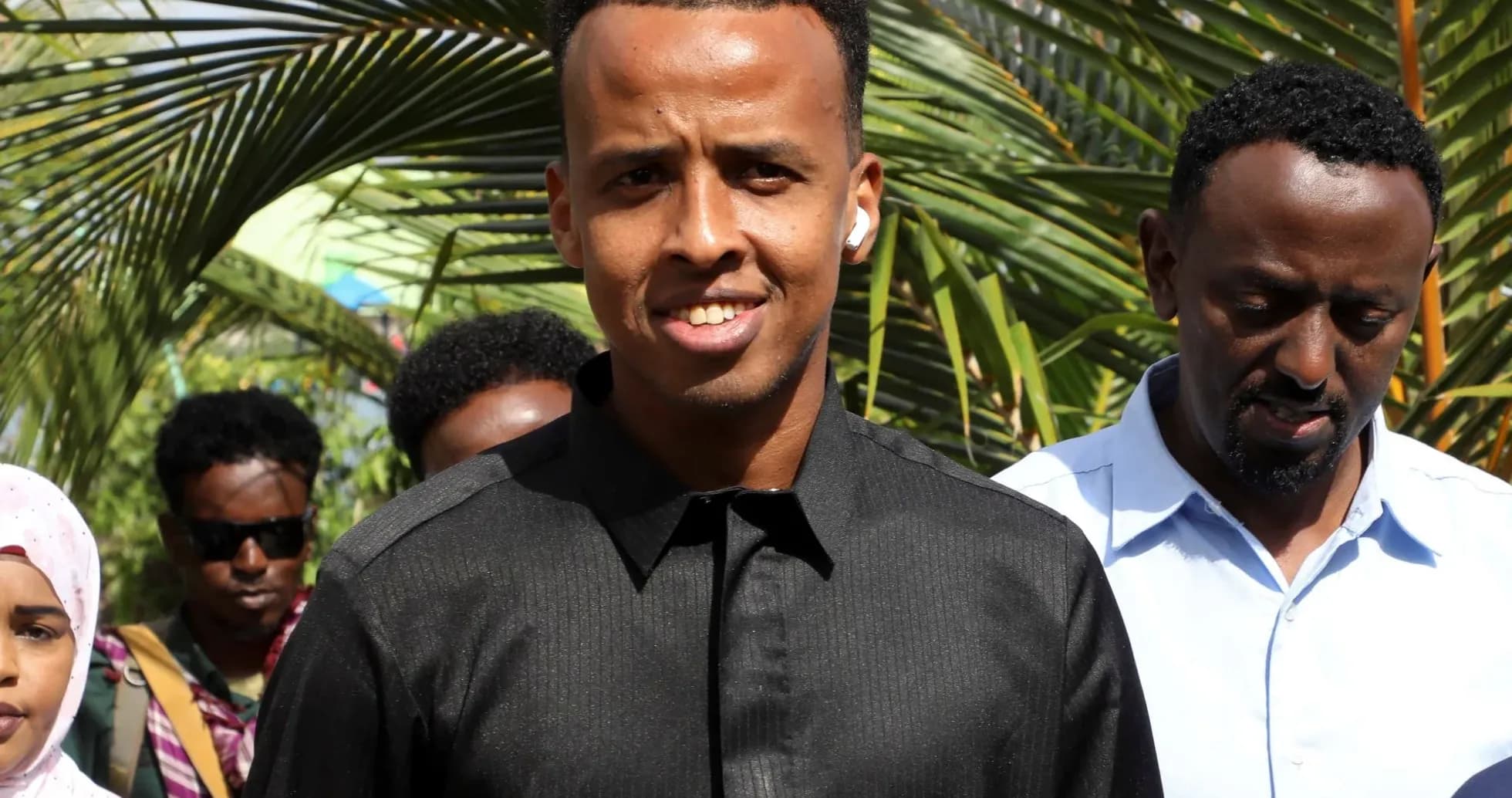
Omar Artan will finally walk out on one of football’s biggest stages on Wednesday night. Not at a World Cup, as he once expected, but at the UEFA Super Cup, where Paris Saint-Germain face Aston Villa – and where a story that began in an airport interrogation room will find its most powerful sequel yet.
From Miami rejection to European showpiece
Two months ago, the 34-year-old Somali referee arrived at Miami International Airport as part of FIFA’s selected panel for the World Cup. He left as a global headline.
US authorities refused him entry. A US Department of State official told AFP that Artan was “associated with suspected members of terrorist organisations”, a claim that instantly ended his World Cup dream and triggered a storm far beyond the arrivals hall.
Artan has firmly rejected the allegations. In Somalia, the reaction was visceral. The referee, who had climbed from a country scarred by conflict to the elite list of international officials, was welcomed home as a hero wronged on the world stage.
“It was a very tough period,” he told UEFA in an interview. “A lot of people have sympathy for me, because when someone has been working a lot of years and is supposed to do something, and then can’t do it, it’s very challenging.”
FIFA President Gianni Infantino called the episode “unfortunate” and admitted: “We don’t control everything.” It was a line that sounded as much like a shrug as a defence.
UEFA steps in – and sends a message
Where FIFA stepped back, UEFA stepped forward.
The European body moved swiftly, announcing that Artan would take charge of the UEFA Super Cup – the annual meeting of the Champions League winners, PSG, and Europa League winners, Aston Villa. On paper, it was a high-profile appointment in line with a new cooperation agreement signed in April with the Confederation of African Football (CAF), aimed at closer ties between the two confederations.
In reality, it is much more than a development initiative.
UEFA’s choice of Artan lands squarely in the middle of an escalating political conflict with FIFA and Infantino. The two organisations have been at odds for weeks over an abandoned plan to open up the World Cup to private investors, a project that collapsed under fierce resistance led by UEFA. That revolt has left UEFA openly brandishing the threat of boycotting FIFA tournaments – even future World Cups – as it pushes for Infantino’s departure.
Against that backdrop, handing the Super Cup whistle to a referee FIFA could not get into the United States reads like a pointed statement. This is solidarity, but it is also defiance.
A trailblazer from Somalia
For Artan, the night will mark another first. Earlier this year he became the first Somali to officiate at the Africa Cup of Nations in 2024, a landmark moment for a country that has long struggled for representation in elite football.
Now comes his European debut.
“I was lucky, but I have worked very hard to be here and I’m really proud,” he told UEFA. “As you can imagine, I grew up in a difficult situation, but it didn’t prevent me from pursuing my dreams.”
Those dreams have taken him from Somali pitches to the continental stage in Africa and now to a showpiece fixture in Europe, with two heavyweight clubs and a global audience watching his every decision.
“Having adventures, making memories and learning new things is always great,” he said. “When we got this call it was, for me and my family, really a very, very happy moment.”
A whistle that echoes beyond the pitch
On Wednesday, the focus will officially be on Kylian Mbappé, Moussa Diaby, Ollie Watkins and the rest of the stars from PSG and Aston Villa. Unofficially, a lot of eyes will drift to the man in the middle.
UEFA will present this as part of its technical cooperation with CAF, and that is true. But as Artan walks out with the Super Cup ball under his arm, the subtext will be impossible to miss: a European confederation backing a referee FIFA could not protect, and using one of its showcase fixtures to underline exactly where it stands in football’s power struggle.
For Artan, though, the politics will fade once the whistle blows. After everything – the airport rejection, the accusations, the missed World Cup – he finally gets what he wanted all along: a match, a crowd, and 90 minutes that belong entirely to his decisions.