Pat Cummins Addresses Ball-Tampering Controversy
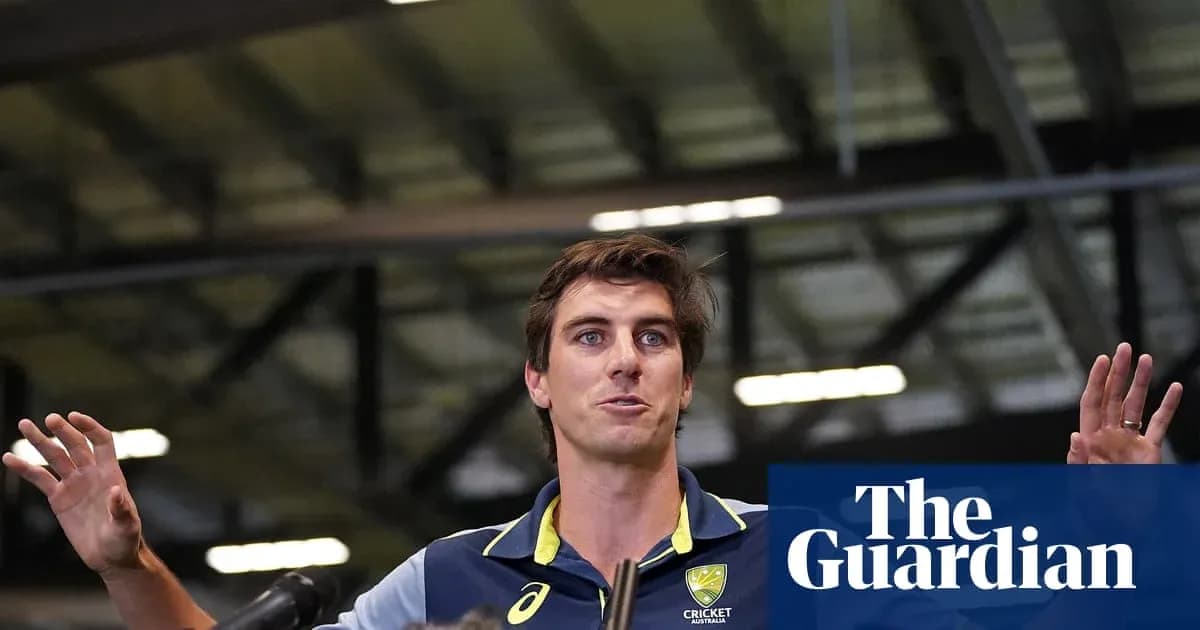
Pat Cummins walked into the room on Friday knowing exactly what waited for him. He stayed there for 70 minutes, took every question, and refused to duck a single one. If anyone had suggested he needed to front up, this was the answer.
This was not a man searching for a line to hide behind. It was a captain choosing a trench and refusing to move.
Cummins draws his line
The narrative of the week had been Usman Khawaja’s: a dressing room steeped in cutting corners, a culture where ball-tampering was not an aberration but a shared sin. “It was all of us,” Khawaja had written, a sweeping indictment of an era and everyone in it.
Cummins would not wear that.
He called it “100% wrong”. He called it “utter nonsense”. Not with bluster, but with a kind of controlled irritation that never quite left his face. The idea that the whole team had created a broader scheme, he said, was simply false – and, more than that, damaging to those who had nothing to do with it.
That was the point that clearly bit. Not just the history, but the collateral.
“It’s something I’ve actually been grappling with the last couple of days – that Usman’s a friend, but I think the way he’s been quite casual and quite flippant with people’s lives, and Australian cricket, I don’t think that’s OK, and I don’t think that’s what friends do.”
In that moment, the debate stopped being abstract. It became personal.
Detail over drama
If this had been an exercise in spin, you would have expected a concession or two. A little vagueness. A softening of the edges. Instead, Cummins went the other way. He reached for detail.
He talked through every method of ball-tampering he’d ever heard of – scratching, scuffing, foreign objects, the lot – and said he had never seen them used or agreed to their use while playing for Australia.
He gave one concrete example from his professional career: a Sheffield Shield match, a bottle cap, umpires stepping in. That was it, he said. The only time he’d seen tampering in action.
Then he pulled back the curtain on the nets. How balls get shredded with sandpaper and other tools in training. How that’s normal, part of understanding what a ball can do. How, in his mind, there was still a line between that controlled experimentation and crossing the rope into a match with the same intent.
He described the dressing room as a series of shifting pockets – groups forming, breaking, reforming – conversations that might never leave a corner of the room. In that swirl, he said, there was no shared moment where a teammate stood up and demanded collective responsibility for what happened in Cape Town, no call to own it as a group, no one shutting such a suggestion down.
On that, he was adamant: he and several others he’d spoken to had no memory of it. That part of Khawaja’s version, he implied, simply did not exist in their recollection.
Where the stories meet – and split
There was one small overlap. Khawaja wrote that during the 2017-18 Ashes, players had lifted the quarter seam to get the ball moving. Cummins, playing his first home Test series, remembered occasionally feeling a raised seam and assuming it was just a manufacturing quirk. Only later, with experience, did he wonder if there was more to it.
That’s as close as the two accounts come to touching.
From there, they diverge sharply. Khawaja’s broad brush – “It was all of us” – versus Cummins’ insistence that this was a harebrained plan concocted and escalated by a few, not a grand conspiracy owned by the many.
Could Cummins be lying? Of course he could. That will be the default position for plenty of people who believe every bowler knows precisely what’s happening to their ball, every over, every spell. The logic is obvious.
But sport, like life, is full of illogical pockets. Teams are not single minds. Batters hoard the ball between overs, running it through a familiar arc: keeper, slip, cover, mid-off, back to the bowler. Batters also hoard the strategy and, historically, the captaincy. Cummins is the first specialist fast bowler to lead Australia. That alone marks a break from the old order.
Friendship under strain
What complicates this story, and saves it from cartoon simplicity, is that there is no easy villain.
Khawaja has no clear incentive to invent a culture of cheating. If anything, his long loyalty to David Warner and his anger over leadership opportunities colour his perspective in other ways. In his own book, he describes being upset at not being given Steven Smith’s captaincy after Smith was removed for allowing sandpaper into the equation. Yet, by his own account, Khawaja had known what was going on in Cape Town and said nothing.
Cummins did not ignore that contradiction. He highlighted it.
“It’s a revelation to me that he knew what was going on, that he was sitting next to Cam [Bancroft], and that he told Cam to be careful. So maybe he’s been grappling with that for eight years.”
That line cut both ways. It acknowledged Khawaja’s burden while quietly undermining his authority to cast judgement on others.
And still, beneath the disagreement, there is a shared history that neither man is eager to torch.
Khawaja had written with warmth about a moment when Cummins changed the post-win celebrations, shelving the champagne spray out of respect for his Muslim teammate. “It was that one little gesture from Pat that changed it all and showed the world we are for everyone. I already liked Pat, but I loved him after this.”
Cummins, asked about that passage, looked and sounded genuinely hurt.
“Uzzy’s said to me a few times how much he’s enjoyed being part of the team. That means more to me than any win.”
This is where the human cost sits: two intelligent, senior players, proud of what they have built together in a new Australian side, now publicly split on how to describe the old one.
No neat ending
Strip away the noise and we are left in a familiar place.
There was a group of players who worked obsessively on reverse swing. There was a group who didn’t. Each assumed, to some degree, that everyone else saw the game the way they did. Cape Town shattered that illusion.
Some friendships are bruised. Some fans have picked their side. Most people are simply left unsure, trying to reconcile conflicting accounts from men they have grown to respect.
What has changed is not the past, but the silence around it. For almost a decade, those inside the story have said as little as possible, content to let press releases and carefully managed statements do the talking.
On Friday, Pat Cummins finally did the talking himself. Now the rest of Australian cricket has to decide what, and who, it believes.