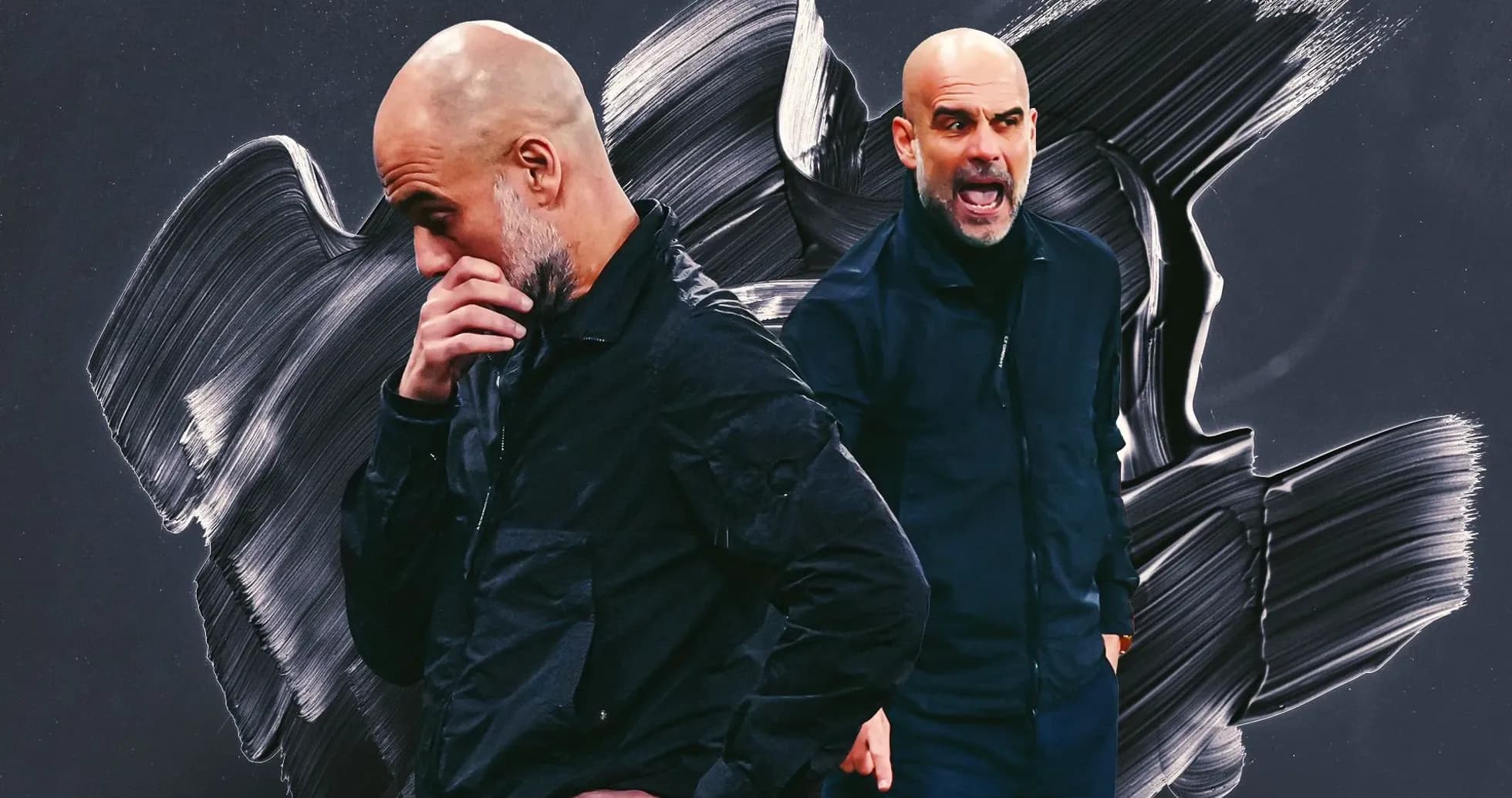
Pep Guardiola's Tactical Gambles Threaten His Legacy
For more than a decade, Pep Guardiola has lived with a label he loathes. A serial winner, three-time Champions League champion, 12 league titles across Spain, Germany and England, countless domestic cups – yet still stalked by the accusation that, when the lights burn brightest in Europe, he can’t resist overcomplicating things.
He spoke only last week of being “massacred” for his decisions. The word came loaded with frustration, maybe even a touch of fatigue. But then came Madrid. Then came West Ham. And the old accusations roared back to life.
The Old Pattern Resurfaces
There is a thick file of evidence behind Guardiola’s reputation for over-thinking. Bayern’s front four against Madrid in 2014. Eric Garcia starting in a back three against Lyon in 2020. Ilkay Gundogan as the holding midfielder in the 2021 Champions League final against Chelsea.
Those nights hardened the narrative. City’s 2023 Champions League win briefly softened it.
On that run to Istanbul, Guardiola largely kept faith with a settled side. A consistent back line, a stable midfield, a clear structure. City outplayed Bayern and Madrid, then ground past Inter in a final that was more fight than flourish. The “tinkerer” label, for once, felt outdated.
Even the exits that followed could be rationalised. Madrid knocking City out on penalties in the 2024 quarter-finals was cruel more than careless. Last season’s emphatic defeat to Los Merengues came at a time when City were badly out of form, and Kylian Mbappé was at his devastating best. Those losses hurt, but they didn’t scream self-sabotage.
This past week has been different.
Arbeloa’s Warning and a Wild Night in Madrid
Alvaro Arbeloa, now in charge at Real Madrid and so often on the wrong end of Guardiola masterclasses as a player, almost predicted it. “Guardiola always has a surprise planned,” he said on the eve of the first leg.
He was right.
At the Bernabeu, Guardiola ripped up the template that had underpinned City’s recent resurgence. Out went the settled back four of Rayan Ait-Nouri, Marc Guehi, Ruben Dias and Matheus Nunes, a unit that had started the previous four league games together. The midfield trio of Nico O’Reilly, Bernardo Silva and Rodri – the heartbeat of a six-game winning run in February – was broken up.
In its place came a bold, attacking line-up that seemed to contradict everything Guardiola usually demands from a first leg away from home in Europe: control, structure, caution with the ball.
O’Reilly, restored to left-back for the first time in two months, was brutally exposed by Federico Valverde for the opening goal. Madrid repeatedly sliced through City’s open midfield whenever they attacked. This was not the meticulous suffocation of space that has defined Guardiola’s best work; it was something looser, riskier, and Real feasted on it.
Afterwards, Guardiola refused to concede he had misjudged it. He pointed to City’s dominance in the first 20 minutes and argued Madrid had scored with their only shots on target. The numbers told a different story: the home side registered seven attempts to City’s four, and Vinicius Jr even missed a penalty that could have virtually killed the tie.
Guardiola’s explanation – that he wanted to “make the Bernabeu feel that we are there” – carried an unmistakable whiff of hubris. It evoked memories of that 2014 Bayern set-up in Madrid, a game he later called “the biggest f*ck up of my career”.
Almost on cue, old comments from Fabio Capello resurfaced. The Italian’s assessment, given to El Mundo a year earlier, suddenly felt painfully relevant.
“You know what I don’t like about Guardiola? His arrogance,” Capello said. “The Champions League he won with City is the only one where he didn’t try anything funny in the decisive matches. But all the other years, in Manchester and Munich, on key days, he always wanted to be the protagonist. He would change things and invent them so he could say: ‘It’s not the players who win, it’s me’. And that arrogance cost him several Champions Leagues. I respect him, but for me, it’s clear.”
If City fail to become only the fifth team in the modern era of the competition to overturn a deficit of three or more goals and reach the quarter-finals, those words will echo loudly. The conclusion will be simple: Guardiola’s arrogance cost him another Champions League shot.
And yet, astonishingly, the most baffling decision of his week was still to come.
From Gung-Ho in Madrid to Cautious in London
Three days after going all-out attack at the home of Europe’s most decorated club, Guardiola veered the other way.
At the London Stadium, against a West Ham side fighting relegation and coached by the notoriously defensive Nuno Espirito Santo, he chose control over incision. Antoine Semenyo started again, while Rayan Cherki – a natural fit for tight spaces and ball retention – watched on from the bench.
On paper, it made little sense. If there was a game crying out for Cherki’s ability to operate in small pockets and keep the ball under pressure, this was it. Instead, Guardiola left his most suitable tool unused until the hour mark.
Cherki eventually came on with 30 minutes to play, joined by three more attackers as City chased the game. The cavalry arrived, but too late. City dropped points for the second match running against a team scrapping for survival, and the consequences were immediate and brutal: nine points behind Arsenal in the title race, albeit with a game in hand.
This time, Guardiola did not hide behind the numbers.
“Bad selection, now you can criticise me incredibly for the selection, now I deserve it,” he said, the admission laced with a hint of sarcasm but also a rare public acceptance that he had simply got it wrong.
A Season on the Brink – and a Legacy Under Scrutiny
Guardiola has little margin left for error. The next month will define City’s season – and perhaps the final chapter of his time at the club.
Madrid await in the second leg. Arsenal loom in the Carabao Cup final. Liverpool stand in the way in the FA Cup quarter-finals. Then comes a trip to Chelsea, before what already feels like a title decider against the Gunners on April 18.
Two weeks ago, City’s campaign promised a shot at everything. Now, it could unravel in the space of four bruising weeks.
There is also the wider question hanging over all of this: what comes next for Guardiola himself. With an expectation that he could depart in June, this may be the last act of an extraordinary decade in Manchester. It should be a farewell written in gold – a coach walking away with his status as one of the game’s great tacticians unblemished.
Instead, his greatest flaw threatens to overshadow his greatest work. He has built dynasties in three countries, reshaped how teams think about space, pressing and possession, and delivered a level of domestic dominance English football has rarely seen. Yet the charge that he cannot resist the temptation to spring a surprise in the biggest games refuses to go away.
Over the next month, Guardiola will stand at the crossroads of his City story. Either he reins in his instinct to tinker and goes out on a high, or he doubles down on the surprises that have already cost him so much.
If he cannot resist, his teams may not be the only ones to pay the price. His legacy might, too.