Portugal Defeats Croatia 2-1: Tactical Analysis of World Cup Clash
Portugal’s 2-1 win over Croatia at BMO Field in this World Cup Round of 32 tie was built on structural control and ball dominance against a dangerous, transition-oriented opponent. Both sides lined up in a 4-2-3-1, but Portugal’s interpretation was far more proactive: 61% possession, 584 passes and a 2.18 xG reflected a game plan based on circulation, overloads between the lines and sustained pressure. Croatia, with 39% of the ball and 1.34 xG, leaned on vertical punches, set-piece threat and the individual quality of their advanced full-back and midfield line.
Out of possession, Portugal’s 4-2-3-1 often resembled a 4-4-2, with Bruno Fernandes stepping up alongside Cristiano Ronaldo to press Croatia’s first line. The double pivot of João Neves and Vitinha provided the platform: they recycled quickly, offered constant short options to the back four, and allowed full-backs João Cancelo and Nuno Mendes to advance aggressively. That structure underpinned Portugal’s territorial edge and their shot profile: 15 total shots, 10 from inside the box and 4 blocked, pointing to repeated penetrations into dangerous central zones rather than speculative efforts.
Croatia’s own 4-2-3-1 was more conservative in its base spacing but flexible in its attacking patterns. Ivan Perišić, nominally the left-back, acted as an auxiliary winger, and it was fitting he opened the scoring with a “Normal Goal” on 53 minutes. Ahead of him, the trio of Nikola Vlašić, Petar Sučić and Martin Baturina operated as narrow No.10s, trying to overload Portugal’s half-spaces. Luka Modrić and Mateo Kovačić alternated who dropped to help build, but Croatia were generally content to cede territory and look for quick surges: 13 shots, 10 inside the box, suggested that when they did break Portugal’s lines, they created clean looks.
Turning Point
The turning point tactically came in the 60–70 minute phase. At 1-0 down and after a VAR intervention had disallowed a potential Cristiano Ronaldo goal for offside at 61', Roberto Martinez detonated a triple outfield substitution wave between 62' and 63'. Bernardo Silva (IN) came on for Vitinha (OUT), Francisco Conceição (IN) for Pedro Neto (OUT), and Nélson Semedo (IN) for João Cancelo (OUT), while Gonçalo Ramos (IN) replaced Bruno Fernandes (OUT). Those moves reconfigured Portugal into a much more vertical, wing-driven side: Bernardo Silva added control and diagonal passes from the right half-space, Francisco Conceição brought 1v1 threat on the flank, and Ramos offered penalty-box occupation alongside Ronaldo.
The immediate impact was seen in territory and penalty-box pressure. Portugal’s shot volume and box entries increased, culminating in the 68' penalty converted by Cristiano Ronaldo. The fact that Portugal finished with 9 corner kicks to Croatia’s 5 underlines how their wide pressure and crossing game intensified after those changes, pinning Croatia back and forcing repeated last-ditch interventions.
Defensive Structure
Defensively, Portugal’s back four held a high line but were largely well-protected by their midfield screen. Rúben Dias’ early yellow card at 17' for “Elbowing” did not significantly alter his aggression, but Portugal’s collective discipline in duels was notable: only 6 fouls committed across 90 minutes, compared to Croatia’s 12. That clean defensive structure helped Portugal keep Croatia’s xG at 1.34 despite conceding 6 shots on goal and 10 inside the box; when Croatia did reach dangerous areas, it was often via isolated actions rather than sustained pressure.
Croatia’s defensive scheme was a mid-block 4-4-1-1, with the No.10 stepping onto Portugal’s pivot when the ball entered the central lane. Initially, this limited Portugal to circulation in front of the block, but once Bernardo Silva entered and Portugal began to overload the right side, Croatia’s wide midfielders were repeatedly dragged inside. That opened corridors for overlapping runs and cut-backs, driving up Portugal’s xG and inside-box shots. Croatia’s 2 blocked shots in attack versus Portugal’s 4 further illustrates how often Portugal were able to get bodies in front of efforts at the edge of their box.
Goalkeepers
In goal, Diogo Costa (Portugal) and Dominik Livaković (Croatia) both had complex evenings. Diogo Costa (Portugal) made 5 saves, a relatively high number given Portugal’s territorial control, indicating that Croatia’s chances, though fewer in volume, were often clean looks that demanded interventions. His goals prevented figure of -0.45 suggests he conceded slightly more than the post-shot quality might predict, but his shot-stopping was still crucial in key moments, particularly as Croatia chased the game late and had a potential goal by Joško Gvardiol disallowed by VAR for offside at 90+13'. At the other end, Dominik Livaković (Croatia) made 2 saves with the same -0.45 goals prevented, reflecting a night where Portugal’s finishing, especially from the spot and in added time, matched the quality of their chances.
Late-Game Patterns
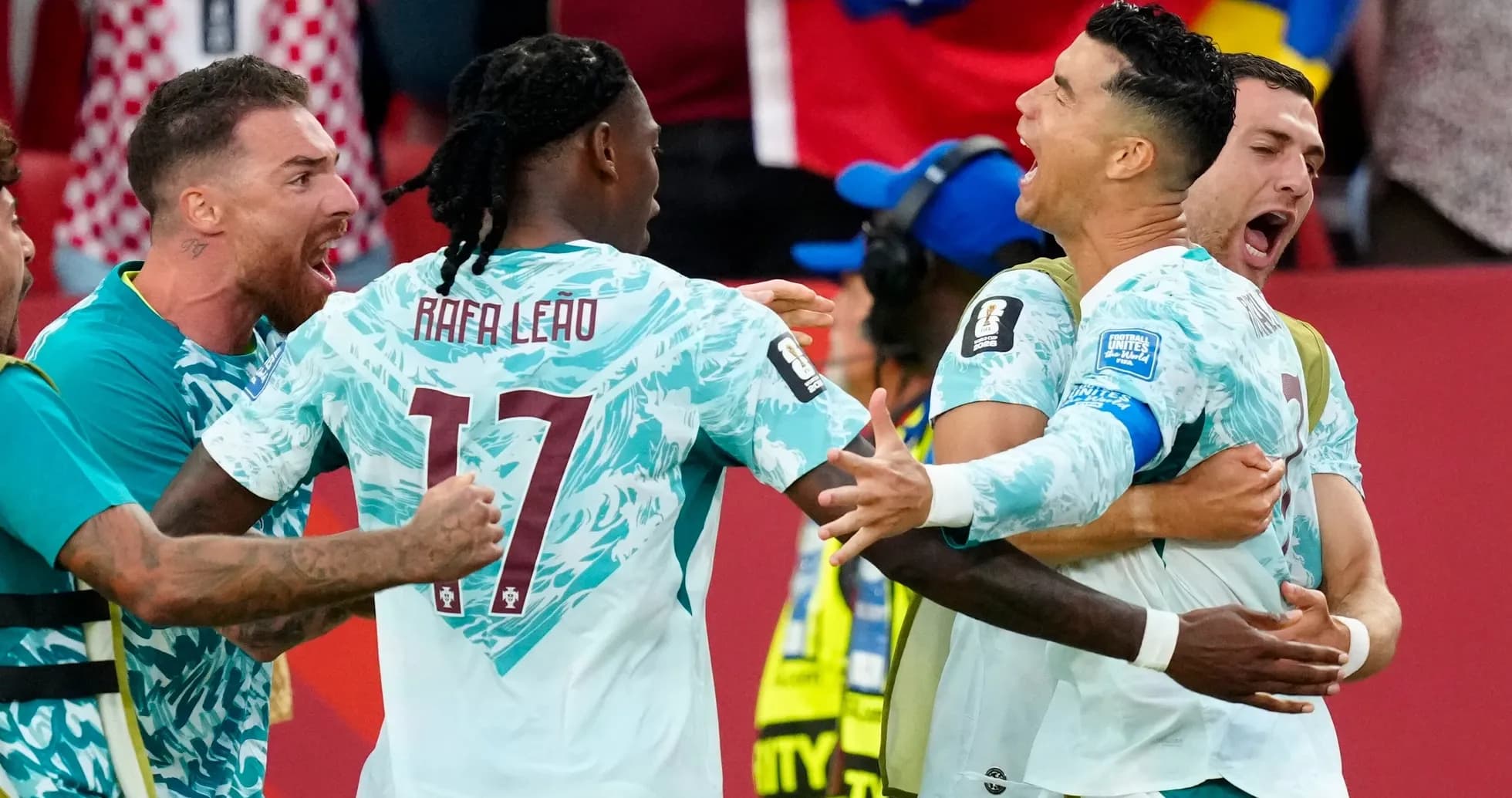
The late-game pattern crystallised the tactical story. With Gonçalo Ramos on as a central striker and Rafael Leão drifting from the left, Portugal repeatedly attacked the space between Croatia’s centre-backs and full-backs. The decisive 90+4' “Normal Goal” from Gonçalo Ramos, assisted by Rafael Leão, epitomised this: wide isolation, a direct run into the channel, and a cut-back finished by a true No.9. By then, Croatia had already tried to refresh their structure: Ante Budimir (OUT) for Igor Matanović (IN) at 46' had initially added fresh legs up front, Mario Pašalić (IN) for Martin Baturina (OUT) at 68' brought an extra runner from midfield, and late introductions of Joško Gvardiol (IN) for Nikola Vlašić (OUT) at 90+2' and Andrej Kramarić (IN) for Mateo Kovačić (OUT) at 90+6' were attempts to tilt the field aerially and physically. Yet those tweaks could not offset Portugal’s control of possession and rhythm.
Discipline also shaped the closing stages. Croatia finished with 2 yellow cards to Portugal’s 1. Luka Modrić was booked at 59' for “Tripping”, a product of being forced into recovery tackles as Portugal accelerated their tempo. Ivan Perišić received a late yellow at 90+8' for “Unsportsmanlike conduct” as frustration grew after another VAR intervention went against Croatia. Portugal, despite their higher tempo and more aggressive attacking posture, maintained composure, committing fewer fouls and avoiding further bookings after Dias’ early card.
Statistical Overview
Statistically, the verdict aligns with the tactical impression. Portugal’s 61% possession, 584 passes, 91% accuracy (584 passes, 532 accurate, 91%), and 2.18 xG portray a side in clear territorial and qualitative control. Croatia’s 39% possession, 368 passes with 311 accurate (85%), and 1.34 xG describe a competitive but reactive performance, reliant on moments rather than sustained pressure. Portugal’s 3 shots on goal from 15 total might seem modest, but the volume of blocked attempts and box entries shows how much of the game was played in Croatia’s third.
Ultimately, Portugal’s structural superiority, bench impact and wide overloads overcame Croatia’s resilience and set-piece threat. The late winner was not a smash-and-grab but the logical outcome of a match where Portugal consistently shaped the zones of play and used their attacking depth to tilt the tie in their favour.