USA Triumphs 2-0 Over Bosnia & Herzegovina in Round of 32
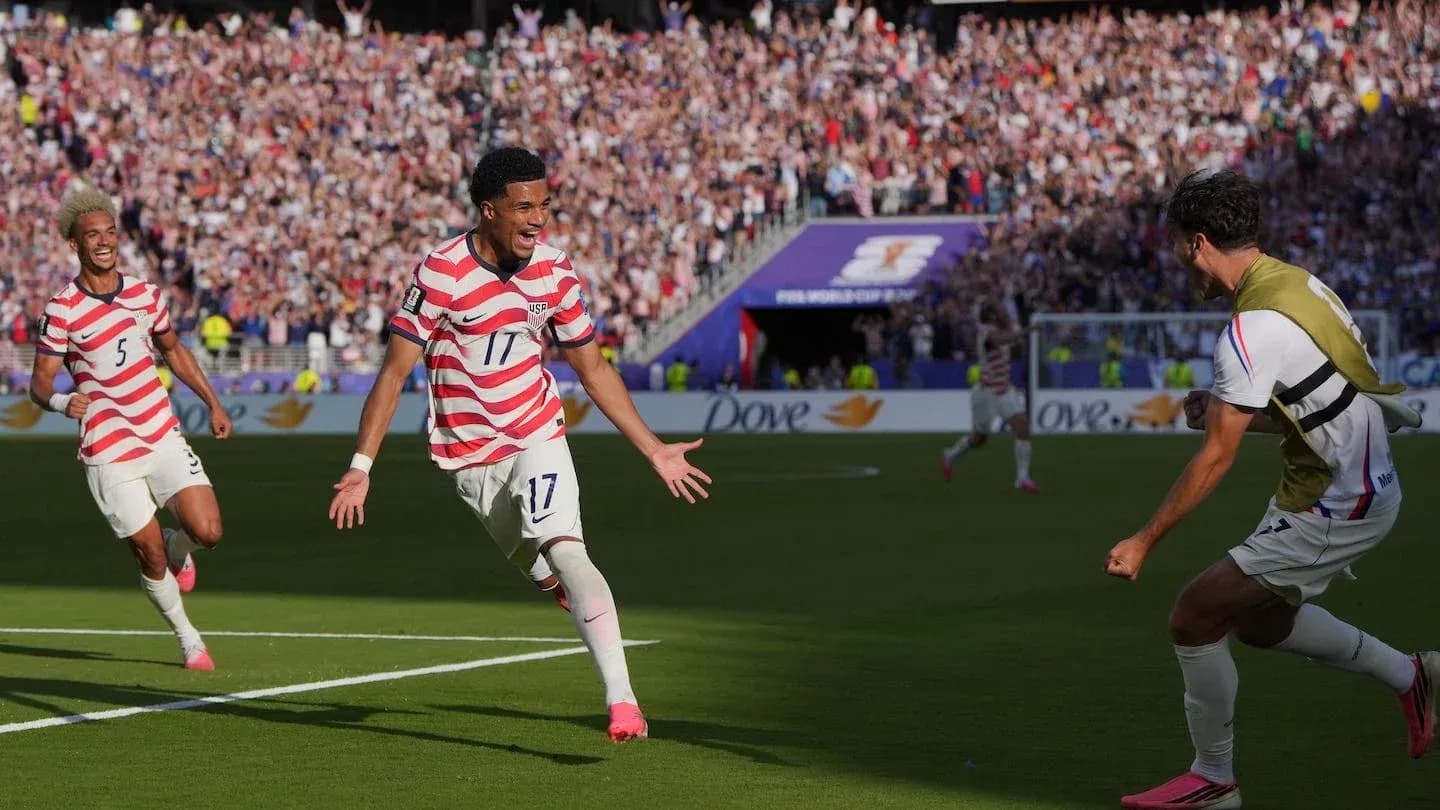
Under the California night at Levi’s Stadium, the World Cup moved from group-stage narrative to pure jeopardy. USA against Bosnia & Herzegovina in the Round of 32 felt like a collision of two very different footballing identities: one side expansive and front-foot, the other hardened by attrition and survival. Over 90 minutes that ended 2–0 to USA, those identities were laid bare.
I. The Big Picture – A knockout shaped by group-stage DNA
Heading into this game, USA arrived as Group D winners, ranked 1st in their section with 6 points and a goal difference of 4, built from 8 goals for and 4 against across 3 matches. Their broader World Cup campaign had already revealed an assertive profile: overall they had played 4 fixtures, winning 3 and losing just 1. At home venues they had been perfect, with 3 wins from 3, scoring 8 and conceding only 1. On their travels they had been more volatile: 1 defeat from 1, with 2 goals scored and 3 conceded. The contrast spoke of a team that thrives when it can impose itself.
Bosnia & Herzegovina came in as a more complicated story. In Group B they finished 3rd with 4 points and a goal difference of -1, scoring 5 and conceding 6 over 3 matches. Overall, across 4 fixtures in this World Cup, they had 1 win, 1 draw, and 2 defeats. At home venues they had been sharp in attack (3 goals for, 1 against in 1 game), but away they had struggled badly: 3 matches, no wins, 2 losses, with only 2 goals scored and 7 conceded. Their total defensive record – 8 goals conceded overall – underlined a side still searching for balance.
On the night, the scoreline mirrored those arcs. USA’s 2–0 victory, built on a 1–0 half-time lead and a controlled second half, looked like a continuation of their home-dominant, attack-minded pattern. Bosnia & Herzegovina, despite the structural solidity of a 5-3-2, were again undone by the same fragility that had seen them concede 2.3 goals on average away from home.
II. Tactical Voids – Absences, discipline, and the shape of risk
USA’s squad sheet carried two quiet but important absences. M. McKenzie, out with a bruised foot, and C. Roldan, sidelined by a muscle bruise, removed two rotation pieces from Mauricio Pochettino’s deck. Neither is a headline star, but in knockout football, missing depth can subtly narrow in-game options, especially if the match drifts into extra time or becomes card-heavy.
Discipline, though, was always going to be a live wire. Across the tournament, USA’s card profile showed a tendency to collect yellow cards in the middle and latter phases of games: 20.00% of their yellows between 16–30 minutes, 40.00% between 46–60, and another 20.00% between 76–90, with an additional 20.00% in the 91–105 window. Their single red card had arrived between 61–75 minutes, a reminder that their aggression can spill over just as matches open up.
Bosnia & Herzegovina’s disciplinary curve was even more volatile. They had seen 37.50% of their yellow cards between 76–90 minutes and another 12.50% in added time (91–105), plus a red card in the 76–90 window. That late-game spike in cards hinted at a side that often ends matches chasing, stretched, and emotionally strained.
In a knockout tie, those profiles matter. USA’s willingness to press and duel risks bookings, but Bosnia & Herzegovina’s late collapses into fouls and dismissals suggested that if USA could keep the tempo high into the final quarter-hour, the Balkan side might again crack under pressure.
III. Key Matchups – Hunter vs Shield, and the battle for control
The headline duel was always going to be the “Hunter vs Shield” confrontation between F. Balogun and Bosnia & Herzegovina’s defensive line anchored by Tarik Muharemović.
Balogun arrived as one of the World Cup’s most dangerous forwards. Across his 3 appearances he had scored 3 goals, averaging a goal per game, with 8 shots and 4 on target. His rating of 7.23 reflected not just finishing but all-round menace: 27 duels contested, 10 won, and 7 fouls drawn. He had already lived on the disciplinary edge himself, collecting 1 yellow and 1 red card, but that volatility is part of what makes him so hard to manage. He plays on the line, physically and psychologically.
Opposite him, Muharemović embodied Bosnia & Herzegovina’s best hope of resistance. In 3 appearances and 260 minutes he had been a constant in their back line, with 157 passes at 84% accuracy and a defensive portfolio that included 1 tackle, 1 successful block, and 8 interceptions. He had won 16 of his 24 duels, a strong success rate that spoke to timing and reading of the game. Yet he, too, carried a red card into this knockout stage, a sign that his aggression can tip over when under sustained pressure.
Around that central duel, the structures told their own story. Pochettino’s 4-3-3 – with M. Freese behind a back four of A. Robinson, T. Ream, C. Richards, and A. Freeman – gave USA width and passing lanes from deep. In midfield, W. McKennie, T. Adams, and M. Tillman formed a three capable of both circulating and breaking lines, while the front trio of S. Dest, Balogun, and C. Pulisic stretched Bosnia & Herzegovina horizontally and vertically.
Sergej Barbarez countered with a 5-3-2 designed to compress space. N. Vasilj was shielded by a back five of S. Kolasinac, S. Radeljić, Muharemović, N. Katić, and A. Dedić. The midfield trio of K. Alajbegović, I. Šunjić, and A. Gigović were tasked with clogging central channels, while E. Džeko and E. Demirović offered Bosnia & Herzegovina a classic twin-threat: a target and a runner.
The contest turned on whether Bosnia & Herzegovina’s “shield” could stay compact enough to deny Balogun and Pulisic the half-spaces, and whether their midfield could survive USA’s waves without sinking into the card-heavy chaos that had marred their previous matches.
IV. Statistical Prognosis – Why 2–0 felt almost pre-written
Even before a ball was kicked, the numbers tilted towards USA. Overall, they had averaged 2.5 goals scored per game, with 2.7 at home, while conceding just 1.0 overall and only 0.3 at home. Bosnia & Herzegovina, by contrast, averaged 1.3 goals for but 2.0 against overall, with a particularly grim away record: 0.7 goals scored and 2.3 conceded per away fixture.
Clean sheets added another layer. USA had kept 2 overall, both at home, and had failed to score in none of their matches. Bosnia & Herzegovina, meanwhile, had not managed a single clean sheet and had failed to score once. That imbalance of attacking reliability and defensive solidity made a USA win with Bosnia & Herzegovina shut out a statistically coherent outcome.
While the raw xG values are not provided, the underlying shot and scoring patterns suggest a USA side more likely to generate high-quality chances. Balogun’s volume – 8 shots in 3 games with 50% on target – and his ability to draw fouls in dangerous zones point towards a team that lives in the final third. Bosnia & Herzegovina’s more modest scoring record, combined with their tendency to concede heavily away, implies a lower expected goal output against an organised USA.
Defensively, USA’s capacity to limit goals at home – 1 conceded in 3 home fixtures overall – married well with Bosnia & Herzegovina’s lack of cutting edge on their travels. The matchup between USA’s aggressive, structured press and Bosnia & Herzegovina’s late-game disciplinary issues created a clear predictive arc: USA to control territory, Bosnia & Herzegovina to spend long stretches defending deep, and the risk of a late collapse if they were forced to chase.
In the end, the 2–0 scoreline at Levi’s Stadium did not just send USA into the next round; it confirmed the trajectory both teams had been tracing since the group stage. USA’s front-foot identity, anchored by Balogun’s ruthless edge and a back line that rarely buckles at home, proved too much for a Bosnia & Herzegovina side whose away vulnerabilities and disciplinary volatility again surfaced when it mattered most.